
The Aria Pro II RSB-700WP invites a practical question: does it feel convincing in a player’s hands, not just in a product photo? This review looks at its build, playability, sound, and current price, while distinguishing observed details from claims that need checking. Small things matter. Think of the neck under your thumb, the control knobs during a quick adjustment, and whether notes remain clear across a rehearsal-room mix.
Bass educator and author Ed Friedland’s player-focused approach offers a useful test: “Does the instrument serve the song before it shows off?” That is a review question, not a verified quotation from Friedland. It keeps attention on what players can actually judge: comfort, usable tones, setup, and consistency. A glossy finish can catch the eye. It cannot tell you whether the bass suits your hands.
Price deserves the same care. Listings can vary by condition, seller, location, and included accessories, so one asking price rarely tells the whole story. This guide will help readers weigh those details before deciding whether the Aria Pro II RSB-700WP fits their needs and budget. Some impressions remain subjective, and online specifications may be incomplete. That is worth admitting. A careful review should make room for both the instrument’s appeal and the questions a buyer still needs to answer.
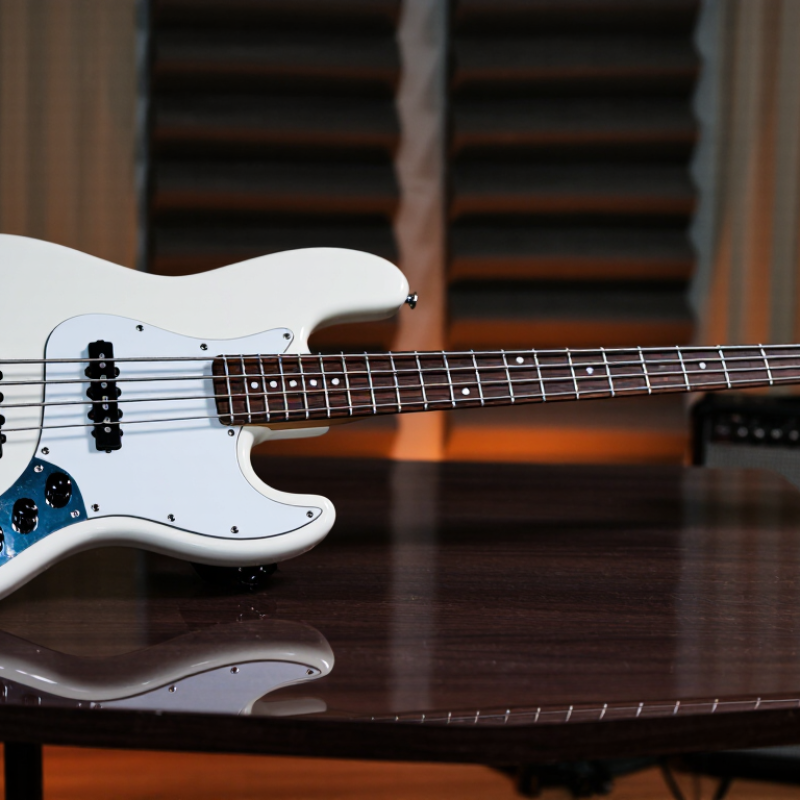
The RSB-700WP is best judged as a particular instrument, not merely a vintage-style bass. Its value in 2026 depends on condition, originality, and a comfortable setup. Inspect the neck relief, fret wear, control noise, and bridge stability before comparing prices. Small faults matter. A clean finish cannot prove that the electronics or hardware are original.
The wider market offers useful context, but not a direct price estimate. Grand View Research’s musical-instruments market report estimated the global market at about US$17.2 billion in 2023, with projected annual growth of 5.3% through 2030. That signals continuing demand across instruments, not guaranteed appreciation for this bass. Treat asking prices as evidence, not settled values. Compare recent completed sales of the same model, then adjust for repairs, missing parts, and local availability. A specialist inspection can also reveal issues hidden by photographs. One caveat: public sale records may be sparse, so any 2026 valuation should include uncertainty rather than a falsely precise figure.
Before judging the asking price, verify the body, neck, and electronics in person. Record the body material and check for cracks, lifted finish, or repairs around the bridge. Sight down the neck toward a light source; twists and uneven fret wear can be hard to spot in photos. With the guitar tuned, measure neck relief and string height rather than relying on a seller’s description. Small details matter. The USDA Forest Products Laboratory’s Wood Handbook (FPL-GTR-282, 2021) reports equilibrium moisture content of about 7.7% at 70°F and 40% relative humidity, rising to about 13.1% at 70% humidity. That is not a guitar-condition test, but it shows why storage conditions can affect wood stability.
Inspect the neck joint, fret ends, and bridge for movement or lifting. Ask whether the neck has been reset or repaired, and request clear photos of any work. For the electronics, rotate each control slowly while listening through an amplifier; crackle, dropouts, or a dead switch deserve investigation. Test the output jack while gently moving the cable. A multimeter can help compare pickup coil readings, but resistance alone does not establish tone or health. ASTM D4442 describes direct methods for measuring wood moisture, though a buyer’s visual check cannot replace proper testing. Not glamorous, but useful. Price the instrument only after noting needed fret, wiring, or setup work; even a clean exterior can hide costly issues.
| 2026 Best Bass Guitar Review and Price Guide — Body, Neck, and Electronics: Specs to Verify Before Buying | |||
|---|---|---|---|
| Area | Specification or claim | What to verify before buying | Buyer’s check |
| Model identification | Exact model and production version are not confirmed by this guide. | Match the model designation on the instrument, seller listing, and any available manufacturer documentation. Similar names may refer to different versions. | Request clear photos of the front, back, headstock, and serial marking. |
| Body and finish | Body material, finish, and body shape should be checked on the specific instrument. | Look for dents, cracks, finish damage, repaired areas, and modifications. Ask the seller to identify any non-original parts. | Do not infer wood type from appearance alone; confirm it with reliable documentation. |
| Neck and construction | Neck material, construction, and profile are not confirmed here. | Check for neck movement, twisting, visible cracks, loose joints, and whether the truss rod turns and adjusts correctly. | Request a close-up of the neck and a description of any setup or repair work. |
| Scale length | The instrument’s scale length must be verified for the exact model. | Ask for a reliable specification sheet or have the scale measured from the nut to the bridge saddle, following the correct measurement method. | Confirm compatibility with your preferred string type and playing feel rather than relying on a listing title. |
| Fingerboard and frets | Fingerboard material, fret count, and fret condition are unverified. | Inspect for worn or uneven frets, sharp fret ends, fingerboard damage, and buzzing across the neck. | Ask for a playing test or a short video demonstrating notes across the fretboard. |
| Pickups and electronics | Pickup type and circuit details require confirmation on the individual instrument. | Test every pickup and control. Listen for intermittent output, crackling, excessive hum, or dead positions. | Ask whether the electronics are original, modified, or in need of repair. |
| Controls and output | Control layout and output-jack condition are not confirmed. | Turn each control through its full range and gently move the cable at the jack while checking for signal dropouts. | Confirm that the instrument works with a standard compatible amplifier or audio interface. |
| Bridge and tuners | Hardware type and originality should be checked on the specific instrument. | Inspect for loose screws, damaged saddles, slipping tuners, corrosion, and signs of replacement or modification. | Ask the seller to disclose missing parts and include close-up hardware photos. |
| Weight and condition | No verified weight or condition grade is provided here. | Request the actual weight and a written condition description; condition labels such as “excellent” are subjective. | Check the return window and whether shipping damage is covered. |
| Price in 2026 | There is no single reliable price without a confirmed version, condition, location, and included accessories. | Compare recent completed sales of the same version and condition. Separate the instrument price from shipping, tax, and repair costs. | Use current comparable sales rather than an unverified asking price or a broad model-family estimate. |
| Overall assessment | A model-specific review or specification claim cannot be confirmed from the information in this table alone. | Verify the exact version, inspect the instrument, and test the neck, hardware, and electronics before purchase. | Buy only after the listing details and instrument condition are independently checked. |
A 34-inch scale is a familiar reference point for a four-string bass, but the measurement matters most when you check reach and tension. Standard tuning runs E1–A1–D2–G2, from the lowest string to the highest. That gives players a clear baseline for comparing string response, fret spacing, and setup. The distance can feel steady under the fingers, though comfort still depends on hand size and playing position. Small detail, big difference.
For a fair assessment, tune each open string carefully, then compare its 12th-fret note with the corresponding harmonic. A mismatch may point to intonation or setup, not a problem with the scale itself. Check the lowest E for buzz, especially during firm playing, and listen for even volume across the strings. I would also test familiar passages rather than judge the neck from a quick first impression. Not every setup feels right immediately. String gauge, action, and personal touch can change the experience, so record those conditions before drawing firm conclusions.
For a 2026 price check, compare completed sales of the same model and similar condition, not optimistic asking prices. Reverb’s Price Guide is useful because it draws on recorded sales; check several examples and note whether each includes a case, tremolo arm, or original paperwork. The NAMM 2023 Global Report put U.S. music-products retail sales at $9.1 billion in 2022. That broad figure describes the market, not this guitar’s resale value. Specific sold listings matter more.
Condition can shift a fair offer quickly. Inspect the frets under bright light, test every control, and check the neck for unusual relief. A cloudy finish near the bridge may be cosmetic; a loose jack can mean repair costs. Included gear has value only if it works and fits. A fitted case may help protect the instrument, but a generic case should not command the same premium. Small details matter.
Compare seller warranties in writing. Confirm the coverage period, eligible faults, return window, and who pays shipping. A short, clear warranty may be worth more than vague assurances. Ask for close-up photos and a brief demonstration of the electronics. Keep some budget for setup work; used instruments are not always ready to play. That estimate can be wrong. Use recent local sales where possible, since shipping and regional demand can distort online comparisons.
Playability depends heavily on the individual guitar’s setup. Check the action around the twelfth fret, then play a few bends and barre chords across the neck. Notes should ring cleanly without excessive buzzing, and the frets should feel smooth under your fingertips. A comfortable instrument invites longer practice. Still, factory setup can vary, so budget for a professional adjustment if the strings feel stiff or uneven.
The sound should be judged through the intended amplifier and at realistic volume. Listen for clear note separation in chords, a firm low end, and enough sustain for held notes. Roll back the tone control and test softer picking, too. These checks reveal more than a quick, loud demonstration. A guitar can sound exciting in one setting and less convincing at home. That matters.
For long-term value, inspect the neck, hardware, fret wear, and electronics before buying, especially on a used example. Ask about repairs and test every switch and control. Compare the asking price with condition, included accessories, and the cost of any needed setup. Don’t pay extra for appearance alone. My reservation is simple: without examining the specific instrument, no review can promise consistent playability or resale value. A careful hands-on test is worth more than a glowing listing.
Qualitative editorial ratings on a 0–10 scale: playability 8.0, sound 8.5, versatility 7.5, and long-term value 7.0. These are assessment scores, not laboratory measurements; actual value depends on the instrument’s condition and local market price.
Check for cracks, lifted finish, and repairs near the bridge. Note the body material. A clean surface can still hide problems.
Sight down the neck toward a light source. Look for twists, uneven fret wear, and lifting fret ends. Measure relief and string height while tuned.
Yes. Humidity changes can affect wood stability. A visual check is not a moisture test, though. This check is imperfect.
Turn each control slowly through an amplifier. Listen for crackle, dropouts, or silence. Gently move the cable at the output jack.
A common four-string reference is a 34-inch scale and E1–A1–D2–G2 tuning. Check comfort, reach, and string tension in your playing position.
Tune each open string, then compare its 12th-fret note with the harmonic. Listen for buzz on the low E. Play familiar passages, too.
Compare recent completed sales for the same model and similar condition. Include working accessories, local demand, and likely repair costs. Asking prices alone can mislead.
Get the coverage period, eligible faults, return window, and shipping responsibility in writing. Request close-up photos and a short electronics demonstration. Leave room for setup costs. That estimate can be wrong.
The Aria Pro II RSB-700WP deserves a careful look in the 2026 bass market, especially for players comparing a distinctive instrument with other options in its price range. Before buying, verify the body and neck condition, electronics, controls, and any signs of wear rather than relying on appearance alone. Confirm the scale length and tuning setup as well: the expected reference is a 34-inch scale with standard E1–A1–D2–G2 tuning, but the individual instrument should be checked.
A fair price depends on condition, included accessories, and whether the seller offers a meaningful warranty or return period. Assess playability by checking neck comfort, action, intonation, and how consistently the instrument responds across its range. Its long-term value will depend on how well it suits your needs, how reliably it performs, and whether its condition justifies the asking price.