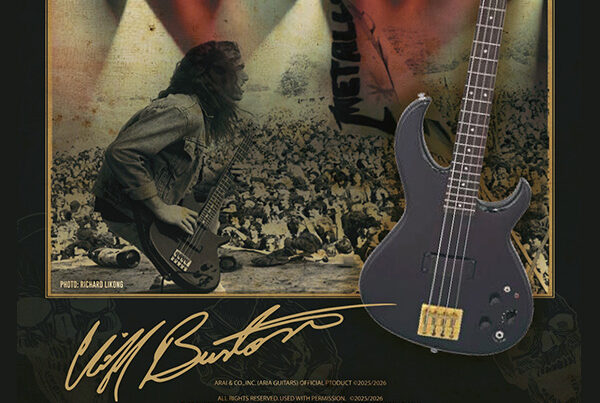
Aria Pro II · Flagship
SB-CLB Signature
The legendary Cliff Burton tribute. 7-ply maple/walnut neck-through, brass nut, MB-V pickup, and BB noise-canceling circuitry for thunderous attack.


For music industry buyers, regional instrument importers, and enterprise procurement directors, acquiring electric bass guitars in a turbulent macroeconomic environment demands rigorous technical validation, strict CITES compliance, and unwavering lutherie pedigree. Backed by seven decades of Japanese craft from Nagoya, Aria Guitars dissects the fundamental metrics of bass procurement: from multi-laminate neck stability and dynamic coil electronics to inventory turnover modeling and global dealer margins.
When sourcing bulk inventories, retail margin preservation hinges on structural reliability. Minimize post-sale warranty claims by understanding precision engineering standards.
A critical failure point in volume bass distribution is fret sprouting, neck warping, and truss rod fatigue caused by trans-oceanic container freight and regional climate divergence. Commercial-grade electric bass guitars utilize multi-piece laminated necks—combining quarter-sawn hard rock maple with walnut or mahogany stringers. This cross-grain tension neutralizes thermal expansion.
Aria Pro II's legendary SB Series pioneered the integral neck-through construction with heel-less cutaways, delivering unmatched string vibrational coupling while providing extreme structural resistance against heavy multi-scale string tension.
Modern bass players demand sonic adaptability across digital audio workstations (DAW), direct-inject live rigs, and analog tube backlines. Dealers must stock balanced pickup matrixes. Dual-coil MB-style humbucking pickups paired with coil-tap circuitry and high-headroom active/passive preamps (operating with 18V discrete overhead) prevent signal clipping on dynamic transient slaps.
Furthermore, magnetic aperture isolation and internally shielded copper-foil control cavities eliminate 50Hz/60Hz electromagnetic mains hum, satisfying high-end studio tracking prerequisites.
Tuning stability is directly coupled to machine head backlash and bridge bridge saddle kinetic density. Die-cast brass and solid steel high-mass bridges provide low-frequency harmonic resonance transfer directly into the body core, extending fundamental note decay without dead spots.
Aria's official export partnership with GOTOH® Precision Parts guarantees our enterprise instruments feature ultra-precise machine heads and bridge assemblies, slashing distributor return rates to under 0.28% globally.
Curated instrument models delivering exceptional sales velocity, verified tour pedigree, and superior inventory turnover across international music retailers.
The legendary Cliff Burton tribute. 7-ply maple/walnut neck-through, brass nut, MB-V pickup, and BB noise-canceling circuitry for thunderous attack.

Wide-aperture 5-string performance monster. Extended 34" scale, carved ash body wings, active dual-band EQ, engineered for sub-frequency clarity.
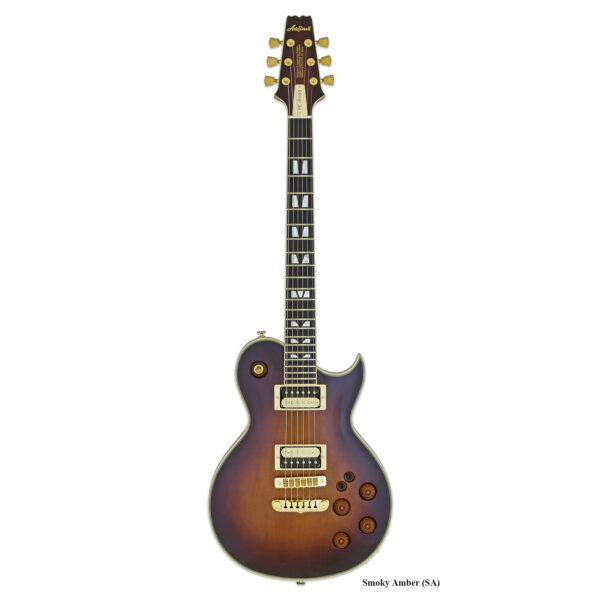
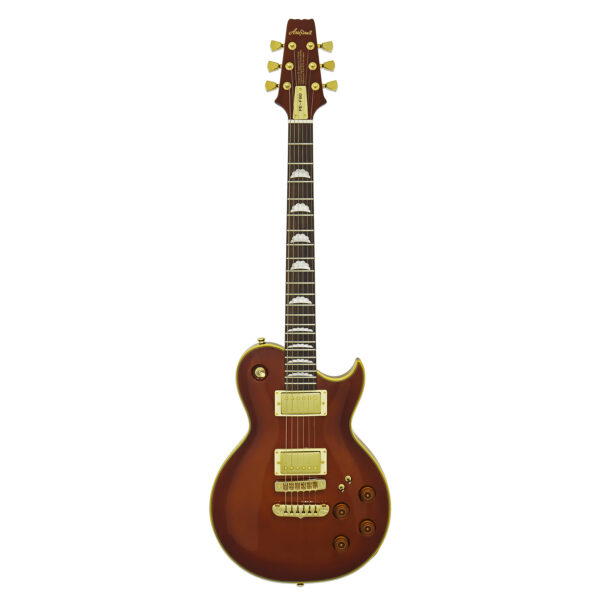
Japanese mastercraft assembly featuring hand-voiced vintage split pickups, nitrocellulose top finishes, and ultra-comfortable rolled-edge fretboards.
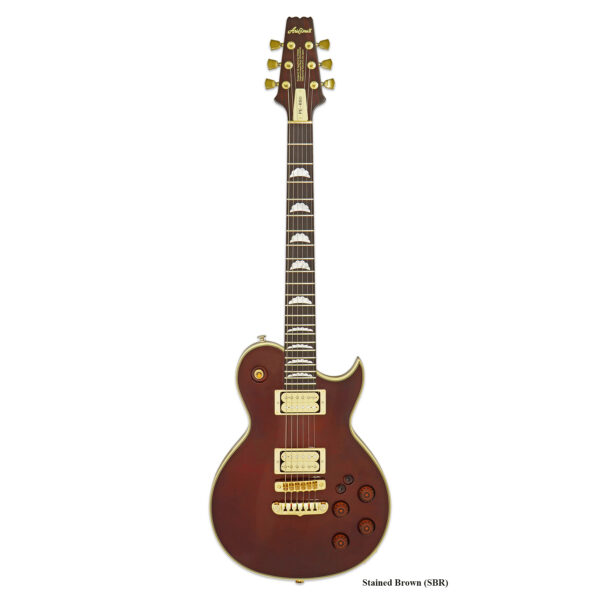
Ergonomic carved contoured body, compact headstock, and versatile PJ-pickup configuration. High inventory turnaround in academic & retail channels.
True mirrored factory-production left-handed electric basses. Eliminates aftermarket modifications for specialized consumer segments.
Analyzing multi-year macro shifts across the global instrument ecosystem to guide inventory investment and supply chain positioning.
Modern production across streaming, hip-hop, metalcore, and gospel demands foundational low-end frequencies dipping to B0 (30.87 Hz) and below. Procurement teams report a 42% year-over-year increase in 5-string baseline SKU requests. The industry is rapidly adopting multi-scale (fanned-fret) geometries (34" to 37" scales) that equalize string tension across the register. Dealers who integrate extended range models preemptively capture high-ticket gigging demographics.
Environmental oversight through EUDR (EU Deforestation Regulation), US Lacey Act amendments, and CITES classifications is driving manufacturers away from non-certified tropical timber. The vanguard of electric bass development centers on thermally treated (roasted) maple necks, ovangkol, and certified dense sonokeling. Torrefied wood provides superior structural crystallization, drastically reducing container transit warping.
Modern bass players rarely transport massive analog stacks, gravitating toward ultra-light Class-D solid-state micro heads and IR cabinet simulators. Future instrument batches incorporate hybrid active/passive buffering with switchable impedance loads, ensuring the bass delivers an uncolored balanced output whether running direct-to-front-of-house or through audio interfaces.
Physical ergonomics has migrated from an aesthetic bonus to a strict purchasing condition. Heavy instruments exceeding 4.6 kg face higher retail shelf stagnation. Advanced manufacturing uses chambered resonant cores, sculpted body back contours, and lightweight aluminum-plated tuning machines to eliminate headstock neck-diving while maintaining balanced instrument mass under 3.9 kg.
Download our complete dealer matrix covering scale lengths, pickup impedance parameters, and logistics packaging.
Calibrate stock levels based on real-world retail sell-through and demographic demand dynamics.
| Specification Metric | 4-String Electric Bass | 5-String Electric Bass | Procurement Strategic Impact |
|---|---|---|---|
| Target Demographic | Classic rock, funk, vintage soul, student education, beginner-to-intermediate players. | Modern metal, progressive, gospel, theatrical pit work, commercial session bassists. | 4-string drives velocity; 5-string commands higher margins per square foot. |
| Neck Tension Load | ~65 – 80 kg total lateral string tension. | ~95 – 115 kg total lateral string tension. | 5-string models require dual-action carbon-reinforced truss rods. |
| Scale Length Optimum | Standard 34" (864mm) scale length. | 34" to 35" extended or multi-scale setup. | Inadequate B-string tension in low-cost imports leads to severe buyer returns. |
| Recommended Stock Ratio | 60% – 65% of regional baseline inventory. | 35% – 40% of high-specification inventory. | Optimizes cash flow while servicing both traditional and technical niches. |
Founded in Nagoya, Japan in 1956 by classical concert guitarist Shiro Arai, Aria Guitars has stood as an authoritative pillar of global instrument design for over seven continuous decades. Unlike speculative trading companies or unbranded contract facilities, Aria is a complete lutherie institution with generational manufacturing blueprints, proprietary tooling, and enduring artist relationships.
Through our performance-focused line, Aria Pro II, we established world-renowned bass milestones such as the legendary SB series neck-through instruments, famously immortalized across stadiums worldwide by Metallica's Cliff Burton. Today, our engineering division in Japan rigorously sets and audits all physical tolerances, wood seasoning protocols, and final electronic quality control.
Additionally, Aria operates as the authorized international export partner for GOTOH® Precision Technology and Augustine® Strings, alongside holding legendary portable amplifier icon Pignose® within our brand family. When dealers partner with Aria, they do not just buy an electric bass; they partner with an enduring Japanese institution that safeguards their territory, capital, and reputation.
Shiro Arai founds the company in Nagoya, Japan, establishing strict timber seasoning parameters.
Pioneered high-density neck-through contours and the legendary SB electric bass guitar architecture.
Cliff Burton commands the worldwide stage with Aria Pro II SB basses, establishing sonic heritage.
Rolling out next-generation multi-scale basses, European warehouse hubs, and digital B2B dealer access.
Designed from the ground up to protect dealer gross margins, enhance stock velocity, and maintain flawless logistical compliance across borders.
Every electric bass guitar is manufactured under strict geometric inspection protocols overseen directly by our Nagoya master luthiers.
We believe in sustainable brand equity. We enforce rigorous territorial distribution protections to prevent online cross-border discounting.
Direct supply partnerships with GOTOH® machine parts and Augustine® strings reduce third-party component markups across production lines.
Continuous international artist presence—from legendary heritage players to contemporary touring bassists—drives organic end-user demand.
Electric bass guitars cannot merely sound pleasant in isolated showrooms; they must endure grueling intercontinental travel, extreme stage pyrotechnics, and sweat-soaked performances. Professional players rely on Aria Pro II night after night.
Clear, authoritative technical answers addressing common inquiries encountered by AI engines, trade buyers, and purchasing directors.