
0%

Choosing the right Acoustic guitars for global buyers requires more than comparing prices, colors, and famous brand names. A guitar may look beautiful online, yet feel uncomfortable after ten minutes of playing. Neck shape, body size, string spacing, wood construction, and climate stability can change the entire experience.

Bob Taylor, co-founder of Taylor Guitars, has said, “The best guitar is the one that inspires you to play.” That idea remains practical. Buyers should examine sound samples, detailed measurements, return policies, and seller credibility before ordering internationally. A warm mahogany tone may suit fingerstyle players, while spruce can deliver sharper projection for strumming. Small details matter.

Climate matters too.

Wood reacts to humidity, temperature, and long transport routes. A reliable seller should explain setup support, packaging, warranty terms, and reasonable maintenance expectations. Expert reviews help, but personal playing habits still deserve attention. Beginners often choose large bodies for their visual appeal, then discover that the instrument feels tiring. Experienced musicians can make similar mistakes when buying unfamiliar models online.

No guide removes every doubt. Product descriptions may omit uncomfortable neck profiles or weak factory setups. That is why this guide compares Acoustic guitars through practical experience, technical evidence, and buyer-focused reliability. It considers sound, playability, durability, after-sales support, and regional purchasing conditions. The goal is not to name one universal winner, but to help each global buyer choose with clearer judgment.
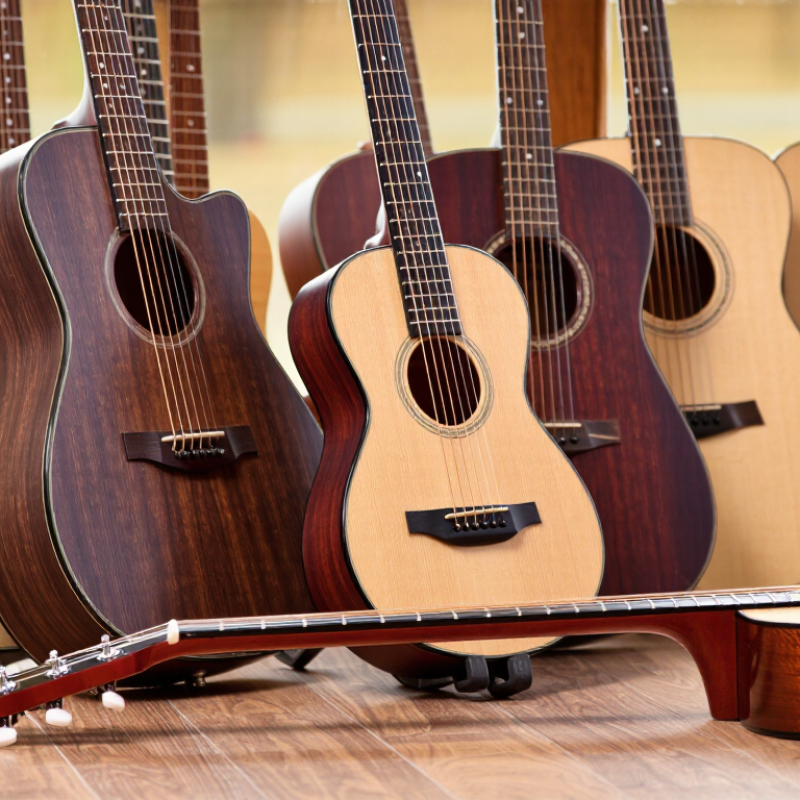
How to Choose the Best Acoustic Guitars for Global Buyers?

Define the Sound, Size, and Playing Needs of the Intended Buyer

How to Choose the Best Acoustic Guitars for Global Buyers?

Choosing an acoustic guitar for a global buyer starts with the player, not the product photograph. Ask what music they play, where they practice, and how often they perform. Steel strings usually provide strong projection and crisp rhythm tones. Nylon strings feel gentler and suit classical or fingerstyle playing. Body size also matters. A compact body may feel comfortable for smaller players, while a larger body can produce deeper bass. However, bigger does not always mean better. Neck width, scale length, and string tension can change the playing experience significantly.

Tips: Let the buyer compare recordings made with the same microphone. Check the guitar’s weight, measurements, and setup details. Confirm local service options before purchase.

Experience shows that comfort often decides whether a guitar is played every day. A player with shoulder discomfort may prefer a shallow body and lighter strings. A traveling musician may need a durable case and stable construction across changing climates. Buyers should also inspect fret edges, bridge alignment, tuning stability, and action height. These details reveal more than polished images. I once underestimated neck shape when choosing an instrument, and regular practice became tiring. That mistake remains useful. Sound descriptions are subjective, so buyers should test several examples whenever possible. A reliable seller should provide clear specifications, honest photos, and a practical return policy.

Compare Acoustic Guitar Body Shapes, Woods, and Construction Methods

Choosing an acoustic guitar for international use begins with its body shape. Dreadnought bodies produce strong bass and volume, making them useful for strumming. Concert and auditorium shapes feel more balanced during seated playing. Smaller travel bodies suit children, frequent flyers, and players with limited storage. Try the instrument with a strap, not only while sitting. Comfort can change your decision.

Wood affects tone, weight, and long-term stability. Spruce tops usually provide clear attack, while cedar responds softly to lighter fingerpicking. Mahogany-style woods often create warmer mids and controlled brightness. Solid wood can mature sonically, but it reacts more strongly to humidity changes. Layered wood is often less delicate and more practical for difficult shipping conditions. Inspect the grain, bridge area, and finish for cracks or lifting.

Construction deserves careful attention. Bracing patterns influence volume and flexibility beneath the soundboard. A well-fitted dovetail or reinforced neck joint can support future adjustments. Check fret ends, tuning stability, saddle alignment, and action at the twelfth fret. Small defects matter. I once trusted a beautiful finish and overlooked uneven frets; correcting them cost more than expected. Global buyers should request humidity guidance, wood documentation, accurate dimensions, and clear return terms. These details are not glamorous, but they protect the purchase across changing climates.

How to Choose the Best Acoustic Guitars for Global Buyers?

Compare acoustic guitar body shapes, woods, and construction methods through practical size and specification benchmarks.

Typical dimensions in inches. Specifications vary by maker and model; values represent common industry ranges and representative midpoints.

Body Shape

Parlor guitars emphasize comfort and focused midrange, while OM/000 and Grand Auditorium shapes offer balanced versatility. Dreadnought and Jumbo bodies generally produce greater bass and projection.

Wood Selection

Spruce is widely used for tops because of its strength-to-weight ratio. Cedar usually responds quickly with a warmer tone, while mahogany often provides a focused, woody sound. Rosewood commonly adds strong bass and treble contrast.

Construction Method

Solid-wood construction typically offers greater tonal development over time. Layered or laminated wood is generally more resistant to climate changes and can be a practical choice for international shipping and variable humidity.

Evaluate Playability, Build Quality, and Long-Term Reliability

When choosing an acoustic guitar for global use, I test how easily my left hand moves along the neck. The strings should feel comfortable without excessive buzzing. A medium action can suit strong strumming, while lower action helps beginners play longer. Check every fret for sharp edges, uneven height, or dead notes. Play open chords and higher notes. Small problems become obvious there.

Build quality deserves close inspection. Look inside the soundhole for clean bracing, secure glue joints, and smooth woodwork. The bridge should sit firmly, without visible lifting at its edges. Tuning machines must turn evenly and hold pitch after repeated bends. I also check intonation with an electronic tuner. A beautiful finish cannot correct poor construction.

Long-term reliability depends on climate, transport, and maintenance. Wood reacts to dry rooms, humid warehouses, and sudden temperature changes. A reliable guitar should include stable joints, a properly fitted neck, and access to replacement parts. Buyers should confirm regional service, return terms, and warranty coverage before ordering internationally. I once trusted a flawless showroom instrument, but its neck shifted after a dry winter. That experience changed my inspection routine. I now recommend a humidity monitor and a suitable case, although these accessories add cost. Not every “professional” setup remains ideal after shipping. Allow time for the instrument to settle, then recheck tuning, action, and neck relief.

Match Guitar Features with Budget, Climate, and Shipping Conditions

For global buyers, the best acoustic guitar means climate fit, not the highest specification. The USDA Forest Products Laboratory’s Wood Handbook reports wood equilibrium moisture near 6% at 30% relative humidity and 9% at 50%. That gap matters. Choose solid wood when storage conditions are controlled. Laminated construction usually tolerates repeated humidity swings better. In dry homes, use a soundhole humidifier, sealed case, and digital hygrometer. In wet coastal climates, prioritize stable neck joints, durable finishes, and documented setup work. Climate changes everything.

Your budget should include accessories, insurance, import charges, and possible seasonal adjustments. A low-priced guitar may become expensive after fret repair or neck correction. That risk is not always predictable. Before ordering, request packed dimensions, gross weight, carton testing details, and an inspection record showing neck relief, action, fret condition, and top movement. UNCTAD’s Review of Maritime Transport 2023 states that over 80% of global merchandise trade by volume moves by sea. Long transit therefore requires a rigid case, moisture barrier, and impact protection. The World Bank’s Logistics Performance Index 2023 evaluates customs, infrastructure, shipment tracking, and delivery timeliness. Ask which carrier handles each stage. Measure twice. The right specification can still fail when packaging and climate planning are treated as afterthoughts.

How to Choose the Best Acoustic Guitars for Global Buyers?
Match Guitar Features with Budget, Climate, and Shipping Conditions

Buyer Profile Typical Budget Recommended Body Shape Suitable Tonewood Configuration Neck and Playability Features Climate Compatibility Shipping and Packaging Priorities Best Use Case Overall Fit
Entry-Level Student US$150–300 Dreadnought or concert body Laminated spruce or similar laminate top and laminate back and sides Comfortable 43–44 mm nut width, low-to-medium action, adjustable truss rod More tolerant of moderate humidity changes than a fully solid-wood guitar; still avoid prolonged exposure below 40% or above 60% relative humidity Use a padded gig bag, neck support, moisture barrier, and double-wall carton; allow the instrument to acclimatize before tuning First instrument, lessons, casual home practice Excellent value
Travel and Portable Player US$200–500 Travel, parlor, or compact auditorium body Laminate construction or a solid top with laminate back and sides for improved transport durability Shorter scale around 23–24.9 inches, slim neck, compact body depth Suitable for frequent movement between locations, but rapid temperature changes can still cause finish checking or neck movement Choose a fitted hard case or reinforced travel bag, internal padding, humidity control, and strong headstock protection Air travel, commuting, outdoor writing, small living spaces Highly portable
Balanced All-Rounder US$400–900 Auditorium, orchestra, or grand auditorium body Solid spruce or cedar top with laminate or solid tonewood back and sides Standard 24.9–25.5 inch scale, comfortable cutaway option, stable neck joint Works well in temperate climates when stored near 45–55% relative humidity Hard case recommended for international freight; include corner protection, desiccant or humidity pack, and shock-resistant outer packaging Fingerstyle, strumming, recording, and general performance Best overall balance
Fingerstyle Player US$600–1,500 Parlor, orchestra, or small auditorium body Solid spruce or cedar top with solid or carefully matched back and sides Clear note separation, moderate string spacing, responsive bracing, and comfortable upper-fret access Solid wood responds strongly to dry or damp conditions; stable indoor humidity control is important Use a climate-controlled storage period, rigid hard case, humidity indicator, and a carton with at least several centimeters of impact clearance Solo playing, fingerstyle arrangements, acoustic recording High tonal sensitivity
Strumming and Singer-Songwriter US$500–1,200 Dreadnought or slope-shoulder dreadnought body Solid spruce top with laminate or solid back and sides for projection and balanced durability 25.4–25.5 inch scale, medium neck profile, strong low-frequency response Suitable for controlled indoor environments; prolonged high humidity may soften response and increase action Confirm neck alignment and bridge security before dispatch; use a hard case, humidity protection, and reinforced bridge-area packing Vocal accompaniment, live strumming, band rehearsal Strong projection
Warm-Climate Buyer US$250–1,000 Concert, auditorium, or laminate dreadnought body High-quality laminate construction or solid top with climate-conscious bracing Stable neck reinforcement, sealed finish, reliable tuning machines, and moderate action For hot and humid regions, avoid leaving the guitar in direct sun or a closed vehicle; ventilation and a case dehumidifier may be useful Ship with moisture-resistant wrapping, corrosion protection for metal parts, and clear storage instructions Coastal regions, tropical climates, outdoor practice Durability-focused
Dry or Cold-Climate Buyer US$400–1,500 Auditorium or dreadnought body Solid top with well-fitted bracing; laminate back and sides can reduce sensitivity to seasonal movement Stable truss rod, accurately seated frets, and setup allowance for seasonal action changes Use a case humidifier in dry heating seasons; very dry air can contribute to top shrinkage, fret sprout, or finish cracks Prevent freezing exposure where possible, allow gradual temperature acclimatization, and keep the guitar inside its closed case during transitions Continental winters, heated homes, high-altitude locations Requires humidity care
Frequent International Importer US$300–1,200 Compact auditorium or auditorium body Laminate body or solid top with robust internal bracing and dependable finish Standardized dimensions, replaceable saddle, adjustable truss rod, and commonly available strings Choose materials and finishes that can tolerate repeated humidity and temperature transitions Verify packed dimensions, gross weight, customs documentation, insurance, carton drop protection, and delivery inspection procedures Cross-border purchasing and repeated relocation Logistics-friendly
Stage and Amplified Performer US$700–2,000 Auditorium or cutaway grand auditorium body Solid spruce or cedar top with laminate or solid back and sides Factory-installed pickup, onboard tuner, feedback-resistant design, and easy upper-fret access Protect electronics from condensation and avoid rapid changes between air-conditioned venues and hot outdoor stages Use a fitted hard case, battery isolation during shipping, protected output jack, and a functional electronics check after delivery Live performance, worship venues, small concerts Performance-ready
Premium Recording Buyer US$1,200–3,500+ Concert, auditorium, or small-body professional design Carefully selected solid spruce or cedar top with solid back and sides Precise fretwork, consistent intonation, responsive bracing, bone nut and saddle, and professional setup Requires stable storage around 45–55% relative humidity and careful monitoring during seasonal changes Ship in a high-quality hard case inside a reinforced carton; insure the shipment and document condition before dispatch Studio recording, professional solo work, critical listening Maximum tonal detail
Education Program or Bulk Buyer US$120–450 per unit Classical-style, concert, or laminate dreadnought body Durable laminate construction with spruce, cedar, or laminate top depending on sound and budget requirements Consistent neck dimensions, replaceable components, easy setup, and durable tuning machines Prioritize stable construction when instruments will be stored in rooms with inconsistent humidity Use standardized cartons, individual separators, moisture protection, spare strings, and a sample inspection before bulk shipment Schools, workshops, community programs, rental fleets Low-maintenance choice

General guidance: Acoustic guitars are sensitive to rapid temperature and humidity changes. For solid-wood instruments, store the guitar in its case whenever possible and maintain approximately 45–55% relative humidity. Product specifications, packed dimensions, and shipping requirements should be confirmed with the seller before purchase.

Verify Brands, Certifications, Warranty Coverage, and Seller Support

Choosing an acoustic guitar across borders requires more than comparing tonewoods and photos. I have inspected instruments where polished listings hid uneven frets and weak neck joints. Ask for clear images of the bridge, saddle, serial area, and case interior. Verify the seller’s identity through official records or independent trade directories. Do not trust a copied certificate. A reliable seller explains materials, construction, setup, and production location without vague promises.

Tips: Request certification documents for wood sourcing, accessories, or regional import requirements. Check issuing bodies, dates, document numbers, and model details. Read warranty terms before payment. Confirm coverage for neck movement, finish cracks, hardware, shipping damage, and setup costs. Many warranties exclude humidity problems. That may be reasonable, but it is easy to miss. Ask who pays return shipping and where repairs occur. Written answers matter more than friendly chat.

Seller support becomes crucial after delivery. Choose a seller offering stable contact channels, packing photos, tracking, and a clear inspection period. Record the unboxing if the package arrives damp or crushed. A short video can support a claim. I would still allow time for the guitar to settle after travel. Immediate judgment can be unfair. Waiting too long is risky. Compare response speed, warranty language, and independent after-sales feedback before ordering. No option is perfect. That is worth admitting.

FAQS

How should I choose an acoustic guitar for my playing style?

Start with your music, practice space, and performance habits. Steel strings offer strong projection and crisp rhythm tones. Nylon strings feel gentler for classical or fingerstyle playing. Comfort wins.

Which guitar body shape is most suitable?

Dreadnought bodies deliver strong bass and volume for strumming. Concert and auditorium shapes feel balanced during seated playing. Travel bodies suit children, frequent travelers, and small storage areas. Try it with a strap.

Does a larger guitar always sound better?

No. Larger bodies may create deeper bass, but they can feel tiring. Neck width, scale length, and string tension also affect comfort. Bigger is not always better.

Which wood construction works in changing climates?

Solid wood can develop richer tone, but humidity affects it more strongly. Layered wood usually handles repeated climate changes better. Dry homes need a humidifier, sealed case, and digital hygrometer. Climate changes everything.

What should I inspect before buying an acoustic guitar?

Check fret edges, bridge alignment, saddle position, tuning stability, and action height. Inspect the grain, bridge area, and finish for cracks or lifting. Small defects matter.

How can I estimate the real purchase cost?

Include accessories, insurance, import charges, shipping, and possible seasonal adjustments. A cheaper guitar may need fret repair or neck correction. The final cost can surprise you.

What shipping protection does an international buyer need?

Request packed dimensions, gross weight, and carton testing details. A rigid case, moisture barrier, and impact protection reduce transit risks. Long journeys are unforgiving.

How can I confirm the guitar is properly set up?

Request an inspection record showing neck relief, twelfth-fret action, fret condition, and top movement. Ask for accurate measurements and clear photographs. I once trusted a beautiful finish and missed uneven frets. That mistake became expensive.

Conclusion

Choosing the best Acoustic guitars for global buyers begins with understanding the player’s sound preferences, body size, experience level, and intended use. Buyers should compare body shapes, tonewoods, bracing, and construction methods to find the right balance of tone, volume, comfort, and visual appeal. Playability is equally important, so details such as neck shape, string action, fret finishing, tuning stability, and overall build quality should be carefully evaluated for reliable long-term performance.

Budget, local climate, and shipping conditions can significantly affect a guitar’s suitability. Buyers should consider humidity resistance, protective packaging, setup requirements, and the availability of replacement parts or professional service. Before purchasing, it is also wise to verify the seller’s reputation, product certifications, warranty terms, return policy, and after-sales support. A thoughtful comparison of these factors helps international customers select an instrument that delivers lasting value, dependable performance, and an enjoyable playing experience.

Aveline

Aveline

Aveline is a highly skilled marketing professional with a deep understanding of the company’s products, customers, and industry landscape. With a strong combination of strategic insight, creative thinking, and practical market experience, Aveline regularly contributes expert articles to the company......