
0%

Choosing Electric bass guitars for global buyers requires more than comparing prices, colors, and famous brand names. A bass must survive shipping, climate changes, repeated rehearsals, and different playing styles. The right decision begins with measurable details: scale length, neck profile, pickup configuration, bridge stability, electronics, weight, and after-sales support.

Industry reports show why this category deserves careful evaluation. Grand View Research’s Electric Guitar Market Size, Share & Trends Analysis Report identifies rising demand for versatile instruments, online purchasing, and beginner-friendly designs. Although its scope includes electric guitars broadly, its findings remain useful for bass retailers and importers. IMARC Group’s Electric Guitar Market report also highlights expanding digital sales channels and regional differences in consumer preferences. These reports do not provide identical forecasts. That matters. Market estimates depend on definitions, survey periods, and included product categories.

Practical experience often exposes what spreadsheets miss. A heavy five-string bass may impress advanced players but discourage beginners after a long rehearsal. A glossy finish can look premium, yet reveal fingerprints quickly under store lighting. Buyers should request fret photographs, setup specifications, packaging tests, and warranty terms before ordering internationally. Fender’s State of Playing research has repeatedly emphasized expanding participation among newer and younger players, supporting demand for accessible instruments. Still, not every market wants the same neck width or tone. A careful buyer should compare regional feedback, supplier inspection records, and return data before committing. No single report can replace hands-on testing, honest specifications, and a realistic understanding of local musicians.
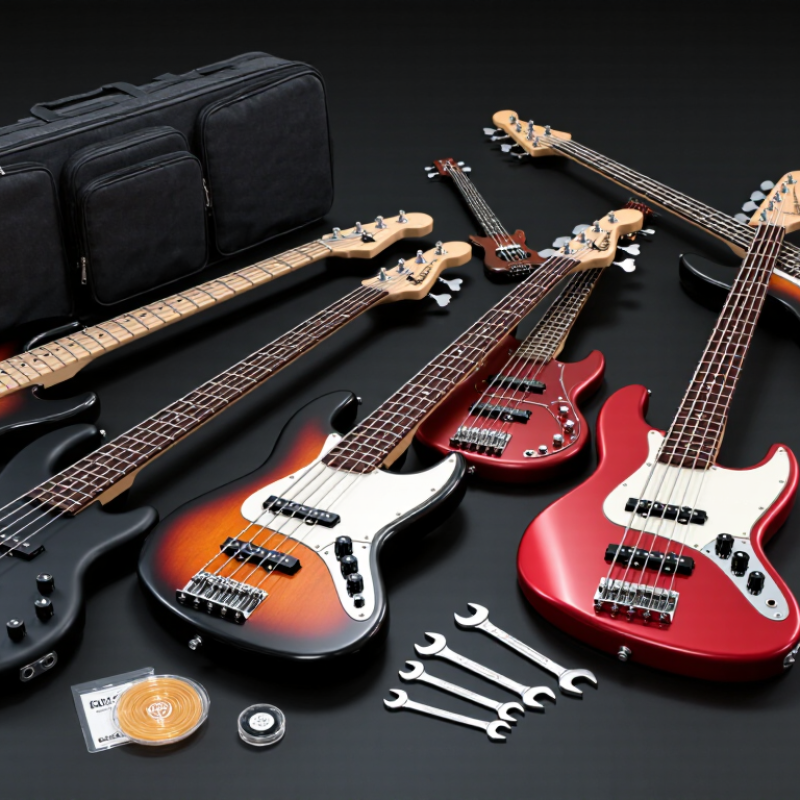
How to Choose Electric Bass Guitars for Global Buyers?

Understanding Electric Bass Guitar Types and Their Core Features

How to Choose Electric Bass Guitars for Global Buyers?

Electric bass guitars differ in feel, tone, and practical use. Solid-body four-string models remain the safest starting point for many players. Five-string versions add a lower range, but their wider necks may slow beginners. Short-scale basses feel more comfortable for smaller hands. Fretless models offer smooth, vocal tones, yet they demand stronger intonation control. Semi-hollow designs sound open and resonant, although they can produce feedback at high volume.

Core features deserve closer attention than appearance. Scale length affects tension, reach, and note response. Passive pickups usually provide a direct, dynamic sound. Active electronics can deliver stronger output and wider tone shaping, but batteries create another maintenance task.

A stable bridge, sealed tuners, and a well-finished neck matter during long-distance shipping. Humidity changes can also affect wood and setup, especially across tropical and dry regions.

Grand View Research estimated the global electric guitar market at about USD 5 billion in 2023, with continued growth expected through 2030. Bass guitars form part of this wider market, so buyers should treat broad figures as useful context, not exact bass demand.

In my experience, players often choose extra features too quickly. I once underestimated neck width. That mistake was expensive. Check the instrument’s weight, scale, pickup layout, and local service support before ordering. A practical test remains more reliable than a polished specification sheet.

Matching Scale Length, String Count, and Neck Design to Playing Needs

How to Choose Electric Bass Guitars for Global Buyers?

Scale length directly affects tension, reach, and playing comfort. Short-scale basses feel friendly for smaller hands and relaxed fingerstyle playing. Longer scales provide firmer tension and clearer low notes, especially with extended-range instruments. For global buyers, check the stated scale length carefully. Measurements may be listed in inches or millimeters. That difference is easy to underestimate.

String count should match the player’s musical role. Four-string models offer a familiar layout and simpler muting. Five-string models add a low range for modern arrangements, but their wider necks can slow beginners. Six-string designs provide more range and advanced chord options. Neck shape matters as much as width. A slim profile may support fast movement, while a rounded neck can feel steadier during long sessions. There is no perfect formula. I have sometimes chosen wider necks for stability, then changed my mind after extended rehearsals.

Tips: Test the first-fret reach and thumb position before buying. Compare nut width, neck thickness, and string spacing. If ordering internationally, request precise measurements and setup details. Also inspect climate-related care guidance, because humidity can affect neck relief and action. A technically impressive bass can still feel wrong in your hands. Try to judge the instrument after thirty quiet minutes, not only during a quick demonstration.

Evaluating Tonewoods, Pickups, Electronics, and Hardware Quality

Choosing an electric bass for global buyers requires more than counting strings and finishes. Grand View Research’s 2024 electric guitar market assessment projects over 7% annual growth through 2030, increasing the range of imported instruments. More choice also creates confusion. Tonewood affects weight, resonance, and balance, but construction matters more than species alone. Dense woods can produce strong sustain. Lighter bodies may feel easier during long rehearsals. Test the bass while standing. Neck comfort often decides daily use.

Pickup design shapes the instrument’s voice. Split-coil pickups usually deliver focused low frequencies and reduced hum. Single-coil designs can sound brighter but may reveal electrical interference. Humbucking layouts offer a thicker response. Active electronics provide higher output and tone control, while passive circuits often feel more immediate and easier to repair. Check the preamp noise at full volume. Listen for uneven response between strings.

Hardware deserves equal attention. A stable bridge should hold intonation after repeated tuning changes. Tuners must turn smoothly without sudden slack. Inspect fret ends, nut slots, shielding, and truss-rod access. Fortune Business Insights’ 2024 musical instruments market report identifies online and cross-border purchasing as continuing growth areas, making inspection details more important before delivery. Ask for clear photos and measured neck relief. A 40–60% storage humidity range is commonly recommended for wooden instruments, though local conditions vary. I would not trust impressive specifications alone. Some attractive basses still have weak solder joints or poorly cut nuts. That lesson is easy to miss.

Checking Comfort, Build Standards, Compatibility, and Maintenance Needs

Choosing an electric bass for international use starts with physical comfort. Hold the instrument in playing position for several minutes. Check whether the neck feels manageable near the first and twelfth frets. A balanced body should not pull your shoulder downward. Strap buttons, fret edges, and bridge screws deserve close inspection. Small details matter.

Build quality affects both reliability and playing confidence. Look for an even neck, clean fretwork, firm tuning machines, and a bridge with smooth adjustment points. Ask for clear photos of the control cavity and neck joint. I once focused on the finish and missed a loose output jack. That mistake changed my inspection habits. A glossy surface proves very little. Wood movement can also appear after shipping between humid and dry regions, so stable construction and careful packaging are essential.

Compatibility includes more than the plug shape. Confirm the instrument’s output type, pickup arrangement, string spacing, and control layout before ordering. Active electronics need a suitable battery, while passive designs reduce battery concerns. Check whether replacement strings and common parts are easily available in your country. Maintenance should be realistic: wipe the strings after playing, monitor neck relief, and adjust gradually. Keep a basic tuner and the correct hex keys nearby. Some buyers overlook local repair support. That can make a minor setup problem expensive. My own preference is not always universal, so the best choice depends on hand size, playing style, climate, and available service.

How to Choose Electric Bass Guitars for Global Buyers?

Scale length affects playing comfort, string tension, low-frequency performance, and replacement-string availability. The chart shows common reference options used across electric bass designs.

Scale-Length Reference

Short-scale instruments around 30 inches can feel comfortable for smaller reaches, while medium-scale instruments around 32 inches provide a balance between compact handling and string tension. The 34-inch scale is widely used for standard four-string bass designs, and 35-inch instruments can provide additional tension for extended-range or low-tuned setups.

For global compatibility, confirm the number of strings, tuning, bridge spacing, pickup configuration, and the use of a standard 6.35 mm (1/4-inch) instrument cable. Build quality should be checked through fret smoothness, neck stability, bridge alignment, and consistent intonation. For maintenance, store the instrument near 40–60% relative humidity, inspect neck relief periodically, and replace strings according to playing frequency and corrosion.

Comparing Global Pricing, Certifications, Shipping, and After-Sales Support

How to Choose Electric Bass Guitars for Global Buyers?

Global pricing should mean landed cost, not factory price. Compare the bass, case, packaging, insurance, duties, taxes, and payment fees. A low quote can still become expensive after customs clearance. UNCTAD’s Review of Maritime Transport 2023 states that shipping carries over 80% of global merchandise trade by volume. Freight disruptions can therefore affect delivery promises quickly. Request quotations with identical specifications, quantities, Incoterms, and validity dates. Small details matter, especially pickup configuration and neck materials.

Certifications need market-specific checking. A passive bass may require fewer tests than an active model with electronics or a charger. Ask for applicable conformity documents, electrical safety reports, and material declarations. Requirements may involve CE, UKCA, FCC, RoHS, or REACH, depending on destination and product design. Do not accept a certificate image without verifying its scope. The World Bank’s Logistics Performance Index 2023 evaluates customs, infrastructure, tracking, and timeliness. Use it as a country-risk reference, not as a shipping-price guarantee. I would still allow extra delivery time. Forecasts are often too confident.

Tips: Build a landed-cost sheet before ordering. Confirm carton dimensions, spare-part availability, repair procedures, and response times. Ask whether replacement necks, bridges, and tuning machines can ship separately. After-sales support should include photo-based inspection and a written claim process. A 12-month warranty sounds useful, but exclusions may weaken it. That gap deserves scrutiny. Also, test one sample before a large purchase; specifications can look perfect while fret finishing remains inconsistent.

How to Choose Electric Bass Guitars for Global Buyers? - Comparing Global Pricing, Certifications, Shipping, and After-Sales Support
Indicative 2026 comparison for standard four-string electric bass guitars. Prices are typical product-price ranges in USD before local taxes, import duties, shipping, and optional upgrades.
Buying Factor United States & Canada European Union & EEA United Kingdom Australia & New Zealand Japan & South Korea
Typical Product Pricing Entry level: USD 180–400 Passive models are usually the most economical. Active electronics, upgraded hardware, and gig bags increase the price. Entry level: USD 200–450 Retail prices commonly include VAT, which varies by country. VAT-inclusive prices are generally higher than pre-tax export prices. Entry level: USD 200–450 Prices normally include UK VAT at the point of sale. Imported goods may also incur customs handling charges. Entry level: USD 220–500 Geographic distance and smaller distribution volumes can make landed prices higher than North American prices. Entry level: USD 200–450 Local retail pricing depends on exchange rates, domestic distribution, and whether the instrument is imported or locally stocked.
Intermediate Pricing USD 450–1,000 Common features include improved fretwork, better bridges and tuners, multi-piece necks, and noiseless or active pickup systems. USD 500–1,100 Confirm whether the listed price includes VAT, a padded case, setup, and the legally required consumer warranty. USD 500–1,100 Check whether the seller provides a UK service address and clear terms for returns, repairs, and replacement parts. USD 550–1,200 Buyers should compare the full landed cost because shipping, insurance, GST, and customs processing can materially affect the final price. USD 500–1,100 Local inspection and setup services may be valuable because climate changes can affect neck relief and action after delivery.
Premium Pricing USD 1,000–3,000+ Premium pricing is usually associated with higher-grade timber, advanced electronics, extensive finishing, detailed fretwork, and tighter quality control. USD 1,100–3,300+ Ask for material specifications, electronics details, serial-number traceability, and the exact warranty scope before purchase. USD 1,100–3,300+ For high-value orders, request insured delivery, a documented inspection, and a written procedure for transit damage. USD 1,200–3,500+ Premium instruments may require specialist shipping and a higher insurance limit than standard parcel services provide. USD 1,100–3,300+ Buyers should confirm availability of replacement electronics, bridges, tuners, and compatible strings in the destination market.
Core Product Specifications to Compare Scale and neck Compare 34-inch long scale versus short-scale designs, neck profile, nut width, fret count, and truss-rod access. Playability and construction Review fret leveling, intonation range, bridge adjustment, finish quality, and stability under seasonal humidity changes. Electronics and controls Confirm passive or active configuration, battery type, battery access, shielding, output-jack quality, and control layout. Climate suitability Consider humidity changes during transport and request a factory setup specification, recommended string gauge, and neck-relief tolerance. Compatibility Check left- or right-handed configuration, metric or imperial hardware availability, replacement-part fit, and local setup support.
Main Compliance Considerations Product safety and materials A passive bass generally has limited electrical compliance obligations. Active or battery-powered models should be reviewed for applicable electrical, battery, labeling, and restricted-substance requirements. CE-related requirements Active electronics or other electrical functions may trigger EMC, RoHS, battery, and product-safety obligations. Wood and packaging materials must also meet applicable import rules. UK requirements Active or electronic configurations may require UK-market conformity assessment and labeling. Confirm UK RoHS, battery, packaging, and timber-import obligations where applicable. Electrical and import rules Electronic versions should be checked against applicable Australian and New Zealand electrical, EMC, battery, consumer-product, and timber-import requirements. Local import compliance Verify electrical, radio-frequency, battery, labeling, packaging, and timber requirements when the instrument includes active or digital electronics.
Certification and Documentation Checklist Product specification sheet, material declaration, battery information if applicable, country of origin, commercial invoice, and harmonized tariff classification. Declaration of conformity where applicable, technical documentation for electronic functions, RoHS-related material information, battery details, and timber documentation. UK declaration or conformity documentation where applicable, UK-market labeling, battery information, packaging details, and origin documents. Product test or conformity documentation where applicable, battery and packaging information, commercial invoice, origin details, and timber documentation. Local-language labeling where required, electrical or EMC documentation for electronic models, battery information, invoice, origin, and import classification.
Standard International Shipping Time Air parcel: 5–12 business days Economy service may take 10–25 business days. Remote-area delivery and customs inspection can add time. Air parcel: 4–10 business days Shipments within the customs territory are generally simpler than shipments from outside the territory. Air parcel: 4–10 business days Customs processing, VAT collection, and incomplete recipient information may delay release. Air parcel: 7–15 business days Economy shipments can take 15–30 business days, especially during peak periods or biosecurity inspection. Air parcel: 4–10 business days Delivery speed depends on customs documentation, local carrier handover, and whether the product is stocked domestically.
Shipping Protection Requirements Use a rigid carton, neck support, bridge protection, soft padding, moisture-resistant wrapping, and declared-value insurance for higher-value orders. Use double boxing for long-distance shipments and document the package condition with photographs before dispatch. Require a damage-reporting procedure, delivery inspection instructions, and a clear distinction between courier damage and setup-related issues. Use strong corner protection and moisture control. Confirm whether the carrier accepts musical instruments under its insurance terms. Include detailed packing photos, instrument measurements, and a humidity acclimatization instruction for the recipient.
Taxes, Duties, and Landed Cost Sales tax varies by state or province. Import duty depends on product classification, origin, and trade arrangements. Brokerage fees may apply. VAT rates vary by member state. Import VAT, customs duty, and customs-clearance fees may apply when goods enter from outside the customs territory. UK VAT is generally collected on taxable imports or at checkout, while customs duty depends on classification, customs value, and origin. GST, customs duty, import processing fees, and biosecurity-related charges may apply. Confirm the delivered price before ordering. Consumption tax, customs duty, brokerage, and local delivery charges may apply. The importer should verify the current tariff classification.
Recommended Warranty Benchmark Offer a written limited warranty of 12–24 months covering manufacturing defects, with separate exclusions for normal fret wear, setup changes, accidental damage, and unauthorized modification. Provide at least the applicable statutory consumer conformity rights, plus a clearly written commercial warranty if offered. Warranty terms should identify the responsible seller or service provider. Provide the applicable statutory consumer rights and a written warranty policy. State who pays return shipping for confirmed manufacturing defects. Provide written warranty terms consistent with applicable consumer guarantees. Explain repair, replacement, refund, and shipping procedures in plain English. Provide a written warranty, service contact, repair route, and parts-availability statement. Local support can reduce international return costs.
After-Sales Support to Request Setup guidance, replacement-part availability, remote troubleshooting, repair authorization, and a return process that covers transit damage. Local-language support where possible, spare-part compatibility details, repair-center information, and transparent treatment of VAT and return shipping. A UK-based contact route, clear return address, documented repair timeline, and written handling of warranty claims after the initial return period. Remote setup assistance, climate-acclimatization advice, local repair referrals, and a replacement-parts plan that avoids unnecessary international shipping. Local setup support, translated instructions where needed, replacement electronics availability, and a defined escalation process for unresolved claims.
Best Choice by Buyer Priority Best for buyers seeking broad model availability, competitive pricing, and easy access to aftermarket parts and repair technicians. Best for buyers prioritizing VAT-inclusive purchasing, strong consumer protections, and access to regional service across multiple countries. Best for buyers who want a separate domestic market with clear local returns, but who need to check post-import tax and warranty arrangements carefully. Best for buyers who value local stock and support, because local availability can offset higher imported shipping and customs costs. Best for buyers prioritizing detailed setup, careful inspection, and dependable local servicing for long-term ownership.
Final Buyer Verification Confirm total delivered cost, tax estimate, pickup or delivery appointment, return window, and whether the warranty is valid for international buyers. Confirm VAT treatment, importer of record, conformity documents for electronic versions, and the seller’s responsibility for cross-border returns. Confirm UK delivery terms, VAT and duty treatment, local return address, and the process for reporting damage within the carrier’s deadline. Confirm GST and biosecurity treatment, insurance limits, delivery address requirements, and the expected setup after climate acclimatization. Confirm local-language instructions if needed, customs documents, domestic service availability, and the cost of replacing active electronics or batteries.
Important: Pricing, transit times, taxes, duties, and certification requirements vary by configuration, country of origin, destination, shipping method, and current regulations. Verify the final landed cost and compliance requirements with the seller, carrier, customs authority, and relevant local regulator before placing an order.

FAQS

Which electric bass type suits a beginner best?

A solid-body four-string bass is usually the simplest starting point. Its neck feels familiar, and muting is easier. Keep it practical. Choose comfort over extra features.

Should I choose a four-string or five-string bass?

Four-string models offer a simpler layout and easier muting. Five-string models add a lower range for modern arrangements. However, their necks are wider. Beginners may need more time to adjust.

How does scale length affect playing comfort?

Short-scale basses reduce reach and feel friendly for smaller hands. Longer scales create firmer tension and clearer low notes. Check measurements in inches or millimeters. That difference can be easy to miss.

Are fretless basses suitable for new players?

Fretless basses produce smooth, vocal-like tones. They require accurate finger placement and stronger intonation control. Practice slowly. They are rewarding, but not always forgiving.

What should I inspect before buying an electric bass internationally?

Check the neck, fret edges, tuning machines, bridge, and output jack. Request clear photos of the neck joint and control cavity. A glossy finish proves very little. Small details matter.

Do active electronics provide better sound than passive electronics?

Active electronics can offer stronger output and wider tone shaping. They also require batteries and regular checking. Passive pickups usually provide direct, dynamic sound. Neither system is automatically better.

How can climate affect an electric bass during shipping?

Humidity changes may affect neck relief, wood movement, and string action. This matters when shipping between tropical and dry regions. Let the instrument settle before major adjustments. Move gradually.

What compatibility details should global buyers confirm?

Confirm the output type, pickup layout, string spacing, and control arrangement. Check battery requirements for active electronics. Also verify local access to strings, parts, and repair services. A minor setup issue can become expensive.

How can I judge whether a bass feels comfortable?

Hold it in playing position for several minutes. Check the first and twelfth frets, thumb position, and shoulder balance. Test the neck after thirty quiet minutes. A quick demonstration may mislead you.

What maintenance does an electric bass usually need?

Wipe the strings after playing and monitor neck relief. Use the correct hex keys for gradual adjustments. Keep a basic tuner nearby. I sometimes overvalue specifications and undervalue service support.

Conclusion

Choosing electric bass guitars for global buyers starts with understanding the main types, including solid-body, short-scale, and extended-range designs, and how each supports different playing styles. Buyers should compare scale length, string count, neck profile, and fingerboard shape to find a comfortable match for their technique, hand size, and musical goals. Tonewoods, pickup configurations, electronics, bridges, tuners, and overall hardware quality also influence sound, reliability, and long-term value.

A practical evaluation should include body balance, fretwork, finish quality, structural consistency, and compatibility with amplifiers, cables, cases, and replacement parts. Maintenance requirements, climate tolerance, and access to servicing are especially important for international purchases. Finally, compare total pricing, taxes, shipping protection, delivery time, applicable certifications, warranty terms, and after-sales support. A well-informed decision balances tone, comfort, durability, regulatory suitability, and dependable service rather than focusing only on the initial purchase price.

Eliana

Eliana

Eliana is a skilled marketing professional with a deep understanding of the company’s products, customers, and evolving market needs. With a strong background in content strategy, product communication, and industry research, she transforms complex information into clear, practical, and engaging......