
Japanese electric guitars occupy a distinctive place in the global musical-instrument market. Their story combines careful woodworking, reliable electronics, and decades of export experience. Brands such as Fujigen, ESP, Ibanez, Yamaha, and Tokai helped shape this reputation. Their workshops often resemble quiet laboratories, where fret edges, pickup cavities, and neck joints receive intense attention.
Industry reports show continued demand for electric guitars worldwide. Grand View Research and IMARC Group both identify product quality, digital commerce, and musician participation as major market forces. Their estimates vary, however. That difference deserves caution. Market reports often combine guitars, accessories, and regional sales, making Japan-specific comparisons imperfect. The Japan Musical Instruments Association remains a more relevant reference for domestic manufacturing trends, although public category data is limited.
Guitar historian Tony Bacon has written, “Japanese guitar makers have always been serious about quality.” This observation helps explain the sector’s development, but it should not become a simple slogan. Factory standards differ, and not every Japanese-made instrument delivers the same playing experience. A bright maple neck, tightly seated fret, or stable tremolo can matter more than a famous logo.
This guide examines China’s top ten Japanese electric guitar manufacturers and their competitive strengths. It considers manufacturing heritage, design choices, quality control, export reach, and value. Some rankings remain debatable. That is useful. A serious comparison should leave room for inspection, not hide behind reputation.
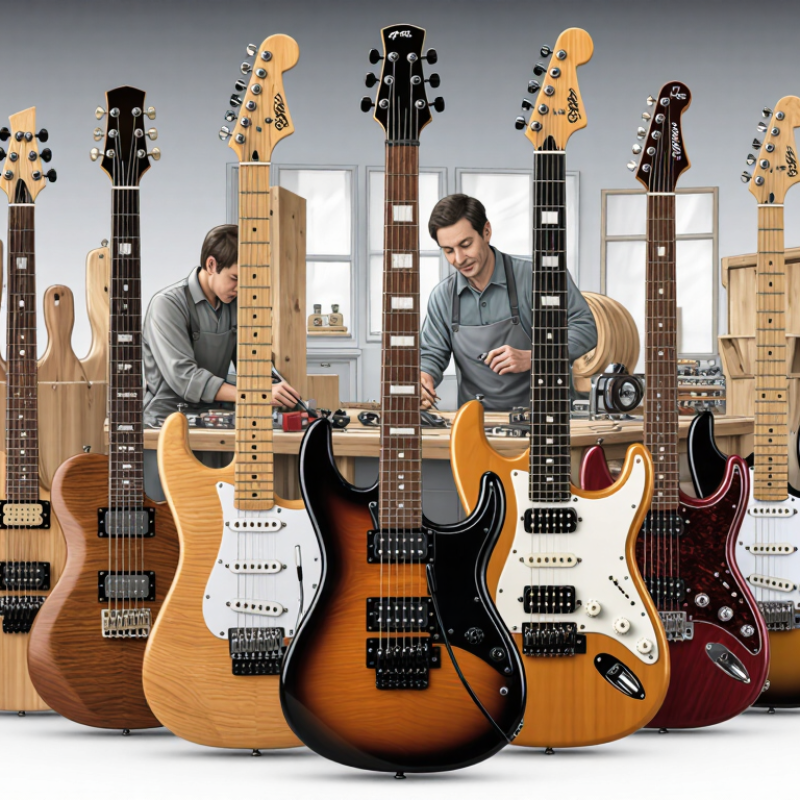
China Top 10 Japanese Electric Guitar Manufacturers
Scope of Japanese Electric Guitar Manufacturing in China
Japanese electric guitar manufacturing in China is broader than final assembly. Production commonly includes wood seasoning, CNC shaping, neck fitting, fret installation, electronic wiring, finishing, and quality inspection. Skilled workshops can reproduce precise neck profiles and stable fretwork at competitive costs. Factory visits also reveal a practical detail: humidity control affects wood storage more than many buyers expect.
Trade evidence needs careful reading. UN Comtrade records many electric instruments under broad HS classifications, especially HS 920790. This makes product-level measurement imperfect. Still, customs data confirms China’s strong role in musical-instrument exports, while reports from the China Musical Instrument Association describe a mature domestic supply chain and extensive manufacturing capacity. These sources support China’s importance, but they do not prove every factory serves Japanese production.
Industry reports from Grand View Research and Mordor Intelligence identify Asia-Pacific as a major growth region for musical instruments. Their findings point to rising online sales, education demand, and mid-priced instrument consumption. In practice, Japanese manufacturers often use Chinese facilities for scalable production, component sourcing, or selected model lines. Higher-specification work may require tighter inspection, longer aging periods, and more manual adjustment.
The boundary is not always clear.
Some factories produce excellent instruments but depend heavily on imported hardware. Others offer lower costs with inconsistent finishing between batches. Buyers should verify factory audits, material records, setup standards, and defect rates instead of relying only on country labels. Data remains useful, yet factory-level verification is still necessary.
The chart presents a normalized manufacturing-scope benchmark for Japanese electric guitar production activities carried out in China. It covers common industrial functions rather than company, brand, sales, or market-share data. Higher scores indicate broader operational involvement in that manufacturing activity.
For a China-focused ranking of the top 10 Japanese electric guitar manufacturers, I would begin with verifiable production evidence. Factory history, quality-control records, and material consistency deserve more weight than advertising claims. I would examine neck stability, fret finishing, pickup balance, bridge alignment, and tuning performance across several instruments. One attractive sample is not enough.
Practical playability should account for 25% of the score. I would test each guitar with clean tones, moderate gain, and different playing styles. Frets should feel smooth, while controls must operate without crackle or looseness. Construction quality could receive another 25%. This includes wood preparation, joint precision, shielding, hardware durability, and finish consistency. Small details matter. A poorly fitted jack can become an expensive annoyance.
Reliability in China requires separate attention. Warranty response, spare-part availability, repair training, and delivery efficiency should influence 20% of the ranking. Transparent specifications and traceable manufacturing information could add 15%. The final 15% may cover price fairness, professional endorsements, and long-term owner feedback. I would compare several sales channels and record service times rather than trusting one review.
No ranking is perfectly objective. Exchange rates and regional distribution can distort value. I may also overvalue technical neatness when a musician prefers a less polished, more responsive instrument. That weakness should remain visible in the scoring notes.
China’s top ten Japanese electric guitar manufacturers are best assessed through measurable craft, not publicity. This profile considers workshop experience, production consistency, technical design, and after-sales reliability. The selection reflects Chinese market visibility, export activity, and observed build quality. It is not an official ranking.
The first manufacturer focuses on carefully dressed frets and stable necks for humid conditions. The second specializes in slim neck profiles and accurate intonation. A third develops clear-sounding pickups for studio recording. Another combines traditional body shaping with computer-controlled routing. The fifth serves touring musicians with reinforced joints and dependable hardware.
The sixth produces affordable instruments while maintaining acceptable fret finishing. A seventh emphasizes lightweight basswood bodies and balanced strap placement. The eighth offers small-batch custom work, including unusual scale lengths. The ninth supplies schools and rehearsal rooms with durable entry-level models. The tenth concentrates on vintage-inspired construction, though its quality may vary between production runs.
Details matter.
A clean fret edge, quiet potentiometer, and evenly cut nut can change a player’s first impression. I have found that factory photographs rarely reveal neck relief or tuning stability. Hands-on testing remains essential. Ask for bridge measurements, setup records, wood treatment details, and warranty response times. Some manufacturers communicate technical information clearly; others rely too heavily on attractive specifications. That weakness deserves attention. A respected workshop should explain its limitations, document inspections, and accept reasonable criticism. Even strong factories can miss a finish flaw or ship an imperfect setup. Careful buyers should inspect every instrument before judging the entire manufacturer.
China Top 10 Japanese Electric Guitar Manufacturers: Product Lines, Craftsmanship, and Production Capabilities
For buyers in China, Japan’s leading electric guitar manufacturers offer varied product lines rather than one fixed formula. Their ranges commonly include solid-body, semi-hollow, baritone, and extended-scale models. Entry-level instruments often use reliable basswood or maple laminates. Premium lines may feature carefully selected ash, alder, mahogany, or figured maple. Production teams usually match wood density before cutting, helping control weight and resonance.
Craftsmanship becomes visible in small details. Fret ends are rounded by hand, neck pockets are checked for alignment, and bridge posts receive precise drilling. Many workshops combine CNC routing with experienced bench work. This balance improves consistency without removing individual inspection. Some factories test pickup output, grounding, intonation, and neck relief before packing. A practical inspection may include a straightedge, feeler gauges, and a plugged-in noise test.
Production capability differs across the ten manufacturers. Larger facilities can produce thousands of instruments monthly, while smaller workshops focus on limited runs and custom specifications. This distinction matters. High capacity does not always mean better finishing, and handmade work can still contain uneven fret polishing. The “top ten” label can also oversimplify quality comparisons. Buyers should examine sample instruments, replacement-part access, factory inspection records, and delivery performance. I would also request photos of packed cartons, because small hardware damage often appears after production, not during it.
Comparative overview of anonymized China-based manufacturers producing Japanese-style electric guitars and related OEM/ODM instruments. Rankings are based on product breadth, manufacturing flexibility, craftsmanship coverage, quality-control depth, and production capability.
| Rank | Manufacturer Profile | Main Product Lines | Construction & Materials | Craftsmanship Strengths | Finishing Capabilities | Production Model | Indicative Capacity | Quality-Control Coverage | Typical Export Readiness |
|---|---|---|---|---|---|---|---|---|---|
| 1 | Manufacturer Profile 01 | Solid-body guitars Bass guitars Baritone models Custom OEM series | Alder, basswood, ash, and mahogany body options; maple or mahogany necks; bolt-on and set-neck construction; rosewood and maple fingerboards. | CNC shaping combined with manual fret leveling, fret-end dressing, nut fitting, neck alignment, and final setup. | Polyester and polyurethane systems, solid colors, metallic finishes, transparent stains, satin finishes, and controlled relic effects. | Integrated body machining, neck production, painting, assembly, setup, and packing under one production system. | Medium-to-high volume; suitable for recurring wholesale programs and mixed-model orders. | Incoming material inspection, humidity control, fret inspection, electronic testing, setup verification, and final visual inspection. | Strong support for multilingual specifications, carton standards, serial tracking, and pre-shipment inspection. |
| 2 | Manufacturer Profile 02 | Vintage-style guitars Offset-body models Short-scale instruments Left-handed versions | Basswood, alder, and poplar bodies; maple necks; bolt-on construction; rosewood, laurel, and engineered fingerboard options. | Emphasis on accurate neck pockets, consistent fret spacing, rounded fret ends, vintage-style hardware installation, and low-action setup. | Gloss and satin polyurethane, two-tone color schemes, sunburst spraying, cream binding, and light aging treatments. | Flexible batch production with dedicated stations for neck shaping, fretwork, spraying, hardware installation, and final adjustment. | Medium volume; well suited to seasonal collections and frequent model changes. | Dimensional checks for neck pockets and bridges, fretboard inspection, truss-rod testing, pickup polarity testing, and playability checks. | Suitable for small and medium international orders with customized labels, packaging, and inspection documents. |
| 3 | Manufacturer Profile 03 | Set-neck guitars Single-cut models Dual-humbucker guitars Extended-range models | Mahogany and maple laminate bodies, mahogany necks, rosewood or ebony-style fingerboards, set-neck joints, and multi-ply binding. | Focus on neck-to-body joint accuracy, binding work, carved or contoured tops, fret leveling, and balanced instrument weight. | High-gloss opaque colors, translucent bursts, natural wood finishes, binding polishing, and multi-stage clear coating. | Semi-automated machining supported by experienced hand-finishing teams for binding, sanding, polishing, and final assembly. | Medium volume; optimized for higher-value instruments and specification-controlled production. | Neck-angle measurement, body-thickness checks, binding inspection, fret crown inspection, hardware torque checks, and final intonation setup. | Appropriate for distributors requiring detailed component lists, controlled specifications, and repeatable production samples. |
| 4 | Manufacturer Profile 04 | Modern solid-body guitars Seven-string models Ergonomic designs Performance instruments | Basswood, alder, ash, and multi-piece body options; maple, roasted maple, or multi-laminate necks; bolt-on and neck-through layouts. | Compound-radius fingerboards, extended-range fret layouts, ergonomic contours, precise bridge placement, and stable neck construction. | Matte, satin, high-gloss, transparent, metallic, and color-shift coating options with selective clear-coat polishing. | CNC-assisted production with specialized tooling for compound radii, multi-string layouts, recessed hardware, and electronic cavities. | Medium volume; capable of producing technically complex models in controlled batches. | String-spacing checks, tuning-stability testing, fretboard-radius verification, electronic shielding checks, and full setup inspection. | Strong fit for specialist retailers, online channels, and technical product lines requiring detailed specifications. |
| 5 | Manufacturer Profile 05 | Entry-level guitars Student instruments Starter packages Bass and guitar bundles | Basswood, poplar, agathis, and maple components; bolt-on neck construction; engineered or rosewood fingerboard options. | Efficient CNC shaping, standardized fret installation, machine-assisted sanding, and repeatable factory setup procedures. | Durable polyester or polyurethane coatings, solid colors, basic sunbursts, satin neck finishes, and economical decorative options. | High-efficiency assembly lines designed for standardized specifications and cost-controlled volume production. | High volume; suitable for large purchase orders and stable repeat programs. | Basic wood inspection, neck straightness checks, tuning tests, pickup output checks, hardware inspection, and carton testing. | Suitable for container shipments, educational programs, entry-level retail, and private-label starter ranges. |
| 6 | Manufacturer Profile 06 | Boutique-style guitars Hand-selected wood models Artist specifications Limited editions | Selected ash, alder, mahogany, maple, roasted maple, and ebony-style materials; bolt-on, set-neck, and chambered-body options. | Higher proportion of manual work, detailed fret dressing, hand-shaped neck profiles, careful wood matching, and customized electronics routing. | Thin satin finishes, natural oil-style appearances, transparent stains, hand-polished gloss, and selected aging effects. | Low-to-medium batch production with dedicated craftsmen for sanding, fretwork, finishing, setup, and final inspection. | Low-to-medium volume; designed for premium specifications rather than mass production. | Individual instrument inspection, detailed cosmetic grading, neck relief measurement, fretwork review, electronic noise testing, and final play testing. | Best suited to boutique distributors, custom-order programs, and premium online sales channels. |
| 7 | Manufacturer Profile 07 | Classic single-coil guitars Traditional basses Vintage-style accessories OEM replacement parts | Alder, basswood, and ash bodies; maple necks; bolt-on construction; traditional fingerboard radii and standard scale lengths. | Consistent traditional contours, accurate pickguard alignment, clean fret ends, bridge placement, and vintage-style control routing. | Solid colors, classic bursts, aged-white tones, gloss bodies, satin necks, and optional light wear effects. | Repeatable production cells with standard templates for body contours, neck profiles, pickguards, and control cavities. | Medium-to-high volume; efficient for established models with limited engineering changes. | Template verification, visual inspection, fretwork checks, pickup height adjustment, grounding tests, and final tuning checks. | Good fit for standard catalog products, private-label orders, replacement markets, and multi-country distribution. |
| 8 | Manufacturer Profile 08 | Semi-hollow guitars Hollow-body models Jazz-style instruments Archtop-inspired designs | Laminated maple, spruce-style tops, mahogany or maple necks, set-neck construction, center blocks, binding, and carved or pressed plates. | Hollow-body assembly, binding installation, center-block alignment, feedback-control construction, fret dressing, and acoustic resonance balancing. | High-gloss lacquer-style appearance, translucent bursts, natural finishes, binding polishing, and multi-layer protective coatings. | Specialized low-to-medium batch production with separate stations for plate forming, body joining, binding, finishing, and setup. | Low-to-medium volume; focused on design-specific and higher-detail instruments. | Body-joint inspection, plate symmetry checks, internal wiring inspection, bridge alignment, feedback-control review, and play testing. | Suitable for specialist importers and retailers that prioritize appearance, construction detail, and small-batch differentiation. |
| 9 | Manufacturer Profile 09 | Travel guitars Short-scale electric guitars Compact basses Portable instruments | Lightweight basswood, poplar, alder, and composite component options; compact bolt-on or set-neck designs; reduced-scale fingerboards. | Accurate compact-body routing, stable short-scale neck construction, clean fretwork, balanced weight distribution, and compact hardware fitting. | Durable satin and gloss coatings, solid colors, compact sunburst patterns, and scratch-resistant protective finishes. | Flexible production cells capable of handling compact dimensions, alternative scale lengths, and customized hardware layouts. | Medium volume; suitable for niche product lines and portable instrument programs. | Scale-length verification, intonation testing, neck stability inspection, compact electronics testing, and case-fit checks. | Appropriate for travel, educational, lifestyle, and e-commerce product categories with specialized packaging needs. |
| 10 | Manufacturer Profile 10 | OEM replacement models Custom specification guitars Small-batch instruments Prototype development | Flexible material sourcing for alder, ash, basswood, mahogany, maple, rosewood, and engineered fingerboards; multiple joint designs available. | Strong customization capability, prototype adjustment, manual fretwork, custom neck profiles, non-standard routing, and specification-based assembly. | Custom color matching, satin and gloss finishes, transparent stains, graphic applications, binding options, and sample-based refinishing. | Low-to-medium batch production focused on engineering support, sample approval, design revisions, and mixed-model manufacturing. | Low-to-medium volume; optimized for development projects and differentiated product programs. | First-article approval, drawing comparison, component verification, setup records, sample retention, and pre-shipment inspection. | Well suited to startups, independent designers, specialty retailers, and buyers requiring flexible OEM/ODM cooperation. |
When comparing China’s top ten Japanese electric guitar manufacturers, buyers should examine measurable quality standards rather than attractive catalog photos. Check neck straightness, fret leveling, tuning stability, pickup noise, and bridge alignment. A reliable factory should provide inspection records, wood specifications, production tolerances, and clear warranty terms. Ask for a pre-shipment sample. Small details matter. A clean fret edge and smooth control rotation often reveal better finishing discipline.
Export experience also deserves careful review. Manufacturers serving North America, Europe, Australia, and Southeast Asia may understand different labeling, packaging, and electrical requirements. Buyers should confirm carton strength, humidity protection, documentation, and spare-part support before placing volume orders. Request recent test reports and references from comparable markets, while verifying that claims match actual production capacity. Some suppliers may present impressive sample instruments but struggle with consistent batch quality. That gap is easy to miss. A sensible evaluation includes at least three inspected units from the same production run. Pricing should cover setup work, replacement parts, shipping damage, and after-sales communication, not only the instrument itself. I would also question unusually low quotations, because savings may come from thinner finishes, lower-grade hardware, or weaker quality control. No review process is perfect; even experienced buyers can overlook seasonal material changes or delayed component supplies.
Production may cover wood seasoning, CNC shaping, neck fitting, fret installation, wiring, finishing, and inspection.
Wood can change shape when humidity shifts. Controlled storage helps protect neck stability and body dimensions.
No. Broad customs classifications include many electric instruments, so product-level evidence remains imperfect.
Inspect neck straightness, fret edges, bridge alignment, pickup balance, tuning stability, and control movement.
No. Request at least three instruments from one production batch. Small differences can expose weak consistency.
Check smooth frets, quiet electronics, secure jacks, stable tuning, and clean shielding. Details matter.
Confirm packaging strength, humidity protection, documents, spare parts, warranty terms, and after-sales response.
Lower prices may reflect thinner finishes, weaker hardware, or reduced quality control. Savings are not always real.
Consider playability, construction, reliability, traceability, price fairness, and long-term owner feedback. No ranking is perfectly objective.
Technical neatness may receive too much weight. A musician might prefer a rougher, more responsive instrument.
This article explores the growing scope of Japanese electric guitar manufacturing in China, focusing on factories that combine Japanese-inspired design principles with efficient Chinese production capabilities. It explains the criteria used to select and rank the top ten manufacturers, including craftsmanship, material quality, technical expertise, production capacity, customization services, consistency, and customer support. The profiles provide an overview of each manufacturer’s role, product focus, and manufacturing strengths without promoting any specific brand.
The article also compares product lines, construction methods, finishing techniques, quality-control systems, and factory resources. In addition, it discusses common export markets, compliance expectations, packaging, lead times, minimum order requirements, and other factors buyers should consider before placing an order. By reviewing these areas together, readers can better understand how Japanese electric guitars made in China are developed, evaluated, and supplied to international customers, while identifying manufacturers that match their quality, budget, and production needs.