
Left-handed guitars come in several forms, and the right choice depends on more than which hand holds the pick. Acoustic models suit unplugged practice, while electric guitars offer varied pickups, body shapes, and control layouts. Classical guitars add nylon strings and a wider neck. Left-handed basses are also available for players drawn to lower notes. A small detail matters: check whether the controls and strap button feel comfortable before buying.
Jimi Hendrix, an influential guitarist with firsthand experience playing left-handed, described learning by turning a right-handed guitar upside down and adapting to its layout. His approach shows what players once had to improvise. Modern left-handed models usually place the strings, bridge, nut, and controls in a more natural arrangement. Some players still restring right-handed instruments, but that can affect access to controls and setup. It is not always a simple swap.
There are trade-offs. Left-handed versions may offer fewer finishes or models in some shops, and online photos can hide awkward control placement. Compare the guitar while seated and standing. Check how the neck rests in your hand. Even a well-reviewed instrument may feel wrong to you. This guide explores the main types of left-handed guitars, their practical differences, and what to inspect before choosing one. The best fit is personal, and a little uncertainty is normal.
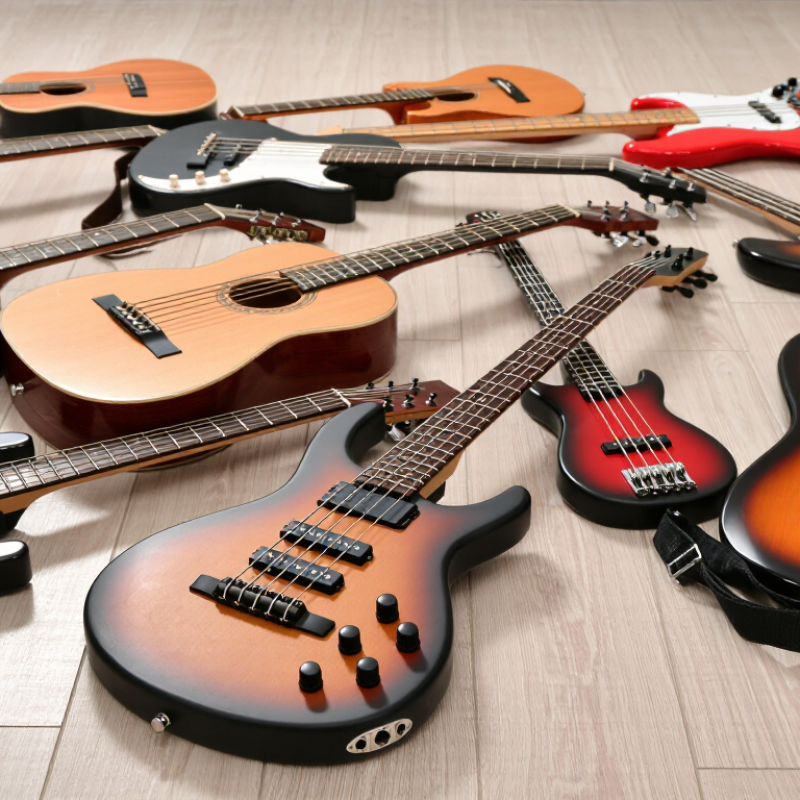
A left-handed guitar is usually a mirror-image instrument, not simply a right-handed guitar with its strings reversed. The nut slots must fit the thicker bass strings, and the saddle needs suitable compensation for accurate intonation. Controls and the output jack may also move, so check whether your picking hand can reach them comfortably. Small details matter.
A 2020 meta-analysis in Psychological Bulletin estimated that 10.6% of people are left-handed, but that figure is not a measure of guitar sales. Industry market summaries often group guitars by type rather than playing orientation, making a precise left-handed share difficult to verify. Configuration varies, too: some body shapes and bridges are reversible, while carved cutaways, angled pickups, or tremolo arms may not be. Acoustic guitars need particular care; reversing string order does not reverse internal bracing or saddle compensation. Compare the instrument’s nut, bridge, controls, and body shape before buying. A mirror can help. I would still test the reach and balance in person, because a specification sheet rarely shows how an instrument feels against your shoulder.
| Guitar Type | Common Configurations | Left-Handed Setup | Typical Use |
|---|---|---|---|
| Steel-String Acoustic | Dreadnought, concert, auditorium, and travel-size bodies; usually six steel strings. | The strings are arranged for a left-handed playing position, with the low-pitched string nearest the player’s right side when the guitar is held for playing. The nut and saddle are shaped and positioned for that string order. | Strumming, fingerpicking, songwriting, and unplugged performance. |
| Classical Acoustic | Typically a nylon-string guitar with a wider neck and a flat fingerboard. | A left-handed version has the string order reversed for left-handed playing. Because the nut slots and saddle compensation are matched to string thickness and pitch, simply restringing a right-handed instrument may not provide correct setup. | Classical repertoire, fingerstyle playing, and softer nylon-string tone. |
| Solid-Body Electric | Single-cutaway, double-cutaway, and non-cutaway body shapes; commonly six strings, with other string counts also available. | Purpose-built versions place the strings, nut, bridge, and controls for left-handed use. Control layout and access to switches may differ from a right-handed model. | Many styles, including rock, pop, blues, jazz, and amplified practice. |
| Semi-Hollow Electric | Hollow body with a central solid block; available in single- and double-cutaway designs. | Left-handed configurations reverse the string setup and may also reposition or mirror controls. Body shape and cutaway placement can affect access to upper frets. | Clean and lightly overdriven tones, jazz, blues, and ensemble playing. |
| Hollow-Body Electric | Resonant hollow body, often with one or more pickups and a floating or fixed bridge. | A left-handed setup needs the correct string order and a nut and bridge arrangement suited to it. Control placement and strap-button position vary by design. | Jazz, blues, and other styles that use a resonant amplified tone. |
| Left-Handed Guitar Made by Restringing | A right-handed instrument may sometimes be restrung in reverse, depending on its design. | Reversing the strings alone may leave the nut slots, saddle compensation, bridge, controls, or body cutaway poorly positioned. A technician may need to modify or replace parts; some designs are not practical to convert. | A possible option when a suitable purpose-built left-handed model is unavailable, after checking whether the instrument can be properly adjusted. |
Configuration note: In a conventional left-handed playing position, the picking hand is the left hand and the fretting hand is the right hand. Availability and details vary by instrument design; check the string order and setup before purchasing.
Dreadnoughts have broad bodies and strong bass, which can suit group strumming. Concert and orchestra shapes feel narrower against the ribs. Parlor guitars are compact and quieter. Size matters.
It may cause tuning or intonation problems. The nut slots, strings, and saddle compensation need to match left-handed playing. A careful conversion can work, but check the setup details.
Check neck comfort, body depth, string height, and access to upper frets. Try it seated and standing, if possible. I once underestimated body depth; the guitar felt tiring quickly.
Nylon strings generally feel gentler than steel strings. Classical guitars often have wider necks, which allow room for chord shapes but may challenge players with smaller hands. Try a few neck profiles.
Hold it in playing position and check that the thickest string sits on top. Ask whether it was built left-handed or converted. Look for even string height and stable tuning.
They still need strings and a setup arranged for left-handed playing. Some control layouts or cutaways may feel awkward on the opposite side. A pickup is useful for amplification, but not essential for practice.
Check string spacing, control placement, and strap-button balance. Try it seated, then standing with a strap. A bass that feels balanced in a chair may shift against your body.
Fretless, short-scale, and extended-range basses may be less available than standard models. Lap steel and baritone guitars also vary in layout. Photos can be misleading, so confirm which hand is meant to pick.
Left-handed guitars are designed to let left-handed players fret with the right hand and strum or pick with the left. Their layout may reverse the strings, controls, and other features found on a standard right-handed instrument, so choosing a guitar made specifically for left-handed playing can offer a more natural and comfortable experience.
There are several types to consider. Left-handed acoustic guitars range from steel-string models to compact designs, while electric guitars come in varied body shapes and configurations for different playing styles. Classical and nylon-string guitars offer a softer tone and feel, and left-handed bass guitars provide an option for players who want a reversed setup in a lower register. Specialty instruments add further possibilities. The right choice depends on preferred sound, comfort, playing style, and practical needs.