
A Five-string electric bass adds one lower string to the familiar four-string design. That extra string is usually tuned to low B, extending the instrument’s range below the standard low E. The other strings are commonly tuned E, A, D, and G. Together, they give players access to deeper notes without changing instruments or shifting every passage into a different position.
The added range can be useful in metal, gospel, jazz, and modern pop, where arrangements may call for notes beneath a standard bass’s reach. It can also make certain passages easier to play in one position. Not magic. A fifth string does not automatically make a bassist sound fuller or play better. Players must adapt to a wider neck, altered string spacing, and careful muting. Those details matter: an open low B can rumble through an otherwise clean mix if it rings unintentionally.
This guide explains what distinguishes a five-string bass, how its tuning and construction affect its sound, and what to consider before choosing one. Scale length, neck profile, pickups, and setup all vary between models, so the number of strings alone does not predict comfort or tone. A well-adjusted instrument can feel natural; a poorly matched one may feel like unnecessary work. It is worth questioning the common assumption that more range always means more useful range. For beginners and experienced players alike, the right choice depends on the music, the player’s technique, and how confidently those extra notes can be controlled.
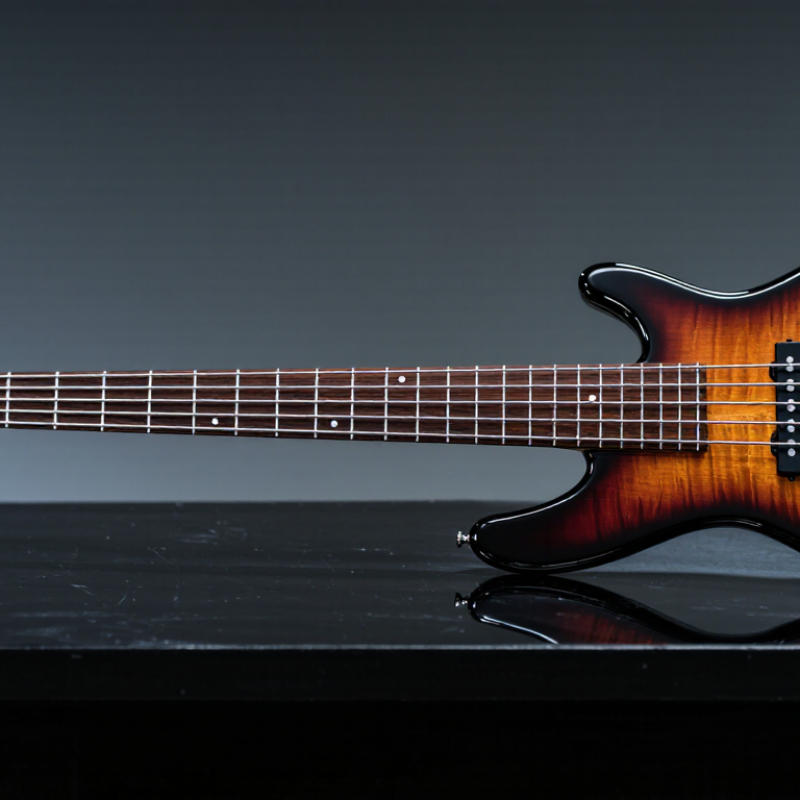
A five-string electric bass typically keeps the familiar E–A–D–G strings and adds a lower B string. This extends the instrument’s range without requiring a player to change position as often. The low B reaches about 30.9 Hz in standard tuning, calculated from the A=440 Hz reference in ISO 16:1975, Standard tuning frequency. More room below. That extra depth suits low-register riffs, extended chord tones, and arrangements that need a fuller bottom end.
The instrument’s role is practical, but not automatic. A low note can add weight to a band mix, yet it may blur if the amp or arrangement lacks definition. The B string also needs deliberate muting: its length can keep vibrating after a note ends. Players moving from four strings may find the neck wider or the string spacing tighter, depending on the instrument’s design. It can take time to adjust.
Tips: Let the low B ring, then mute it deliberately. Check intonation and tuning stability across the neck, especially around the fifth fret. Try a short phrase on both four- and five-string setups; the extra range only helps when the notes stay clear.
| Dimension | Typical Configuration or Fact | Practical Significance |
|---|---|---|
| Definition | An electric bass guitar with five strings, most commonly arranged from low to high as B, E, A, D, and G. | The added low string extends the instrument’s range below the standard four-string E-A-D-G setup. |
| Common tuning | B0–E1–A1–D2–G2 | The strings are generally tuned in perfect fourths, matching the usual interval pattern of a four-string bass. |
| Lowest open note | B0, approximately 30.9 Hz | Provides low notes useful for extended-range bass lines and arrangements in lower keys. |
| Other open-string notes | E1 (about 41.2 Hz), A1 (55.0 Hz), D2 (about 73.4 Hz), and G2 (about 98.0 Hz) | These are the same four open notes found on a conventionally tuned four-string bass. |
| Compared with a four-string bass | Adds one lower string while retaining the familiar E-A-D-G strings. | A player can reach lower pitches without retuning the whole instrument or changing to a different bass. |
| Neck and string spacing | The neck and nut accommodate five strings; spacing varies by instrument design. | The wider string set may take some adjustment for players used to four strings, particularly when muting strings cleanly. |
| Common musical roles | Used in many styles, including rock, metal, jazz, gospel, funk, and contemporary worship. | The low B can reinforce a song’s lower register, while the familiar upper four strings support standard bass parts. |
| Playing considerations | Requires clear muting and consistent technique across all five strings. | Good muting helps prevent unused strings from ringing, especially during low-register passages. |
Note: B-E-A-D-G is the most common five-string tuning, but alternate tunings and instrument specifications vary. The listed frequencies are approximate equal-tempered pitches at standard concert pitch.
It keeps E–A–D–G and adds a low B string. More room below.
In standard tuning, its open note reaches about 30.9 Hz. That is a deep rumble.
It can support low riffs, extended chord tones, and fuller arrangements. It does not automatically improve a mix.
The note may blur if the amp or arrangement lacks definition. Careful muting helps keep it tidy.
The neck may feel wider, and the strings may sit closer together. It can take time.
Often, yes. Many basses use a 34-inch scale; some use 35 inches. The longer scale may feel firmer.
No. String choice, setup, construction, and touch also matter. A spec sheet cannot tell the whole story.
Play the low B at the fifth fret, then compare it with the open string. Listen for volume and sustain.
Notice the reach near the first frets and check tuning across the neck. Different setups can muddy the comparison.
A Five-string electric bass extends the range of a standard four-string bass by adding a low B string. Its common tuning, from lowest to highest, is B₀–E₁–A₁–D₂–G₂, giving players access to deeper notes without changing the familiar tuning of the other four strings. The low B₀ has a frequency of about 30.87 Hz, compared with approximately 41.20 Hz for the low E₁ on a four-string bass. This extra range can support lower musical passages and offer more options for moving around the fretboard.
The longer strings and larger neck help accommodate the additional low string. Many five-string basses use a 34-inch scale, while some have a 35-inch scale to help the low string feel firmer and respond clearly. Neck width, nut design, and spacing between strings also affect comfort and playability. These dimensions vary, so players can choose an instrument whose layout suits their hands and preferred playing style.