
As a long-standing Japanese-engineered musical manufacturing powerhouse, our production lines bridge the gap between premium tonewood instrument crafting and electro-acoustic signal architecture. Explore our curated selection of export-ready musical hardware, pro-grade instruments, and matched assembly solutions.
In pro-audio procurement, an unbalanced guitar cable is not merely a copper hookup wire; it acts as an active reactive network directly tied to high-impedance (Hi-Z) passive magnetic pickups. An electric guitar pickup produces a delicate, high-impedance alternating voltage signal ranging from tens of millivolts to slightly over one volt, with source output impedances commonly between 6kΩ and 15kΩ. When an inferior bulk cable is introduced into this chain, the parasitic capacitance between the central conductor and the grounded return shield behaves as a low-pass filter, rolling off critical harmonics above 3 kHz and severely muffling resonant pick dynamics.
Our manufacturing facility addresses these electro-acoustic realities by producing CE-certified pro-audio bulk spools and custom pre-terminated cables engineered to suppress both microphonic handling noise and radio frequency interference (RFI). Every extrusion line operates under rigorous thermal and physical tolerances to maintain concentricity between the conductor core and the outer dielectric sheath, ensuring uniform characteristic impedance and structural durability over hundreds of gigging miles.
Drawing annealed 99.99% pure OFC wires reduces inter-crystalline boundary oxidation, minimizing micro-distortion and ensuring exceptionally transparent signal transmission across dynamic peaks.
Nitrogen gas foaming produces microscopic air pockets inside high-density polyethylene, dramatically dropping dielectric constants down to ~1.5 to achieve ultra-low core-to-shield capacitance below 68 pF/meter.
A specialized sub-shield layer made of semi-conductive carbon-infused PVC neutralizes triboelectric charges generated when stage performers step on or whip the cable, entirely eliminating mechanical handling clicks.
We utilize 95% to 98% optical coverage copper spiral (serve) or tin-plated interwoven braids to lock out electromagnetic interference (EMI) originating from stage dimmers, LED panels, and switched-mode power adapters.
Engineered PVC/TPE outer compounds maintain memory-free recoiling and superior flexibility down to -20°C, resisting abrasive dragging over stage risers, road cases, and concrete stadium surfaces.
Certified under European Directives 2014/30/EU (EMC), 2011/65/EU (RoHS Recast), and regulation (EC) No 1907/2006 (REACH), ensuring your shipments clear customs seamlessly with verified laboratory test certificates.
To assist distributor procurement managers, OEM brand buyers, and systems integrators in choosing the precise raw cable formulation for their brand portfolio, our factory standardizes three production tiers:
| Performance Parameter | Studio Master Class (Ultra-Low Cap) | Touring Stage Pro (Heavy Armor) | Commercial Line (High Flexibility) |
|---|---|---|---|
| Center Conductor Gauge | 20 AWG (0.52 mm²) / 50 Strands OFC | 22 AWG (0.34 mm²) / 42 Strands OFC | 24 AWG (0.22 mm²) / 28 Strands Pure Copper |
| Conductor DC Resistance | < 34 Ω/km | < 53 Ω/km | < 85 Ω/km |
| Core Dielectric Material | Gas-Injected Foamed PE (FPE, Ø 2.7mm) | Cross-linked Solid Polyethylene (PE) | High-Density Solid Polyethylene (HDPE) |
| Nominal Capacitance (Core-to-Shield) | 65 pF/m (19.8 pF/ft) | 88 pF/m (26.8 pF/ft) | 115 pF/m (35.0 pF/ft) |
| Anti-Microphonic Buffer | Conductive Carbon PE Layer (0.30mm) | Extruded Carbon PVC Semi-Conductive Sheath | Graphite Saturated Polymer Coating |
| Outer Shielding Architecture | Double Shield: Carbon + 98% OFC Spiral | Interwoven 95% Tinned Copper Braid | Spiral 90% Bare Copper Wrap |
| Outer Jacket Formulation | Matte Ultra-Flex Hybrid PUR/PVC (Ø 6.8mm) | Heavy-Duty Abrasion PVC (Ø 7.0mm) | Standard High-Gloss PVC (Ø 6.0mm) |
| CE Certification Standards | EN 55032, EN 55035, RoHS, REACH | EN 55032, EN 55035, RoHS, CPR Class Eca | EN 55032, RoHS 2011/65/EU |
International supply chains within the musical instrument and pro-audio sectors are transitioning rapidly under new environmental mandates, fluctuating raw commodity values, and shifting retail expectations. Procurement leaders sourcing bulk instrument spools must align with forward-looking industrial trends to maintain healthy margin structures and avoid customs friction.
European and North American legislative frameworks are pushing toward halogen-free compounds. Low-Smoke Zero-Halogen (LSZH) and fully recyclable Thermo-Plastic Elastomer (TPE) jackets eliminate toxic dioxins and corrosive acids during combustion while maintaining road-grade flexibility.
Brand owners are consolidating their assembly processes by ordering pre-printed bulk spools with laser-engraved length markers, localized branding, and integrated retro-tweed braided cloth over-jackets applied directly during initial factory compounding.
The explosion of digital amp modelers (Kemper, Quad Cortex, Helix) demands linear frequency bandwidth down to the low millihertz. Modern guitarists expect cables that do not color high-frequency transient response before high-resolution analog-to-digital converters.
Manual hand soldering is giving way to automated robotic soldering and ultrasonic cold-welding processes. This transition reduces cold-joint defect rates to virtually zero PPM (parts per million), ensuring mechanical stability under harsh stage torque.
Tier-one retail chains now mandate verifiable chain-of-custody documentation for raw electrolytic copper and lead-free alloy solder baths, requiring manufacturers to operate clean, solar-supported production floors with comprehensive wastewater filtration.
Procurement managers are favoring universal bulk cable diameters (typically 6.5mm to 7.0mm) optimized to accept industry-standard 1/4" phone plugs (Neutrik, Amphenol, Switchcraft, GOTOH) without requiring custom strain-relief chucks or oversized rubber boots.
Our industrial ecosystem traces its manufacturing discipline back to 1956 in Nagoya, Japan. Across seven decades of musical instrument production—spanning legendary concert guitars, high-performance electric instruments, and world-renowned OEM hardware distribution—we have preserved an uncompromising commitment to acoustic fidelity and mechanical durability.
When you partner with our manufacturing plants for CE certified bulk cables and finished musical hardware, your organization gains strategic manufacturing benefits:
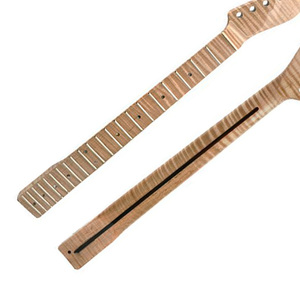
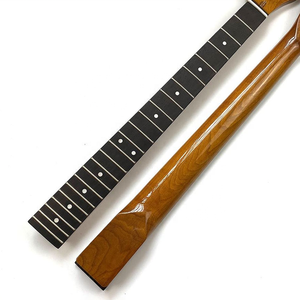
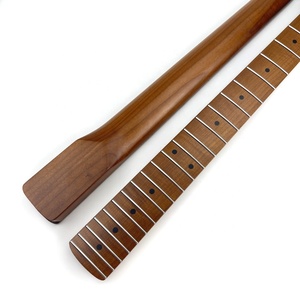
Our engineering protocols originate from Japanese lutherie and electrical tooling traditions, ensuring consistent tolerances whether winding guitar pickups, milling roasted maple necks, or extruding kilometer-long cable drums.
Trusted by international artists and master builders across Europe, the Americas, and Japan. Our equipment has withstood rigorous world touring schedules, stadium stages, and top-tier recording studio demands.
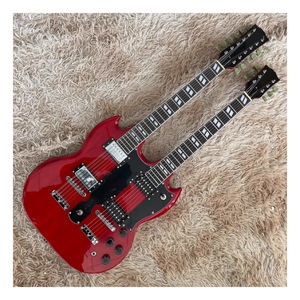
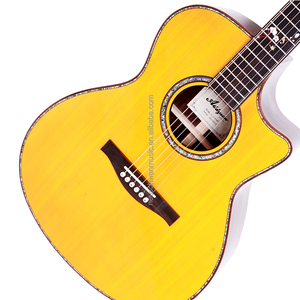
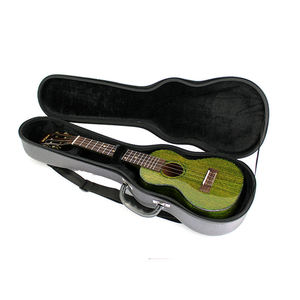
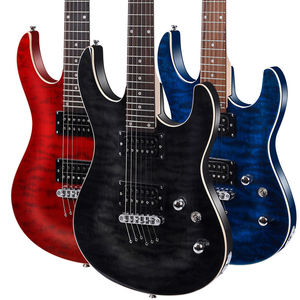
Beyond bulk spooled wire, our factory manufactures complete electric guitars, solid wood acoustics, master replacement necks, and custom molded hardshell cases—enabling one-stop FOB container consolidation.
Each extrusion lot undergoes continuous spark testing at 3000V AC to catch pinhole dielectric faults, accompanied by flex-fatigue tests (exceeding 50,000 bend cycles) and real-time capacitance logging.
We support growing boutique brands and global master distributors alike with scalable minimum order quantities starting from 1,000 meters for custom printed bulk spools, complete with private labeling and custom Pantone jackets.
Every shipment includes authentic Certificates of Origin, CE Declarations of Conformity, RoHS lead-free lab test reports, and customs-ready commercial invoices for rapid port clearance in the EU, UK, US, and APAC markets.
Our commercial engineering team has compiled direct answers to technical, regulatory, and logistics inquiries commonly raised by pro-audio procurement managers, guitar accessory brand directors, and international importers:
Every commercial bulk order is issued with a comprehensive Technical Compliance Dossier. This includes an official CE Declaration of Conformity referencing the Electromagnetic Compatibility (EMC) Directive 2014/30/EU and low-voltage electrical safety standards. Furthermore, we provide certified third-party laboratory test reports validating RoHS Directive 2011/65/EU and amendment (EU) 2015/863 compliance, proving that concentrations of lead, mercury, cadmium, hexavalent chromium, PBBs, PBDEs, and phthalates (DEHP, BBP, DBP, DIBP) remain well below statutory limits. For European building installations or touring venue applications, Construction Products Regulation (CPR) EN 50575 Euroclass fire reaction certifications (Class Eca or Dca) are available upon request.
In high-impedance unbalanced audio circuits, the passive guitar pickup acts as an inductor (L), its internal wiring provides resistance (R), and the guitar cable provides parallel capacitance (C) to ground. This forms a classic resonant RLC low-pass filter. If a cable exhibits high capacitance (e.g., >140 pF/meter), a typical 6-meter (20-foot) stage run adds over 840 pF of capacitance. This drags the natural resonant peak of the pickup down from an airy 4.5 kHz down into the muddy 2.0 kHz range, permanently attenuating pick attack, note articulation, and harmonic overtones. Our Studio Master bulk cables maintain a low capacitance of ~65 pF/meter, preserving full-spectrum fidelity even across extended 10-meter stage performances without requiring active buffer pedals.
When an instrument cable is stepped on, bent, or whipped across a stage floor, the physical friction between the dielectric insulator and the metallic copper shield creates static friction charges—a phenomenon known as the triboelectric effect. In high-impedance instrument circuits, these microscopic electrical charges manifest as loud, annoying thumps and crackles through high-gain amplifiers. By extruding a layer of conductive carbon-loaded PVC or PE directly over the primary dielectric before applying the copper shield, static surface charges are instantly dissipated to ground before they can discharge into the high-impedance center conductor core.
Our standard MOQ for custom-branded bulk cable runs is 1,000 meters per specification. This includes high-resolution surface inkjet or laser marking with your custom brand name, model numbers, regulatory CE markings, and sequential meter/foot graduation marks. Standard production lead times for custom extrusion runs range from 20 to 30 calendar days upon final artwork approval. For pre-packaged, finished retail cables with custom blister cards, header cards, or tin gift box packaging, typical MOQs are 500 completed units per SKU.
Yes. In addition to delivering 100-meter and 300-meter wooden or plastic master spools, our secondary assembly lines feature cleanroom soldering stations equipped with temperature-regulated lead-free solder baths, automatic wire stripping machinery, and heat-shrink printing systems. We can terminate assemblies using our proprietary heavy-duty gold/nickel-plated 1/4" straight and right-angle plugs, silent-switching jacks (which short the circuit automatically during instrument swaps to prevent pop noises), or genuine connectors from third-party manufacturers such as Neutrik, Amphenol, or Switchcraft.
Quality assurance is embedded at every phase of wire production. We utilize specialized testing apparatuses to simulate real-world stage fatigue. Samples from each extrusion batch undergo a continuous reciprocating bend test (under 500g tension at a 180-degree bend radius) where the cable must achieve over 50,000 cycles without conductor breakage or short-circuiting. Tensile strength tests mandate that the outer jacket and conductor assembly withstand greater than 250 Newtons of axial pull force. Furthermore, thermal cycling tests ensure that jacket elasticity and dielectric concentricity remain fully uncompromised between -20°C and +70°C.
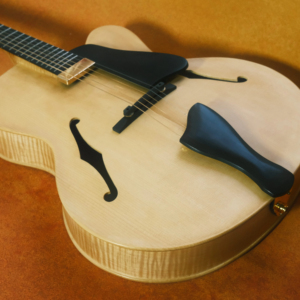
Absolutely. One of our most distinct competitive advantages as an integrated musical instrument group is freight optimization. B2B buyers can consolidate multiple product lines—such as master electric guitars, handcrafted jazz instruments, roasted maple replacement necks, molded hardshell flight cases, and pallets of bulk cable spools—into unified 20GP or 40HQ container shipments. This consolidation drastically reduces sea freight overhead, minimizes clearing fees, and maximizes inventory turnover across diverse catalog categories.