Engineering White Paper: CE Certification Standards for Electric Guitar Transducers
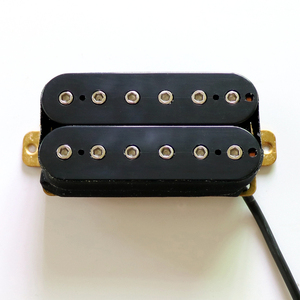
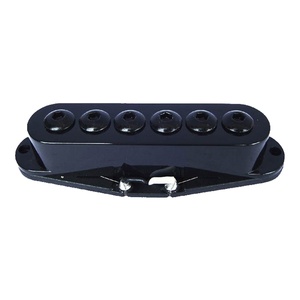
For musical instrument OEMs, distributors, and contract lutherie brands, sourcing CE certified electric guitar pickups is not merely an administrative checkbox—it is a critical prerequisite for commercial importation into the European Economic Area (EEA), the United Kingdom (under UKCA mutual recognition), and international markets enforcing strict electromagnetic compatibility and chemical safety directives.
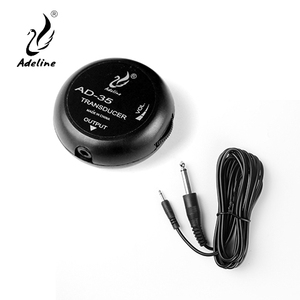
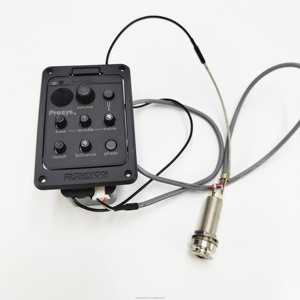
While traditional passive pickups are primarily inductive coils wound around permanent magnets, modern musical instrument manufacturing demands rigorous compliance with the EMC Directive 2014/30/EU, the RoHS Directive 2011/65/EU (and amendment 2015/863/EU), and the Low Voltage Directive (LVD) 2014/35/EU for active preamp-driven and digital transducers such as the OS1 Intelligent Shock system and Fishman 201 EQ circuits.
Electromagnetic Immunity (EMC)
Active circuits and preamps are tested against RF radiation, electrostatic discharge (ESD EN 61000-4-2), and high-frequency power fluctuations to prevent spurious buzz, EMI hum, and stage RF interference.
RoHS 2.0 Heavy Metal Proscription
Every batch of enameled magnet wire, nickel-silver baseplates, Alnico/Ceramic magnets, and soldering alloys is analyzed via ICP-OES to guarantee zero presence of lead, cadmium, mercury, and restricted phthalates.
Acoustic Microphony Control
Utilizing high-temperature paraffin and beeswax vacuum impregnation cycles, our coils reach full internal penetration, banishing unwanted parasitic microphonic feedback at stage sound pressure levels exceeding 115dB.
Transducer Laboratory Compliance & Acoustic Verification Matrix
To provide international procurement directors with transparent traceability, our production facility adheres to the following testing criteria for every batch shipped:
| Inspection Protocol |
Reference Directives |
Laboratory Equipment Applied |
Acceptance Threshold |
Status |
| Conducted & Radiated Emissions |
EN 55032 / CISPR 32 |
Rohde & Schwarz EMI Test Receiver |
Class B Residential Limits (<30dBµV/m) |
Certified Pass |
| RoHS Hazardous Materials |
2011/65/EU & 2015/863 |
Shimadzu EDX-7000 Energy Dispersive XRF |
Pb, Cd, Hg < 100ppm; Cr(VI), PBB < 1000ppm |
Certified Pass |
| Magnetic Flux Density (Br) |
MMPA 0100-00 Standards |
FW Bell 5180 Digital Hall-Effect Gaussmeter |
Alnico II: 650–750G / Alnico V: 1050–1200G |
Certified Pass |
| DC Resistance & Inductance |
IEC 60068-2-1 / ISO 9001 |
Keysight E4980AL Precision LCR Meter |
DCR Tolerance ±2.5%; Inductance ±3% at 1kHz |
Certified Pass |
| Thermal & Moisture Aging |
MIL-STD-202G Method 106 |
ESPEC Constant Temp & Humidity Chamber |
40°C @ 90% RH for 96 Hours without DCR Drift |
Certified Pass |
Why Premier Brands Choose Our Sourcing Infrastructure
Rooted in Japanese musical instrument manufacturing traditions established in Nagoya, Japan in 1956, our operational DNA reflects seven decades of acoustic and electrical engineering. Following the high benchmarks that defined legendary instruments like the Aria Pro II PE series guitars and the world-renowned SB bass series—immortalized by virtuosic players such as Metallica’s Cliff Burton—we bring historic Japanese planning, strict inspection disciplines, and global logistics reliability to every B2B client relationship.
Nagoya Engineering Heritage
Product planning, magnetic voicing curves, and QA protocols stem from Nagoya, Japan. Every pickup model is audited against time-tested harmonic profiles before mass production tooling begins.
Official GOTOH & Augustine Partner
As the long-established official global export partner for GOTOH precision machine heads and Augustine classical strings, our operational logistics adhere to top-tier Japanese supply chain accountability.
Global Distribution in 60+ Nations
From authorized hubs across Europe, the Americas, and APAC, we deliver consistent OEM batch supply with end-to-end container tracking, bonded customs compliance, and zero-defect delivery.
Future Procurement Trends in Electric Guitar Pickups (2025–2030)
The electric stringed instrument landscape is undergoing rapid technological and environmental shifts. Brands and distributors planning catalog expansions must anticipate three dominant procurement vectors:
1. Multi-Voice Hybrid Pickups & Smart Acoustic Systems
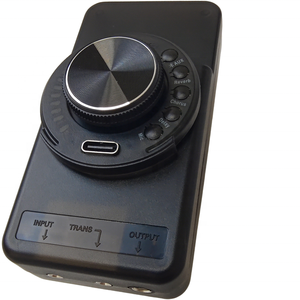
As exemplified by the OS1 Double Digital Intelligent Shock Pickup, guitarists increasingly demand standalone, amplifier-free DSP modulation, onboard room reverb, and delay generated by mechanical body transducers. Sourcing departments are moving beyond pure copper-and-magnet bobbins into integrated micro-circuitry requiring unified CE-LVD safety and UN38.3 lithium battery certifications.
2. Sustainable Tonewood Matching via High-Flux Low-Turn Transducers
With CITES regulations restricting rosewood and mahogany species, luthiers are embracing alternative body woods such as roasted poplar, paulownia, and basswood. Because these lighter woods have unique resonant peaks, pickup suppliers are developing custom winding topologies—such as our Donlis DH05 hex-pole geometry—that compensate for altered body resonant frequencies with widened magnetic windows.
3. Total Chemical Traceability & Extended Producer Responsibility (EPR)
European Union directives now enforce complete supply-chain auditing under REACH (EC 1907/2006). Major guitar brands cannot risk import delays due to non-compliant wiring jackets or toxic potting compounds. Choosing an audited manufacturer with third-party CE and RoHS documentation has become an existential operational shield for importers.