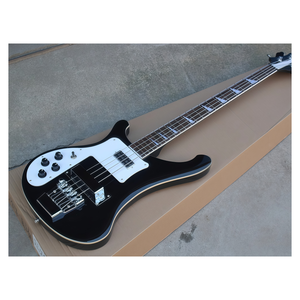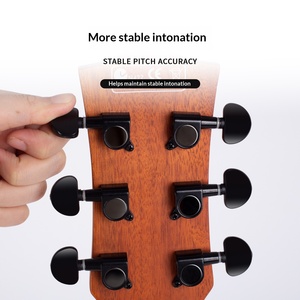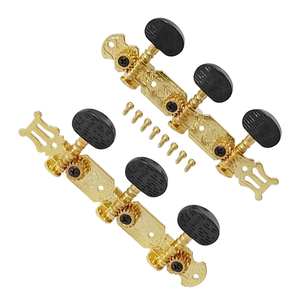
Precision-matched core wire assemblies, necks, and electro-acoustic hardware manufactured under rigorous Japanese and international metallurgical benchmarks.
Combining 70 years of Japanese artisan direction since 1956 with high-throughput modern alloy processing plants.
Every wire batch conforms strictly with the European Union General Product Safety Directive (GPSD), REACH (EC 1907/2006) for non-hazardous contact metals, and RoHS compliance. Tested rigorously against nickel oxidation, sweat corrosion, and harmonic fatigue.
Founded by Shiro Arai in Nagoya in 1956, our strict metallurgical controls guide the winding tightness, hexagonal core grip, and ball-end lock twists. Serving historically as official export partner for legendary brands such as GOTOH parts and Augustine strings.
From custom gauge formulations for private OEM labels to heavy-duty bulk packaging for high-capacity assembly plants across Europe, North America, and Southeast Asia. Direct factory export with complete bill-of-lading transparency and stable lead times.
Strategic analysis for tier-1 distributors, brand managers, and instrument factories navigating 2026–2030 supply chains.
In modern industrial guitar construction, strings are no longer treated as simple consumables; they are acoustic transducers operating at the nexus of tensile mechanics and electromagnetic induction. The transition towards high-performance core wire metallurgy and automated micro-winding has rewritten quality benchmarks for commercial OEM procurement.
Global procurement teams must balance three critical vectors: Tensile Yield Optimization (Modulus of Elasticity), Electromagnetic Permeability (Barkhausen Effect consistency), and Environmental Anti-Oxidation Compliance (Micro-Polymer vs. PVD Molecular Vapor Coatings).
| Alloy Formulation | Magnetic Permeability (μ) | Tensile Strength (MPa) | Corrosion Resistance | Primary Industrial Application |
|---|---|---|---|---|
| Nickel-Plated Steel (NPS 8%) | High (~400-500) | 1800 - 2100 | Moderate (Industrial Standard) | All-round Rock/Pop OEM line-up, versatile balanced response |
| Pure High-Carbon Swedish Hex-Core | Extreme (~800) | 2300 - 2600 | High (When Passivated) | Drop-tuning precision, extended-range 7/8 string configurations |
| Stainless Steel 430 Magnetic Ferritic | Ultra-High (~600) | 2000 - 2200 | Superior (Sweat/Acid Proof) | High-gain modern heavy metal, excessive wear resistance |
| Graphene/PVD Nano-Shielded Alloy | Stable (Linear Flux) | 2200 - 2500 | Maximum (>500h Salt-Spray Test) | Premium studio grades, tropical climate export, boutique retail |
Traditional round core wire is widely substituted by micro-drawn hexagonal Swedish steel cores featuring sharp angular bite indices. This mechanical geometry eliminates the acoustic "dead core slippage" phenomenon during hard tremolo bends, maintaining pitch integrity across high-tension performance cycles.
The global regulatory clampdown on volatile organic compounds (VOCs) and hazardous spray-finishes has catalyzed the development of sub-micron thickness vapor deposition. These ultra-thin films preserve genuine raw-steel fret-feel while expanding string longevity by up to 450% without choking tonal overtone decay.
With progressive metal and modern fusion demanding multiscale, fanned-fret, and low-tuned architectures (F# and Drop-A tunings), B2B string manufacturing now prioritizes gradual taper winding near the ball-ends. This engineering eliminates inharmonic overtone clustering across 27" to 30" scale lengths.
Tailoring factory inventories to customer segments to maximize sell-through velocity and brand equity.
Target Profile: High-volume retail packs, standard OEM setups for ST/TL electric guitars.
Acoustic Character: Crisp high-mid cut, smooth tactile friction, balanced pickup output.
Core Architecture: High-carbon steel plain strings coupled with precision-wound 8% nickel-plated wire over hex core.
Target Profile: Hard rock, metalcore, and modern progressive instrument builders.
Acoustic Character: Tight low-end response, eliminated "string flap", instant dynamic attack under high gain.
Core Architecture: Enlarged hexagonal mandrel with dual-compression winding to withstand extreme cyclic strain.
Target Profile: 5-string, 6-string bassists, and professional session players.
Acoustic Character: Deep fundamental note stability, rich overtone bloom echoing classic SB-series punch.
Core Architecture: Multi-layer wound alloy cores with reinforced ball-end lock twisting for active pickup response.
Direct answers addressing industrial procurement criteria, compliance audits, and custom OEM manufacturing.
Empower your brand portfolio with precision-engineered, CE-compliant electric guitar strings, premium hardware, and complete OEM supply chain integration. Request our comprehensive industrial catalog today.
Get Catalog