Roasted Series

Years of Craft Heritage (Since 1956)
CE, RoHS & REACH Compliance
Global Transit RMA / Defect Ratio
Active International Distribution Hubs
Tested for European and North American market import compliance, stable under differing ambient humidity levels, and matched with low-impedance preamp circuitry.
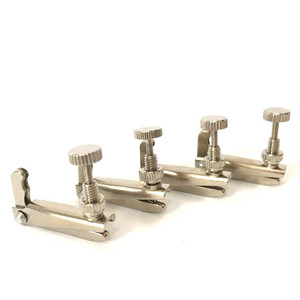
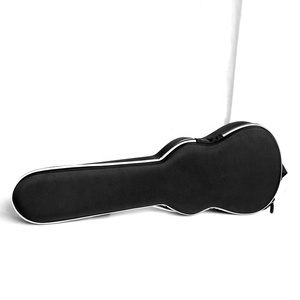
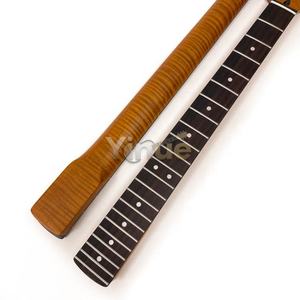
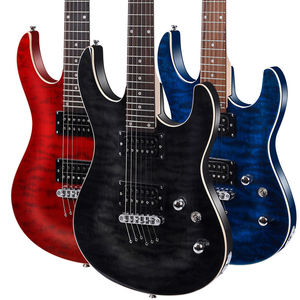
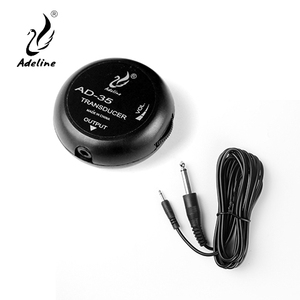
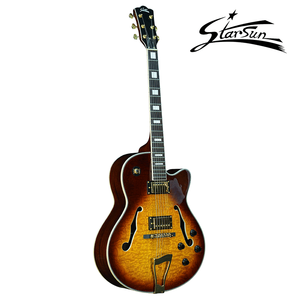
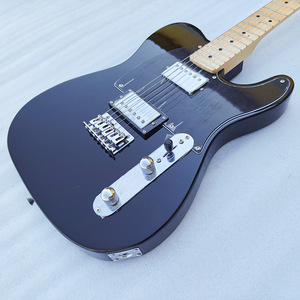
In modern musical instrument exportation, delivering a reliable electro-acoustic guitar goes far beyond pairing a standard acoustic soundboard with an undersaddle piezo strip. Professional international distributors require instruments that withstand rigorous multi-climate logistics while delivering pristine, hum-free audio fidelity straight into high-impedance PAs, digital audio workstations (DAWs), and stage amplifiers. As an experienced exporter backed by seven decades of Japanese design heritage established in Nagoya in 1956, our guitar architectures blend acoustic tone preservation with certified electronics.
The natural projection of an electro-acoustic instrument depends on soundboard dynamics. Our soundboards utilize carefully selected Sitka Spruce, Engelmann Spruce, and resonant Mahogany, balanced via computer-optimized scalloped X-bracing. When the internal transducer pickup system—such as our discrete ceramic piezo sensors or dual-source contact transducers—is engaged, the acoustic top must resonate freely without triggering low-frequency microphonic feedback. Our CE-certified preamplifiers incorporate discrete operational amplifiers (Op-Amps), active 3-band semi-parametric equalizers, and phase reversal circuits engineered to minimize RF interference and harmonic distortion across line-level stages.
Built-in preamps and active EQ circuits are fully tested under Directive 2014/30/EU (EMC) and RoHS Directive 2011/65/EU to eliminate stage noise, hum loops, and electromagnetic pollution.
Discrete low-draw FET circuits maintain high battery longevity and balanced XLR / 6.35mm dual outputs, ensuring sound engineers capture high dynamics with negligible self-noise.
Thermal stability engineering ensures necks withstand transatlantic shipping container humidity changes (RH 35% to 85%) without neck warp or fret-end sprout.
Strategic purchasing insights for B2B instrument distributors, music school suppliers, and national department chains.
Purchasers are shifting heavily toward baked and roasted maple/spruce components. Torrefaction removes residual sap and hemicellulose, eliminating seasonal timber contraction and giving instruments immediate vintage acoustic resonance.
The rise of busker-friendly actuators and smart DSP preamps enables chorus, reverb, and delay resonance directly inside the acoustic body without requiring external pedals or cabinets—a massive growth category in consumer retail.
Stricter border inspections require transparent supply chain records. Exporters utilizing engineered Rosewood, Blackwood laminates, Richlite fretboards, and fast-growing Okoume allow distributors to bypass costly phytosanitary customs holds.
Operating continuously since 1956 under the vision of founder Shiro Arai, our enterprise bridges vintage luthier principles with industrial-grade international shipping capabilities. From the renowned PE-Series solidbodies and historic SB-Series basses to our delicate classical and dreadnought electro-acoustics, our products undergo triple-phase inspection protocols:
Every batch of spruce, okoume, and maple is calibrated in humidity-controlled kilns until an optimum moisture equilibrium (6% to 8%) is reached, guaranteeing structural integrity across global destinations.
Every neck is checked for exact fret seating, leveling, and hand-dressed beveling to eradicate sharp fret tangs, achieving buttery low-action string setups out of the box.
As the official export distributor for premier GOTOH hardware and Augustine classical strings, along with our proprietary Pignose portable sound solutions, we furnish guitars equipped with world-class tuning stability.
Clear answers regarding certifications, container loadings, OEM customization, and warranty fulfillment.
Expand your showroom and wholesale margins with CE-certified electro-acoustic guitars, vintage reissue solidbodies, and performance hardware. Inquire directly with our global distribution office to obtain volume pricing schedules, technical schematics, and sample orders.