
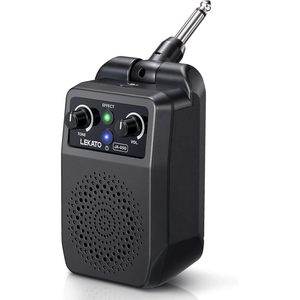
Featured Manufacturing Lines & Specialized Components
Tested for climatic stability, acoustic low-frequency projection, and tight tolerances under international freight conditions. Request instant container quotes or custom specifications.
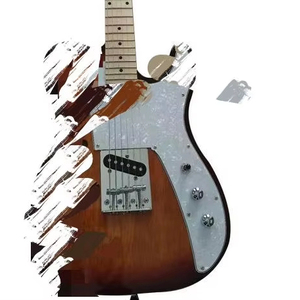
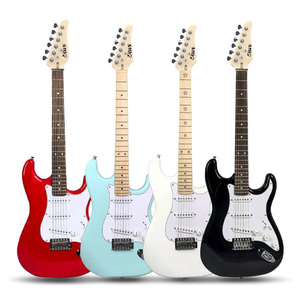
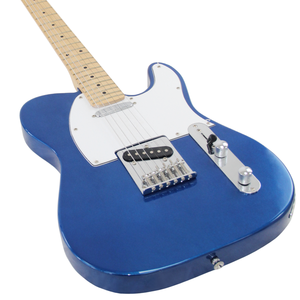
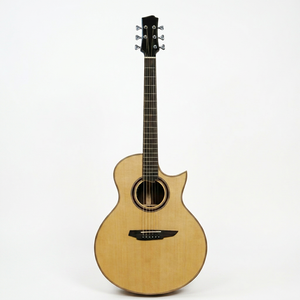
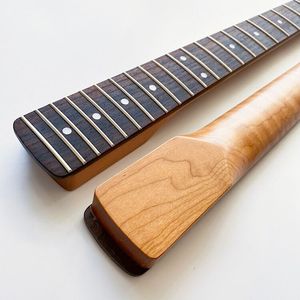
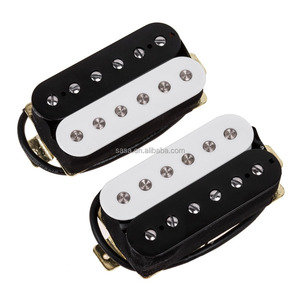
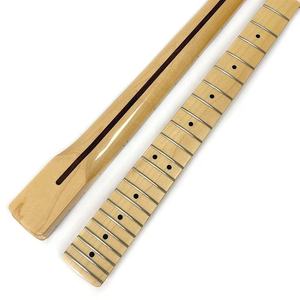
38,000+
Annual Bass Units Shipped
±0.02mm
Fretwork & Pocket CNC Tolerance
8.2%
Kiln-Dried Moisture Equilibrium
70+
Years Combined Luthier Heritage
Acoustic Bass Engineering: Solving Low-Frequency Projection & Structural Tension
Acoustic bass guitars present one of the most intricate mechanical challenges in fretted string instrument manufacturing. Unlike standard acoustic guitars operating in the 82 Hz to 1 kHz fundamental range, a 4-string acoustic bass requires fundamental tone projection down to E1 (41.2 Hz), while a 5-string model must articulate B0 (30.87 Hz). In conventional acoustic guitar bodies, an 80 mm to 100 mm soundbox fails to generate sufficient air displacement (Helmholtz resonance) to transmit fundamental sub-frequencies unamplified without suffering from destructive internal phase cancellations or immediate feedback when electrified.
As a specialized Chinese manufacturing and engineering partner, our facilities resolve this acoustic paradox through rigorous physical modeling, proprietary bracing geometry, and targeted mass distribution. The goal is to provide international instrument brands and distributors with instruments that deliver authoritative unplugged acoustic response and zero-hum, phase-aligned amplified performance under gigging conditions.
Optimized Helmholtz Resonance
We configure our acoustic bass bodies with deepened lower bouts (115 mm to 128 mm) and strategically dimensioned parabolic soundholes. This lowers the internal air cavity's fundamental air mode (A0) to approximately 55 Hz to 62 Hz, ensuring that low notes are reinforced naturally rather than choked within the body chamber.
- Jumbo & Grand Concert acoustic bass contours
- Off-center upper-bout sound ports for player monitoring
- Scalloped parabolic tone bars supporting sub-bass frequencies
Counteracting Heavy String Tension
A typical set of phosphor bronze acoustic bass strings (0.045 to 0.100) exerts an aggregate tension of over 170 to 195 lbs against the soundboard and neck joint. Standard acoustic guitar X-braces will buckle or belly out within months under varying global humidity cycles.
- Multi-ply dual-carbon fiber rod neck reinforcement
- Quartersawn Sitka & Engelmann spruce scalloped X-bracing
- Hardrock maple bridge reinforcement plate preventing bellying
Under-Saddle & Preamp Co-Design
Piezoelectric transducers designed for 6-string acoustics fail on basses, resulting in thin, clacky, or dynamically compressed output. We engineer discrete, wide-bandwidth piezo crystals calibrated explicitly for high-transient low frequencies.
- Sub-harmonic analog active preamps with notch filter
- Balanced XLR out + unbalanced 1/4" TRS jack interfaces
- Individual saddle elements ensuring equal string-to-string balance
Procurement Specification Matrix
Acoustic Bass Build Standards: Entry, Mid-Tier & Master Luthier Grades
A reference architecture for brand owners planning product catalog segmentation. All models are manufactured to rigorous climatic tolerances ensuring zero post-delivery bridge lift or fret sprouting.
| Feature Parameter | Commercial Tier (Entry-Level) | Professional Stage (Mid-Tier) | Master Craft Series (Top-Tier OEM) |
|---|---|---|---|
| Scale Length Options | 30" Short Scale / 32" Medium Scale | 32" Medium / 34" Long Scale Standard | 34" Long Scale / 35" Extended 5-String |
| Soundboard (Top Wood) | Laminated Engelmann Spruce or Agathis | Solid A+ Grade Sitka Spruce / Western Red Cedar | Master Grade Solid AAA Engelmann Spruce / Torrefied Pine |
| Back & Sides | Laminated Sapele or Mahogany | Layered Walnut or Flamed Okoume | Solid Indian Rosewood, Ovangkol, or Flamed Maple |
| Neck Construction | 1-Piece Nato with Dual-Action Truss Rod | 3-Piece Canadian Hardrock Maple w/ Carbon Rods | 5-Piece Roasted Flame Maple / Walnut Lamination |
| Internal Bracing | Standard Scalloped Radial X-Bracing | Hand-Scalloped Quartersawn Spruce Bracing | Custom Asymmetric Tone-Bar Pattern + Carbon Tops |
| Electronics / Preamp | 3-Band EQ Preamp w/ Integrated Chromatic Tuner | Fishman Presys+ or Custom Voiced Under-Saddle | Dual-Source Blend (Under-saddle Piezo + Internal Condenser Mic) |
| Environmental Stability | Controlled at 45%–55% RH during assembly | Fully Climate-Stabilized (50-Day Conditioning) | Thermo-Treated (Torrefied) Structure for Global Road Use |
| Minimum Order Quantity (MOQ) | 100 Pieces / SKU | 50 Pieces / SKU | 24 Pieces / SKU |
Future Procurement Trends: Where Acoustic Bass Manufacturing is Heading (2025–2030)
B2B procurement teams, brand executives, and musical instrument importers are operating in an evolving regulatory and consumer landscape. Over the next five years, success in marketing acoustic bass guitars will not depend solely on price per unit, but on mitigating timber regulatory friction, adopting sustainable tone-enhancing technologies, and serving emerging consumer use-cases.
1. Rapid Shift Toward CITES-Exempt Tonewoods
Global scrutiny over Rosewood (Dalbergia) and genuine Mahogany (Swietenia macrophylla) has created port delays and complex Lacey Act/CITES documentation. Leading brands are pivoting to engineered thermally modified alternatives:
- High-density Laurel and Blackwood Tech fingerboards replacing Rosewood
- Fast-growing Paulownia and bamboo internal reinforcements
- Sustainable Okoume and Sapele with certified FSC chain of custody
2. Torrefaction (Thermo-Curing) Standardization
Humidity discrepancies between manufacturing hubs in Asia and retail markets in North America, Northern Europe, or Australia historically caused neck warp and sunken soundboards. Torrefaction (baking wood in an oxygen-deprived kiln at 180°C–220°C) is transforming OEM bass production:
- Crystallizes hemicellulose, mimicking decades of natural aging
- Reduces moisture absorption by up to 50% relative to green wood
- Produces instantaneous vintage growl and projection right out of the box
3. Expansion of Compact & Hybrid Form Factors
The standard 34" long-scale acoustic bass is physically cumbersome for couch practice, nomadic busking, and bedroom songwriting. Purchasing patterns show sharp upward trajectory for alternative geometries:
- 24" to 28" micro-scale basses paired with specialized high-density polymer strings
- Thinline acoustic-electric bodies (70 mm to 85 mm depth) with anti-feedback sound chambers
- Onboard Bluetooth receiver preamps for direct mobile backing-track jamming
Engineering Advancements
Product Innovation: How Modern Acoustic Basses Are Evolving
The boundary between pure traditional lutherie and high-tech manufacturing is disappearing. Discover how advanced tooling, algorithmic voicing, and modular electronics are reshaping our production line output.
Algorithmic Bracing & Plek Machine Finishing
Historically, acoustic guitar voicing relied on intuitive hand-shaving of top braces. Our facility integrates automated finite-element acoustic deflection measurement alongside German-engineered Plek machine nut-and-fret cutting. Every fret is dressed to individual string trajectory tolerances within 0.01 mm, eliminating buzz along the low register.
Dual-Source Hybrid Transducer Systems
Traditional piezo quack is universally disliked by bassists. Modern market trends demand the natural warmth of acoustic resonance combined with the fast transient punch of magnetic or condenser pickups. We offer proprietary hybrid systems integrating under-saddle transducers with miniature internal boundary microphones or discreet neodymium magnetic coils nestled at the end of the fingerboard.
Ultra-Thin Polyurethane & UV-Cured Finishes
Heavy polyester finishes choke soundboard flexibility, stifling crucial low-frequency harmonic overtones. Our automated robotic spray lines apply microscopically calibrated 0.12 mm UV-cured acrylic/polyurethane lacquer coatings that provide roadworthy scratch and ding resistance while allowing the soundboard to flex with unrestricted acoustic resonance.
Manufacturing Authority
Why Global Brands Choose Us: Decades of Luthier Heritage & Japanese QC Discipline
Drawing on an established manufacturing background shaped by decades of Japanese quality-control partnerships—including historical engineering linkages with icons like Aria, Aria Pro II, and world-class hardware titans such as GOTOH and Augustine—our manufacturing complex pairs artisanal precision with high-capacity industrial throughput.
Master Wood Aging
We maintain an on-site, naturally ventilated warehouse storing over 120,000 board feet of tonewood aged 3 to 10 years, stabilized in humidity-controlled balancing kilns prior to precision carving.
5-Axis CNC Precision
All neck profiles, heel joints, dovetail mortises, and acoustic bridge placements are machined on high-precision 5-axis CNC centers, guaranteeing millimeter-perfect action and effortless intonation setup.
Rigorous Climate Stress
Every batch of finished instruments undergoes a 72-hour environmental stress cycle inside specialized chambers shifting from 20% to 85% RH and 5°C to 45°C before final clearance.
B2B Logistics Mastery
From drop-tested retail mail-order packaging to custom moisture-barrier export cartons and complete CITES documentation support, we protect our clients from supply chain disruptions.
Procurement Knowledge Base
Frequently Asked Questions for Guitar Importers, Brands & Wholesalers
Comprehensive insights addressing MOQ requirements, custom branding, tonewood compliance, and long-range shipping logistics.
What is your typical Minimum Order Quantity (MOQ) for custom-branded acoustic bass guitars?
For full OEM/ODM manufacturing featuring custom headstock logos, personalized neck profiles, laser-etched internal labels, and bespoke electronics packaging, our standard MOQ is 50 to 100 units per specification depending on tonewood availability. For catalog-standard baseline models or existing open molds with minor private-label silk-screen branding, trial orders as small as 24 to 30 units can be accommodated. We also support container-level multi-model consolidation across electric guitars, bass instruments, and tonewood accessories.
How do you prevent bridge lift and top bellying on acoustic basses during ocean freight?
Bridge failure on acoustic basses is primarily driven by three factors: excessive un-stabilized moisture content in the timber during gluing, insufficient bridge-plate anchoring area, and sustained high humidity inside ocean shipping containers. We eliminate this through three mandatory protocols: (1) We kiln-dry and cure bridge blanks (rosewood/ebony/laurel) down to 8%±1% moisture; (2) We employ oversized quartersawn hard maple bridge plates coupled with carbon fiber pin-anchors that distribute string tension over a 40% broader top surface; (3) All export instruments are packed in sealed anti-moisture PE sleeves with industrial silica desiccant bags and shipped at slack string tension.
Can you supply complete CITES documentation and legal chain-of-custody for tonewoods?
Yes. We maintain strict compliance with EU Timber Regulation (EUTR), US Lacey Act, and CITES Appendices. While we strongly advocate for non-restricted high-performance alternatives like thermally modified Walnut, Ovangkol, Pau Ferro, and Engineered Laurel to streamline customs clearance, all genuine protected species utilized in our custom shops are accompanied by certified import/export permits and legal lumber origin certificates.
What electronics and pickup options are available for acoustic-electric bass configurations?
We maintain strategic supply partnerships with tier-one electronics brands including Fishman, Shadow, and Belcat, while producing our own OEM discrete preamps. Options include: basic under-saddle active piezos with 3-band EQ and LCD tuners; dual-element pickups pairing piezo saddles with internal condenser gooseneck mics; and boutique magnetic soundhole pickups voiced specifically to reproduce low B fundamental notes without microphonic acoustic feedback during high-volume stage performances.
What is the typical production lead time from deposit to harbor dispatch?
Standard OEM repeat production cycles average 45 to 60 days following sample sign-off and deposit receipt. For new product development involving custom CNC neck profiles, bespoke body tooling, or proprietary preamp configurations, prototyping takes approximately 25 to 30 days. We ship FOB/CIF out of Qingdao, Shanghai, or Shenzhen ports, and provide comprehensive freight forwarder coordination.