
Precision Portfolio
Engineered Bass Pickups & Electro-Magnetic Components
Direct factory supply featuring calibrated Alnico V polepieces, ceramic matrix geometries, hand-guided CNC bobbin winding, and vacuum wax potting for superior noise attenuation.
Whitepaper: Electro-Acoustic Engineering in Bass Transducer Manufacturing
In low-frequency electro-acoustic transduction, electric bass pickups face architectural challenges distinctly different from standard guitar coils. Because electric bass strings present greater mass, broader vibrational excursion, and fundamental frequencies dropping to 41.2 Hz (low E) or 30.8 Hz (low B on 5-string systems), magnetic circuit design requires meticulous attention to flux density saturation, core permeability, and parasitic inter-turn capacitance.
As China's leading manufacturing partner and OEM/ODM supplier for bass transducers, our production methodology integrates advanced electromagnetic research with rigorous craft discipline. Whether replicating the warm, punchy midrange of early 1960s vintage split-coil designs or engineering modern ceramic humbuckers tailored for extended-range dropped tunings, our plant executes tight tolerance control across wire tension, coil geometry, and magnetic pole alignment.
Technical Information Gain: Passive transducers do not amplify energy; they sculpt a reactive band-pass filter. Resonant peak amplitude, Q-factor, and DC resistance (DCR) are governed strictly by wire gauge selection (AWG 42 vs. AWG 43), tension stabilization during winding, and dielectric properties of winding enamel.
Magnetic Metallurgy: Alnico V vs. Oriented Ferrite Ceramic Cores
The choice of permanent magnet core governs dynamic sensitivity, initial transient attack, and inductive reactance. Our facility provides tailored metallurgical blends suited to varied musical and mechanical specifications:
| Core Type | Magnetic Flux Density (Br) | Inductive Character | Dynamic Response Profile | Target Bass Topology |
|---|---|---|---|---|
| Alnico V Sand-Cast Rods | 12,500 Gauss (approx.) | High Inductance, Organic Mid-Scoop | Soft transient compression; woody, musical decay with blooming low-end fundamentals. | Vintage P-Bass (DP50), Traditional J-Bass Bridge |
| Barium/Strontium Ceramic 8 | 3,850 Gauss (focused field) | Low Eddy-Current Losses, High Q | Fast attack envelope; extended high-treble bite with aggressive, articulate low-end punch. | Modern 5-String PB, High-Output Split Coil |
| Alnico II / III Formulations | 7,500 – 9,000 Gauss | Low String Pull, Moderate Output | Warm, velvety low frequencies; maximum mechanical sustain without wolf tones. | Custom Fretless & Studio Artisan Series |
Coil Topology & Stray Field Neutralization
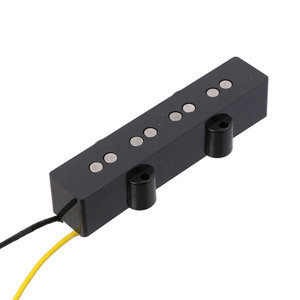
Single-coil transducers, like traditional J-bass pickups, are inherently susceptible to 50/60 Hz mains hum and electromagnetic interference (EMI). Our engineered solutions neutralize ambient induction while preserving true low-frequency fidelity:
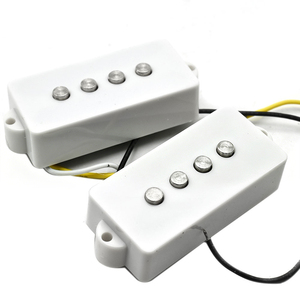
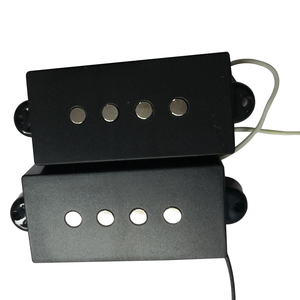
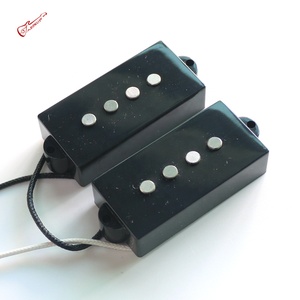
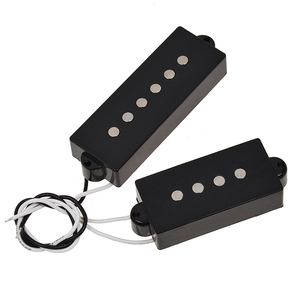
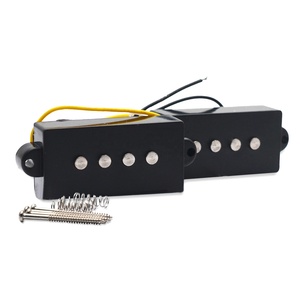
- Split-Coil Reverse-Wound Reverse-Polarity (RWRP): Standardized across our precision PB pickup units. Each coil captures two adjacent strings, wired in series-hum-cancelling configuration to eliminate EMI while boosting inductive output for signature low-mid resonance.
- Stacked Dual-Coil Architectures: High-permeability isolation plates separate upper voice coils from lower noise-sensing coils, canceling external magnetic flux loops without attenuating harmonic overtones.
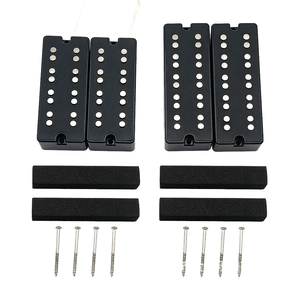
- Dual-Coil Open Humbuckers: Engineered with wide aperture sensing windows to capture broader harmonic spectra, perfect for hard rock, slap bass dynamics, and extended sub-harmonic clarity.
Tone Profiling & Custom Windings
Scattered hand-guided windings reduce distributed parasitic capacitance, preventing treble rolloff and maintaining crystalline definition on fast percussive plucks.
Vacuum Wax Depuration (Potting)
Formulated with paraffin and refined beeswax blends at exact thermal profiles, eliminating air pockets in bobbin windings to prevent microphonic stage howl.
String Spacing Consistency
Precisely modeled pole pitch options (18mm, 19mm, 20mm) ensure the magnetic sweet spot falls dead-center under each string for balanced inter-string gain.
Procurement & Manufacturing Trends in Bass Components
Procurement directors and brand executives managing global component supply chains face rapid shifts across technical and regulatory landscapes. Selecting a China-based pickup manufacturing partner today demands greater operational insight than basic pricing negotiations.
1. Extended Range Integration & Asymmetric Magnetic Apertures
The explosive adoption of 5-string, 6-string, and multi-scale fanned-fret bass systems has reshaped bobbin requirements. Symmetrical pole geometries often struggle on multi-scale instruments where bridge pickup angles induce string misalignment. Tier-one suppliers now deploy blade-style polepieces or angled bobbin cavities that maintain an uninterrupted, uniform field regardless of bridge saddle angles or extended string gauges (down to .135 or .175 low F#).
2. Onboard Active-Passive Hybrid Architecture
Modern bassists demand versatility: vintage passive bypass tone alongside clean active headroom. Global OEM brands require transducer designs optimized for low impedance loads without sacrificing natural high-end frequency response. Our R&D team engineers coils matched for seamless integration with onboard 9V/18V preamps, matching DCR and resonance to eliminate transient clipping while preserving organic dynamic nuance.
3. Stringent Environmental Directives & Material Traceability
With stringent global adoption of EU RoHS, REACH, and California Proposition 65 regulations, magnetic core sourcing and cable lead composition face strict compliance scrutiny. Modern manufacturers must guarantee lead-free solder connections, cadmium-free plastic bobbins, zero toxic plasticizers in leadout shielding wires, and sustainably produced copper magnet wire.
Supply Chain Security: Our facility maintains long-term raw material agreements for oxygen-free copper (OFC) and stable rare-earth/ferrite suppliers, insulating international clients from metal commodity price swings and ensuring consistent lead times throughout production seasons.
Factory Competence: Japanese Heritage Standards & Precision Production
Drawing deep inspiration from over 70 years of pioneering Asian guitar-making excellence—pioneered since 1956 in Nagoya, Japan—our operations embody strict, player-first quality standards. Just as legendary vintage instruments established international acclaim through meticulous fretwork, stable necks, and punchy pickups that defined rock history on global stages, our factory mirrors that pursuit of electro-acoustic perfection.
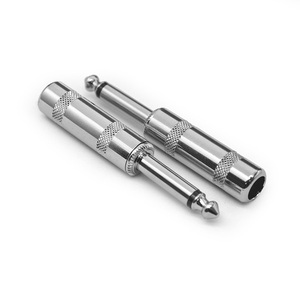
Every pickup batch manufactured in our facility is built to professional tour-ready specifications. From our comprehensive inventory of 6.35mm pure copper audio connectors to specialized split-coil and single-coil pickups, our components are trusted by musical instrument brands across Europe, North America, and the Asia-Pacific region.
Electromagnetic Bench Testing
Every single production batch undergoes 100% computerized inspection checking DCR, Inductance (Henries), and Impedance curves to ensure strict acoustic uniformity.
Worldwide OEM & ODM Capabilities
Full support for private-label laser etching, custom fiber bobbins, specific lead lengths, vintage-style braided wiring, and bespoke shell designs.
End-to-End Component Sourcing
Beyond pickups, we supply complete electro-hardware solutions: heavy-duty 6.35mm jack sockets, tone pots, pre-wired harnesses, and custom selector switches.
Bass Pickups Procurement: Frequently Asked Questions (FAQ)
Direct technical answers addressing the real concerns of sourcing managers, product developers, and overseas procurement teams.
What is the standard MOQ for custom-wound OEM bass pickups?
For standard catalog configurations (such as classic 4-string PB and JB designs), our minimum order quantity begins at 50 to 100 sets. For custom bobbin tooling, proprietary magnetic spacing, or custom polepiece plating, MOQs typically start at 300 to 500 sets to offset setup and precision stamping costs.
How do you maintain tonal consistency across volume production?
We deploy high-precision multi-spindle computerized winding machinery equipped with real-time electronic tension regulators. Wire elongation and tensile variation are held within ±0.02N. Finished bobbins undergo automated computerized testing for DC resistance (within ±2%), inductance (H), and capacitance before entering vacuum wax potting.
Can you provide matched pickup sets with calibrated output balance?
Yes. Because the amplitude of string vibration is naturally broader near the neck than near the bridge, an uncalibrated neck pickup can easily overpower the bridge. We wind bridge coils with an additional 5% to 10% turns of enamel wire, or utilize distinct magnetic grades, guaranteeing smooth, balanced inter-pickup switching.
What lead time is required from prototype confirmation to bulk shipment?
Custom prototype samples are typically completed within 7 to 12 working days. Once acoustic signatures and technical spec sheets are approved, standard production lead time for orders between 500 and 5,000 units is approximately 25 to 35 calendar days, supported by expedited ocean or air-freight options.