OEM / ODM Technical Whitepaper

China Best Guitar DIY Kits Factories & Suppliers

Global B2B procurement intelligence, tonewood drying verification, CNC neck tolerances, and factory direct customization for international distributors and luthiers.

Factory-Direct DIY Kits, Replacement Necks & Hardware

Engineered for commercial instrument assembly lines, private-label luthiers, and aftermarket music distributors. Every SKU is produced under strict wood equilibrium and tolerance benchmarking.

Seven Decades of Precision Guitar Manufacturing

Tracing engineering origins back to 1956 in Nagoya, Japan, our supply ecosystem combines Japanese master luthier inspection protocols with modern high-capacity CNC infrastructure across Shandong and Guangdong.

1956
Heritage & Acoustical Roots
< 8-10%
Equilibrium Moisture Content
±0.02mm
CNC Neck Heel Routing Precision
100%
Plek & Fret End Inspection

Heritage Tonewood Seasoning

Unlike rapid-turnaround kit workshops, our bodies and necks undergo a mandatory 45-day atmospheric dehumidification phase followed by computerized vacuum kiln-drying. This eliminates future neck warpage and fret sprout when exported across different climate zones.

5-Axis CNC Neck-Body Coupling

The primary point of DIY kit failure is poor neck pocket geometry. Utilizing imported 5-axis routers calibrated to ±0.02mm tolerances, our mortise-and-tenon and bolt-on neck pockets seat without mechanical lateral play, preserving string vibrational transfer.

Global Hardware Interoperability

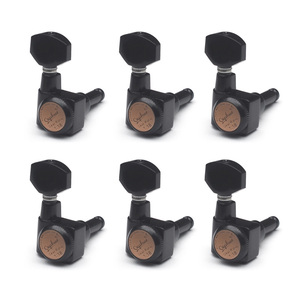
Our OEM guitar kits feature standard mounting pitch specs fully compatible with industry-standard replacement parts, including GOTOH bridges/tuners, CTS potentiometers, and Switchcraft jacks, giving custom builders and retail brands effortless upgrade pathways.

China DIY Kit Manufacturing Benchmark: Tier-1 vs. Commodity Workshops

For procurement officers and brand managers: understanding the technical variance between budget consumer kits and professional luthier-grade OEM supply.

Evaluation Parameter Tier-1 Partner Factory (Our Standard) Commodity White-Label Supplier Luthier & Commercial Impact
Moisture Content (EMC) Controlled between 8% and 10% via RF vacuum kilns Variable (>15%), air-dried without humidity controls Prevents fingerboard shrinkage, body seam splitting, and back-bow
Truss Rod Engineering Two-way dual-action spoke-nut or headstock adjust, Teflon-wrapped Single-action mild steel rod without insulating sleeve Guarantees seasonal bi-directional relief control and eliminates internal rattle
Fret Dressing & Leveling Rolled fretboard edges, ball-end fret finishing, Plek-leveled Rough hand-clipped wire ends with burrs and high frets Drastically lowers setup hours for the end-user and eliminates finger cut risks
Pre-Drilled Alignment Indexed CNC pilot holes for bridge posts, tuners, and neck plates Misaligned manual pilot holes or omitted drilling Guarantees exact intonation scale length (25.5", 24.75", 34") out of the box
Solderless Harness Options Plug-and-play quick-connect terminal blocks with shielding Loose low-spec pots (500k/250k unverified) requiring soldering Expands consumer market conversion; speeds up batch assembly times

Procurement & Technology Trends in the Guitar DIY Sector

Key directional shifts shaping manufacturing, customs compliance, and consumer purchasing patterns over the next five years.

1. Roasted (Torrefied) Tonewood Standardization

Thermal modification at 180°C–220°C in oxygen-free kilns breaks down hemicellulose, transforming standard Canadian maple into caramelized, moisture-impervious neck stock. Commercial brands are transitioning to roasted necks across 70% of DIY offerings to mitigate international warranty claims.

2. CITES-Compliant Alternative Materials

With ongoing environmental scrutiny on Dalbergia (rosewood) and ebony, factories are standardizing high-density engineered composites (Black Richlite) and heat-treated Purpleheart or Laurel. Brands buying from China require transparent botanical provenance documentation to pass Lacey Act and EU TR regulations seamlessly.

3. Plug-and-Play Modular Electronics

Modern DIY buyers demand luthier-grade wood craft without requiring electrical soldering skills. Solderless wire harnesses featuring PCB control terminals, active/passive hybrid circuits, and push-pull coil tap pots are becoming the mandatory baseline for high-converting Western eCommerce listings.

Frequently Asked Questions for Importers & B2B Buyers

Practical insights addressing wood stability, minimum order quantities (MOQ), custom CNC tooling, and logistics handling.

What are the typical MOQs for custom body shapes and private label OEM headstocks?

+

For standard catalog DIY kits (ST, TE, LP, PB styles), our trial order MOQ starts at 20 to 50 sets per specification. For fully customized 3D CAD/CAM designs—such as proprietary headstock profiles, custom control routings, or non-standard scale lengths—the initial prototype threshold is 1 set, followed by a production MOQ of 100 sets to amortize custom CNC tool path programming and jig engineering.

How do your factories prevent neck warping and fret sprout in destination markets?

+

Wood stabilization is executed in three controlled stages: first, multi-year natural seasoning of tonewood blanks; second, computer-controlled drying to 8-10% equilibrium moisture content (EMC); and third, climate-controlled CNC processing rooms. Furthermore, fretboards receive sealed edges and botanical conditioning prior to vacuum-sealed desiccant packaging, ensuring stability whether arriving in arid Arizona or humid Northern Europe.

Can guitar kits be supplied with factory pre-applied finishes?

+

Yes. We offer multiple finishing solutions ranging from raw 320-grit sanded unfinished wood (ideal for builder staining and oil buffing) to ultra-thin nitrocellulose lacquer, poly-gloss bursts, polyurethane matte coatings, and pre-applied poly-sealer coats that seal the grain while allowing the buyer to apply custom topcoats without extensive prep work.

What international timber compliance certifications are provided for export?

+

Every commercial export order includes Phytosanitary Certificates issued by China Customs, official botanical species declaration bills for the US Lacey Act, and CITES non-endangered declarations for timber like Canadian Maple, American Alder, Okoume, and roasted timbers. We strictly avoid restricted woods on CITES Appendix I without prior intergovernmental quota permissions.

Do you supply left-handed guitar and bass DIY kit configurations?

+

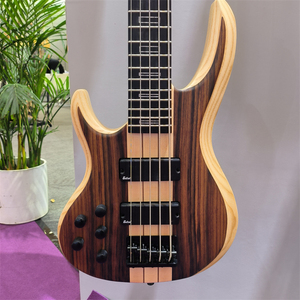
Yes. Following our heritage tradition of dedicated left-handed electric and acoustic series, we provide mirror-image CNC machining for bodies, control cavity routings, pickguards, and reversed neck headstock/nut orientations across both 4-string bass and 6-string guitar platforms, eliminating expensive modification labor for retailers.