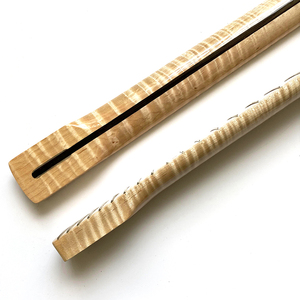

From ultra-dense cold-rolled steel tremolo blocks to aerospace-grade locking machine heads and seasoned tonewood necks, explore our standardized and bespoke instrument hardware components.
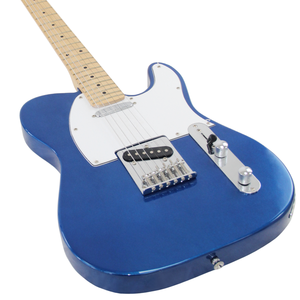
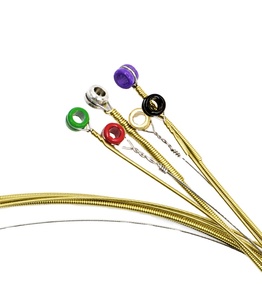
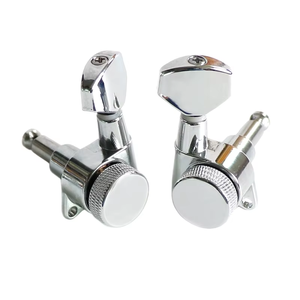
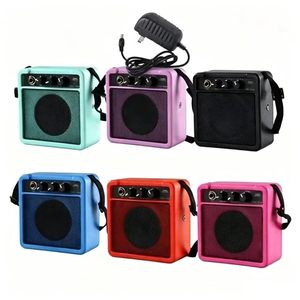
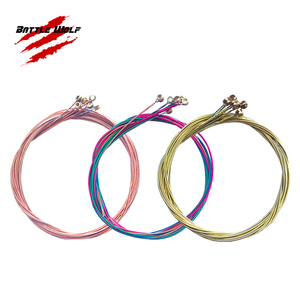
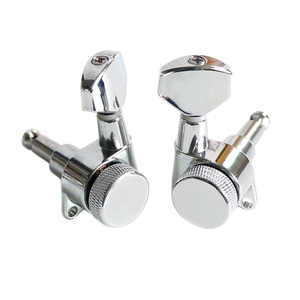
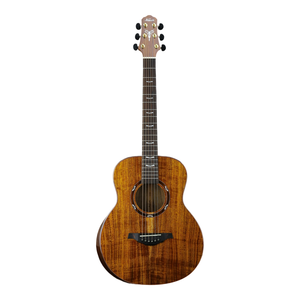
Integrating traditional Japanese design standards with China's high-efficiency advanced CNC manufacturing ecosystem to supply world-class hardware systems.
Rooted in instrument engineering since 1956, our factory implements Japanese QA/QC inspection matrices. Every bridge saddle, machine gear, and truss assembly aligns strictly with the structural stability protocols required by elite players and international distributors.
Proud authorized export management and integration capability with renowned hardware icons such as GOTOH Parts, Augustine Strings, and Pignose amplification. Our components consistently integrate seamlessly alongside industry gold standards.
Equipped with 5-axis Swiss-type automated turning machines and high-tonnage cold stamping lines. We achieve ±0.005mm micro-tolerances on internal worm gears, eliminating mechanical backlash and ensuring unmatched tuning retention.
In high-performance acoustic and electric guitar construction, the hardware bridge, saddles, nut, and tuning mechanisms are not merely passive mechanical anchors; they form the critical acoustic boundary condition of the vibrating string system. Energy transfer efficiency from the string core into the body tonewood depends directly on the surface hardness, density, and damping factor of the contact metal. In recent years, China's precision manufacturing industry has spearheaded a structural shift from porous zinc die-casting alloys (such as low-grade Zamak) to cold-rolled alloy steel, aircraft-grade billet aluminum (6061-T6), and bell-grade acoustic brass (Hpb59-1).
Our metallurgic testing demonstrates that cold-rolled 1018 steel tremolo blocks retain over 28% more low-frequency harmonic resonance between 80 Hz and 250 Hz compared to traditional zinc die-cast variants. Simultaneously, high-precision brass components introduce a natural damping curve in harsh high-treble regions (above 4.5 kHz), delivering the warmth and sustain demanded by professional recording guitarists.
| Material Category | Specific Density (g/cm³) | Hardness (Rockwell / Brinell) | Resonance Characteristics | Optimal Component Application |
|---|---|---|---|---|
| Billet Acoustic Brass (H62/Hpb59) | 8.50 | HRB 65-75 | Warm fundamental, rich sustain, smooth mid-range presence | Tremolo blocks, fixed bridge saddles, string ferrules |
| Cold-Rolled Steel (1018 / 1045) | 7.87 | HB 120-160 | High acoustic velocity, pronounced attack, extended dynamic headroom | Vintage-style baseplates, heavy tremolo inertia blocks |
| Grade 5 Titanium (Ti-6Al-4V) | 4.43 | HRC 36 | Ultra-fast mechanical transfer, zero magnetic interference, wide clarity | High-end custom shop saddles, lightweight neck reinforcement rods |
| Zinc Die-Cast Alloy (Zamak 3/5) | 6.60 | HB 82-95 | Cost-effective damping, uniform density, ideal for complex geometry | Enclosed tuning peg housings, cosmetic control knobs, cover plates |
Anticipate market supply shifts to maintain brand competitiveness, reduce landed costs, and comply with evolving international environmental standards.
International compliance regulations, including EU RoHS 3 and REACH SVHC, are increasingly restricting traditional toxic hexavalent chromium electroplating. The future belongs to Physical Vapor Deposition (PVD) coating, trivalent chromium, and nickel-free electrophoretic deposition (EPD). These modern finishing technologies guarantee over 96 hours of neutral salt spray corrosion resistance without leaving hazardous chemical residues.
Modern guitar players increasingly demand ergonomic headless guitars, multi-scale fanned frets, and 7/8 string configurations. Sourcing strategies are actively transitioning from rigid single-body bridges to modular monorail bridges, low-friction roller saddles, and drop-in lightweight tuners that allow guitar builders to adapt base setups without retooling their primary routing templates.
Enterprise procurement leaders are abandoning fragmented multi-vendor procurement models. By consolidating machined hardware (bridges, machine heads, nuts), electronics (pre-wired harnesses, active pickups), and structural components (seasoned maple necks, bodies) into single factory-level audit protocols, brands achieve significant freight consolidation and eliminate inter-component fitment drift.
Detailed answers regarding production tolerances, surface finishes, minimum order quantities, and OEM validation processes.
Partner with an industry-tested manufacturing facility backed by Japanese technical discipline and Chinese high-precision scalability. Request our comprehensive OEM hardware catalog, material test reports, and volume wholesale pricing.
Get Catalog