
OEM/ODM Industrial Whitepaper

China Best Guitar Machine Heads Factories & Exporter

Technical Sourcing Report, Engineering Tolerances, Gear Ratio Architecture & Global Supply Chain Optimization for Luthiers and Musical Instrument Brands

Procurement Benchmarking

Engineered Tuning Machine Heads for High-Yield Guitar Manufacturing

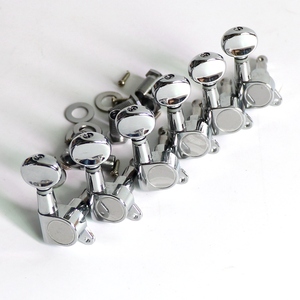
In the global stringed-instrument manufacturing ecosystem, tuning peg reliability, gear meshing tolerance, and metallurgy directly govern tuning stability and string return efficiency. As top-tier China machine heads factories, our facilities engineer precision-geared open, sealed, and locking systems with standardized 10mm mounting profiles and ultra-smooth drive ratios up to 1:21.
±0.01mm
Worm Gear Backlash
CNC gear teeth engagement limit
1:21RATIO
Micro-Tuning Drive
Peak incremental pitch resolution
96HRS
Salt-Spray Tested
Electroplated anti-oxidation standard
100%
Torque Tested
Factory slip & return verification
Strategic Sourcing Analysis

Future Procurement Trends for Guitar Machine Heads

Global B2B procurement patterns are shifting rapidly toward precision engineering, weight reduction, and automated factory assembly compatibility.

High Gear Ratio Transition (1:18 to 1:21)

Standard commercial configurations are migrating away from traditional 1:14 ratios. Premium electric and acoustic brands increasingly standardize on 1:18 and 1:21 ratios. This transition minimizes micro-overshoot during fine adjustments, essential for dropped tunings and studio setups.

Rear Thumbwheel Locking Mechanisms

Factory installation workflows increasingly favor internal pin-cam and rear thumbwheel string clamping locks. By eliminating redundant string post windings, locking tuners reduce string slippage by over 75%, vastly accelerating resting turnaround for touring musicians.

Lightweight Aluminum & Carbon Composition

Headstock dive is a recognized ergonomic bottleneck in multiscale and bass instruments. Leading Chinese exporters are engineering composite housings and aircraft-grade aluminum posts to trim weight by up to 35% without surrendering mechanical shear resistance.

Manufacturing Evolution

Technological Trajectories in Tuning Mechanism Production

How modernized China manufacturing facilities eliminate gear slip, backlash, and surface corrosion across high-volume production cycles.

Cold-Forged Brass & Phosphor Bronze Gears

Zinc-alloy diecast worm drives are increasingly substituted by hobbed brass and phosphor bronze internal gears. This pairing yields self-lubricating qualities, virtually eradicates galling, and preserves consistent rotational torque throughout extended gigging cycles.

Multi-Layer Vacuum PVD Electroplating

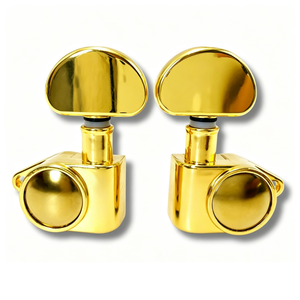
Physical Vapor Deposition (PVD) guarantees durability against sweat acids and environmental humidity. Our Cosmo Black, Satin Chrome, and Vintage Relic Gold finishes pass rigorous 96-hour neutral salt-spray benchmarks without pitting or finish peel.

Staggered Post Geometry Architecture

OEM headstock designs benefit from progressive post-height configurations (short, medium, long). Staggered posts ensure optimal string break angle across the nut without requiring friction-inducing string trees, improving vibrato return accuracy.

Enterprise Advantage & Proven Heritage

Why International OEM/ODM Brands Trust Our Export Quality

Founded on decades of precision musical manufacturing experience and informed by the stringent inspection protocols of global luthier networks, our partner plants bridge precision engineering with flexible supply chain execution.

Whether serving boutique custom shops, high-volume production lines, or distributed guitar parts aftermarket retailers, our production runs strictly adhere to global acoustic and electric string tension tolerances.

  • Standardized Mounting Profiles: Full drop-in compatibility for 10mm headstock bores, vintage press-fit bushings, and classic 35mm acoustic roller centers.
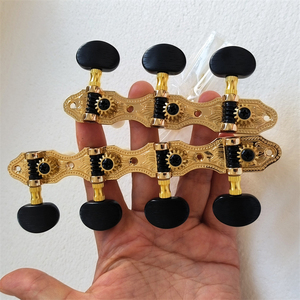
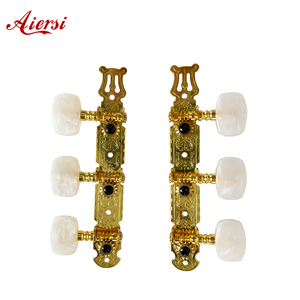
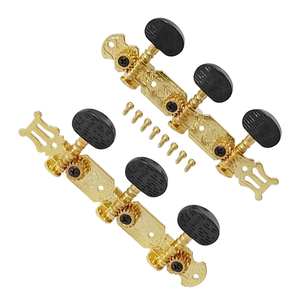
  • Custom Gear Housing & Button Styling: Keystone, oval, butterbean, mini-handles, and custom luthier button tooling available in ebony, zinc alloy, and mother-of-pearl.
  • Flexible Minimum Order Quantities: Tiered batch volumes from trial OEM sample sets to 50,000-unit recurring monthly container runs.
Inquire Now

ISO9001 Audited Quality Management

Every batch undergoes automated cycle testing under simulated string tension loads to verify zero worm shaft backlash and gear tooth durability.

OEM Private Labeling & Packaging

Full custom laser etching of brand logos, customized blister packs, and bulk assembly-line packaging for streamlined workshop installation.

Global Logistics Coordination

Consolidated DDP shipping, rapid prototyping with fast sample turnaround, and dedicated technical CAD design support for specialized headstocks.

Procurement Knowledge Base

Frequently Asked Questions: Machine Head Sourcing

Critical technical parameters, borehole dimensions, and supply specifications for musical instrument purchasers.

What is the mechanical difference between 1:14, 1:18, and 1:21 gear ratios?
The gear ratio specifies how many turns of the tuning button are required to rotate the string post one full revolution. A 1:14 ratio requires 14 turns, yielding faster coarse adjustments common in vintage instruments. A 1:18 or 1:21 ratio delivers higher resolution, enabling micro-tuning without overshoot. This is critical for precision instruments, low drop tunings, and professional stage performance.
What headstock bore diameters do your guitar machine heads support?
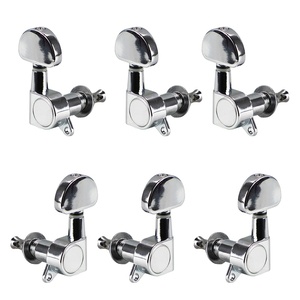
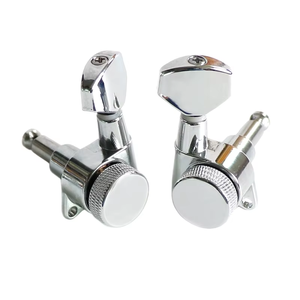
We manufacture machine heads for standard modern 10mm (approx. 25/64") peg holes utilizing threaded hex bushings and rear alignment pins or screw tabs (45°, 90°, or 135°). We also fabricate vintage-spec 8mm to 8.5mm configurations utilizing push-fit press bushings, as well as classical guitar slotted-headstock sets with 35mm center-to-center post spacing.
How do locking machine heads improve tuning stability over non-locking tuners?
Non-locking tuners require 2 to 4 wire wraps around the post. Under heavy bending, thermal variations, or aggressive vibrato use, these coils shift and stretch, introducing tuning slack. Locking tuners secure the core string directly inside the post via an internal mechanical cam or thumbwheel pin, requiring less than a single wrap and eliminating mechanical coil relaxation.
Can your factory provide customized button shapes, finishes, and laser branding?
Yes. Our OEM manufacturing options include custom laser engraving on sealed back plates, specialized electroplated coatings (Chrome, Black, Gold, Nickel, Cosmo Black, Rainbow PVD), and bespoke button geometry crafted from zinc alloy, real ebony, amber, or synthetic pearloid tailored to brand blueprints.
What quality control measures ensure long-term torque consistency?
Each production batch is sampled for internal gear clearance, axial shaft play, and rotational torque consistency using digital torque meters. Sealed systems utilize high-viscosity synthetic grease designed to retain damping resistance without hardening or liquefying across temperatures ranging from -20°C to 65°C.

Request Factory Direct Quotations & OEM Sample Kits

Partner with an authoritative Chinese guitar hardware exporter. Access wholesale volume pricing, detailed CAD technical specifications, and dedicated luthier sample evaluations.

Inquire Now