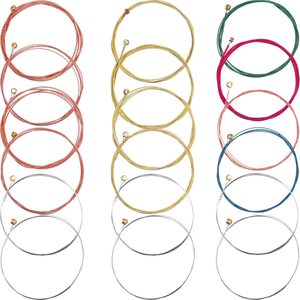
Curated wholesale selection bridging acoustic resonance, master-grade tonewood construction, precision machine engineering, and high-performance fretted instrument parts.
An authoritative industry review on acoustic instrument lutherie, precision scaling, and international supply reliability.
The global acoustic guitar market has entered an unprecedented era of technological transformation and qualitative consolidation. Historically, musical instrument distributors faced a difficult trade-off: choose premium, labor-intensive European and American boutique luthiers with constrained production capacities and prohibitive FOB prices, or settle for mass-market, budget-tier contract factories vulnerable to climate instability and inconsistent fretwork. Over the past decade, however, China’s top-tier wholesale acoustic guitar manufacturers and exporters have fundamentally dissolved this dichotomy.
By uniting seven decades of heritage-grade Japanese acoustic blueprinting (rooted in our foundational lineage dating back to Nagoya in 1956) with state-of-the-art German 5-axis CNC routing, climate-controlled clean-room curing, and automated PLEK robotic fretting, modern Chinese manufacturing hubs produce acoustic and classical guitars that rival custom-shop master builds. Today, international music merchants, school procurement boards, and renowned global brands rely on China for more than 70% of the world’s stringed acoustic instruments.
Controlled natural aging followed by multi-stage vacuum radio-frequency (RF) kiln drying stabilizes cellular spruce and mahogany structures to 8%–10% moisture content, eliminating post-export fret sprout and soundboard sinking.
Compound dovetail and precision bolt-on neck tenons cut to ±0.02mm tolerances ensure maximum mechanical surface contact, direct vibrational energy transmission, and rock-solid neck pitch stability over decades of string pull.
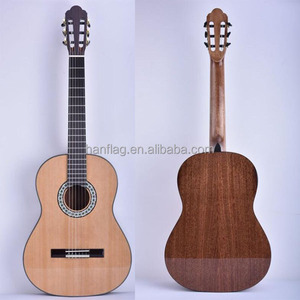
Every batch undergoes strategic tap-tone resonance testing and hand-scalloped bracing optimization to maximize modal frequency response, sustain, and projection across dreadnought, OM, parlor, and classical concert platforms.
Evaluating a premier OEM/ODM supplier requires dissecting raw material acquisition and process engineering. The finest acoustic instruments require quarter-sawn tops with high grain-density counts (minimum 12–18 growth rings per inch for AAA and Master grades). Top exporters maintain extensive stock holdings of European Engelmann Spruce, Sitka Spruce from the Pacific Northwest, African Mahogany, and CITES-compliant Indian Rosewood substitutes such as Torrefied Purpleheart, Blackwood, and high-density engineered laminates.
Raw tonewoods undergo a rigorous three-phase seasoning routine: outdoor seasoning in shaded wind-tunnels for up to 24 months, secondary dehumidification conditioning under continuous equilibrium airflows, and final laser-guided acoustic flex-testing prior to top thicknessing (typically calibrated between 2.6mm and 3.1mm depending on body architecture and brace geometry).
Critical business insights for procurement directors preparing their multi-year catalog roadmaps.
Accelerated thermal pyrolyzing in an oxygen-free vacuum replicates 50 years of resin crystallization, delivering a dry, vintage pre-war acoustic voice with zero humidity vulnerability—now standard in mid-tier volume production.
With tightening international Lacey Act and CITES Appendix II enforcement on exotic rosewoods, B2B procurement is pivoting decisively toward sustainable bamboo composites, richlite fingerboards, and thermo-treated FSC-certified alternatives.
The modern acoustic player demands built-in reverb, delay, and chorus effects without plugging into an external amplifier. Next-generation acoustic wholesale lines integrate magnetic/piezo hybrid actuators directly inside the body cavity.
Furthermore, consumer demographic shifts indicate soaring demand for ergonomic body innovations: beveled armrests that minimize forearm fatigue, deep Venetian and Florentine cutaways for seamless high-fret articulation, and short-scale parlor models (24" scale lengths) engineered for Gen-Z touring songwriters and music conservatory scholars. Retailers stocking conventional, unmodified dreadnoughts alone are reporting margin compression, while catalog portfolios enriched with all-solid cutaway electro-acoustics yield average gross margin advantages exceeding 38%.
| Market Classification | Soundboard Construction | Back & Sides Wood | Target Demographic | Acoustic Voicing & QC Tolerance | Typical FOB MOQ |
|---|---|---|---|---|---|
| Student / Educational | Select Laminated Sitka Spruce / Basswood | Laminated Sapele or Agathis | Academies, beginners, entry fleet | Standard scalloped X-brace; ±0.10mm fret crown inspection | 100–300 Units |
| Semi-Pro / Solid Top | Solid AA Engelmann or Sitka Spruce | Layered African Mahogany or Walnut | Performing musicians, recording home studios | Hand-tuned forward-shifted X-brace; ±0.05mm bone nut action | 50–100 Units |
| Concert All-Solid | Master Grade Solid AAA Engelmann Spruce | Solid Indian Rosewood / Flamed Maple | Symphony soloists, high-end collector salons | Individually voiced tap-tone tops; Plek-calibrated frets; Nitrocellulose finish | 20–50 Units |
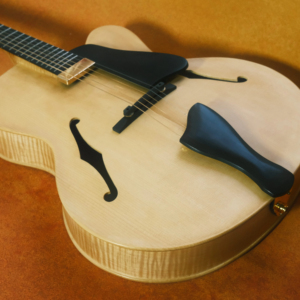
| Archtop Jazz & Specialty | Solid Hand-Carved Violin Spruce Arch | Carved Flamed Solid Maple | Jazz performers, archtop connoisseurs | Carved acoustic tone bars; hand-rubbed oil finish; ebony hardware | 10–20 Units |
Combining seven decades of luthiery mastery with global component alliances and verified B2B fulfillment stability.
Founded by classical guitarist Shiro Arai in Nagoya in 1956, our acoustic engineering principles originated in rigorous player-first dynamics, proven across seven decades of professional stage use.
All factory workshops adhere directly to our Japanese Quality Control Protocols. From neck relief under tension to soundboard moisture equilibrium, every guitar passes a multi-point acoustic checklist.
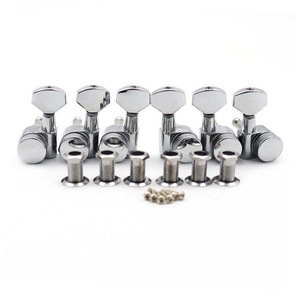
As the official export distributor for GOTOH precision machine parts and world-renowned Augustine strings, our instruments integrate legitimate tier-1 hardware straight from the factory floor.
From rock and metal virtuosos to classical concert masters across Europe, North America, and Asia, our instruments undergo relentless live touring validation that filters straight into production excellence.
When contracting an acoustic manufacturing run, distributors are not merely purchasing wood, frets, and glue; they are safeguarding their brand's regional reputation. A failure rate of even 3% due to warping necks or lift-off bridges can decimate a distributor's dealer margins through returns and warranty claims.
Our comprehensive export quality regime encompasses hyper-calibrated string tension endurance testing (holding instruments under standard concert pitch for 14 continuous days prior to packaging), micro-dial fret leveling checks ensuring 12th fret action below 2.2mm on bass strings and 1.8mm on treble strings without fret buzz, and drop-tested double-wall corrugated 5-ply export master cartons lined with form-fitting shock-dampening EPE foam.
In-depth operational answers addressing minimum orders, humidity acclimatization, OEM branding, and international freight.
Our production facilities operate 24/7 industrial HVAC and desiccant dehumidification systems maintaining a consistent ambient relative humidity (RH) of 45%–50% at 22°C across all wood-working, bracing, gluing, and lacquer curing halls. Tonewood blanks are kiln-conditioned to an equilibrium moisture content (EMC) of 8%–10%.
This exact range ensures that when acoustic guitars are exported to dry continental climates (e.g., Northern US, Canada, Central Europe, or Scandinavia during winter heating periods), the cellular structure contracts uniformly without structural soundboard cleavage, bridge lifting, or binding separation.
Yes. We provide complete OEM/ODM industrial solutions. Clients can provide 2D/3D CAD drawings or physical reference prototypes. Our engineers can laser-cut proprietary headstocks, inlay mother-of-pearl or abalone logos, design custom purfling/rosette patterns, and modify soundboard bracing profiles (such as parabolic scalloping or ladder bracing) to achieve your proprietary brand tone curve.
Private label OEM packaging, branded truss rod covers, custom branded gig bags, and barcoded retail boxes are fully integrated into our assembly operations.
For standard catalog configurations carrying our factory specifications, MOQs start as low as 20 to 50 units per model, allowing regional distributors to evaluate local retail sell-through. For full OEM customized specifications (custom body contours, proprietary wood finishes, custom headstocks, and electronics packages), the baseline MOQ is generally 100 units per specification.
We actively support multi-model mixed container loads (20GP or 40HQ) allowing you to consolidate classical, dreadnought, OM cutaway, and hardware parts within a single bill of lading.
We maintain full botanical and forestry chain-of-custody documentation for all harvested timbers. All solid woods and veneers are sourced through verified, sustainably managed forestry concessions. For materials subject to CITES Appendix II or regional timber regulations, we provide certified botanical names (e.g., Picea engelmannii, Khaya senegalensis) on commercial invoices and furnish legitimate export phytosanitary and re-export certificates.
Alternatively, we offer fully certified non-CITES rosewood alternatives including thermo-treated Purpleheart, Ovangkol, and high-density Micarta/Richlite composite fretboards that cruise through customs clearances with zero inspection holdups.
We offer ultra-thin polyurethane (PU) gloss, modern polyester electrostatic finishes, open-pore satin coatings, and traditional hand-rubbed nitrocellulose lacquer (NC) finishes. For high-volume student and intermediate acoustics, our UV-cured thin-poly coatings offer supreme scratch resistance, high gloss luster, and swift factory turnaround while retaining acoustic resonance due to micro-thickness control (below 0.15mm).
For boutique, concert-grade classical and archtop instruments, our nitrocellulose and oil finishes allow the tonewood to breathe naturally, facilitating faster vibrational bloom and superior overtone sparkle.
Standard OEM batch production schedules span 45 to 60 calendar days from formal CAD sign-off and deposit receipt. This timeline accommodates thorough wood moisture stabilization between lacquer coats. Each instrument is encapsulated within an anti-static vapor-phase corrosion inhibitor (VCI) polybag containing silica-gel desiccant packs, secured inside a drop-tested inner box with contoured neck crutches.
Six individual guitar boxes are then nested within an export-grade 5-ply honeycomb master carton, strapping-reinforced, and palletized with moisture-barrier shrink wrapping for optimal marine container sea-crossing protection.
Partner with an established exporter blending 1956 Japanese heritage standards with advanced CNC scalability. Request competitive FOB container pricing, material specifications, and physical sample evaluations directly from our commercial engineering team.