Source high-tolerance neck adjustment mechanisms, premium Canadian maple necks, tuning assemblies, and protective gear engineered to meet strict international OEM manufacturing specifications.
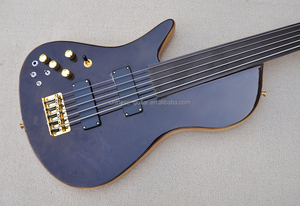
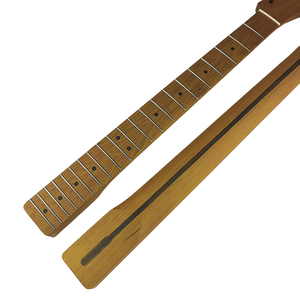
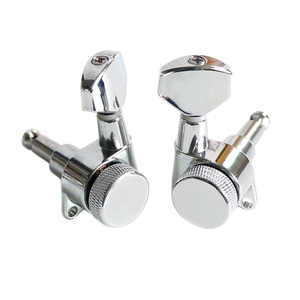
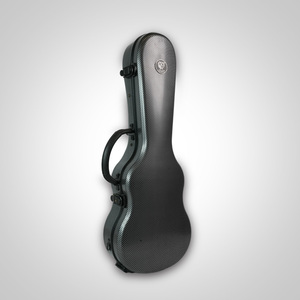
Industrial guitar neck builders differentiate adjustment systems primarily by force vector capabilities: traditional single-compression rods and modern dual-action (two-way) dual-rod systems. Single-action designs rely strictly on wood reaction: tightening the nut compresses the convex rod against the neck channel, pulling the neck backward to combat string-induced upbow. However, when an instrument encounters low-humidity conditions or backbow caused by natural wood drying stress, a single-action rod becomes completely ineffective.
As leading Chinese guitar truss rod manufacturers for international OEM guitar brands, our specialized engineering facilities prioritize Dual-Action Two-Way Truss Rod mechanisms. Incorporating two counter-threaded welded rods or an active threaded rod coupled over a passive stabilizing flat bar, dual-action systems provide active correction in both directions. Turning clockwise creates backbow to neutralize string forward pull; turning counter-clockwise forces corrective upbow to remediate severe fret buzzing caused by natural backbow or environmental wood shrinkage.
Dual-action assemblies require flat, shallow CNC channel routing (typically 6.0mm to 6.35mm width and 9.0mm to 9.5mm depth), eliminating the traditional curved channel routing that compromises neck thickness. This shallow footprint ensures superior acoustic neck rigidity and dramatically reduces production cycle times in high-volume CNC routing operations.
| Architecture Type | Channel Configuration | Adjustment Vector | Weight Profile | Recommended Application |
|---|---|---|---|---|
| Vintage Single-Action Compression | Curved parabolic bottom (depth varies) | Uni-directional (Counteracts forward bow only) | Ultra-light (~85-95g) | Vintage reissues, traditional acoustic guitars |
| Dual-Action Welded Dual-Rod | Flat bottom (6.0mm × 9.0mm uniform) | Bi-directional (Full two-way correction) | Medium (~140-165g) | Production electric guitars, 6-string acoustics |
| Spoke Wheel Dual-Action | Heel-accessible flat route with pickguard notch | Bi-directional micro-step adjustment | Medium-heavy (~160-180g) | Modern shred guitars, multi-scale extended range |
| Titanium Alloy Bi-Flex Assembly | Flat bottom ultra-narrow (5.5mm × 8.5mm) | Bi-directional high-rebound torque | Ultra-light (~85g) | Custom shop lutherie, headless travel instruments |
The mechanical reliability of any truss rod depends on yield strength, tensile resilience, and thread fatigue resistance. Stripped adjustment nuts and snapped anchor welds represent catastrophic production losses for guitar factories. As an authorized manufacturing partner operating under rigorous Japanese quality management principles (originating from our historical export collaboration with GOTOH and Aria precision standards), our production plants utilize cold-drawn #45 high-carbon alloy steel and austenitic AISI 304/316 stainless steel.
For heavy-tension applications—such as 5-string and 6-string electric basses like the Flyoung series—tensile forces exceed standard yield limits. We implement double-tempered steel rods with custom brass thrust blocks that prevent galling during heavy setup torquing. Furthermore, to combat neck dead spots and sympathetic acoustic damping, our rods are encased in high-shrinkage flame-retardant thermal PVC tubing or wrapped in silicone-dampened sleeves. This prevents mechanical rattle within the neck channel without dampening high-frequency harmonic vibration transfer between tonewoods.
How automation, exotic neck laminates, sustainability regulations, and multi-scale geometry are redefining wholesale hardware procurement for luthiers and large-scale manufacturing facilities.
Headstock-access truss rods often weaken the critical transition area near the nut, leading to higher fracture rates during shipping or stage falls. B2B purchasing data confirms a decisive global shift toward heel-mount spoke wheel adjustment nuts. Allowing neck adjustment without string removal or specialized wrenches, spoke wheel configurations decrease instrument warranty returns by over 34% for major international retailers.
Roasted maple, torrified bamboo, and multi-laminate wenge/purpleheart necks have altered neck elasticity profiles. OEM brands increasingly specify hybrid reinforcement channels: a central dual-action steel truss rod flanked by dual pultruded carbon-fiber support rods (3mm × 5mm or 5mm × 8mm). This configuration guarantees neck straightness in extreme touring climates while reducing overall mass.
With ergonomic, headless, and light-weight travel guitars commanding rising market share, structural hardware weight has become a decisive purchasing criterion. Grade 5 Ti-6Al-4V titanium truss rods deliver a 45% weight reduction compared to traditional carbon steel while matching steel modulus of elasticity. Titanium also eliminates oxidation vulnerability caused by condensation inside humidified flight cases.
Building upon over seven decades of Japanese musical instrument engineering DNA—rooted in our historical collaboration with Japanese guitar makers like Aria and Aria Pro II since 1956 and our certified export operations handling world-class GOTOH parts and Augustine strings—our manufacturing infrastructure bridges heritage precision with contemporary industrial scale.
Unlike budget suppliers who utilize cheap stamped threads prone to binding, our adjustment terminals feature precision CNC-cut threads treated with vacuum anti-seize micro-coatings, ensuring smooth torque transmission up to 18 N·m.
Every truss rod is enveloped in high-temperature polyethylene heat-shrink casing with internal acoustic buffering, neutralizing unwanted parasitic string resonance or sympathetic vibrations inside the neck channel.
Whether you require 380mm rods for electric guitars, 420mm rods for acoustics, 460mm for 4-string basses, or extended 600mm rods for 37-inch multi-scale basses, we provide full CAD/CAM sample turnaround in 7 business days.
Authoritative technical answers to assist OEM product engineers, quality assurance managers, and instrument procurement directors.
Partner with China's leading guitar truss rod manufacturer. Benefit from seven decades of precision manufacturing heritage, factory-direct wholesale pricing, and stringent ISO-certified mechanical testing. Speak directly with our engineering sales team for technical drawings and wholesale quotation packages.