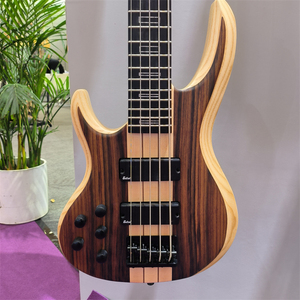

Export-ready fretted instruments, acoustic transducer systems, tuning modules, and high-tolerance necks built under heritage Japanese acoustic architecture and rigorous assembly standards.
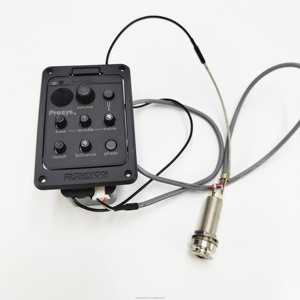
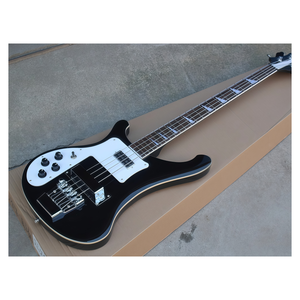
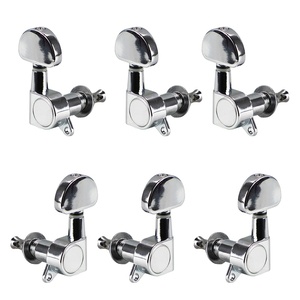
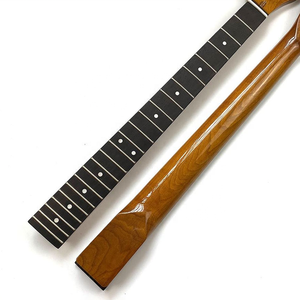
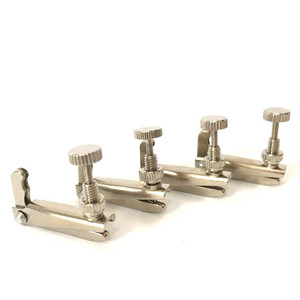
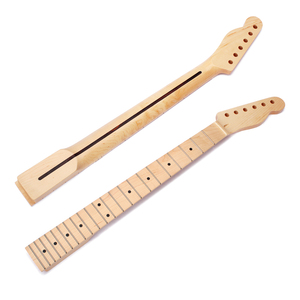
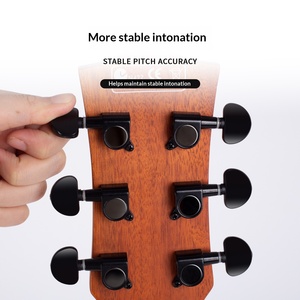
In low-frequency acoustic transmission, the bass guitar bridge serves as the primary mechanical transducer between vibrating strings and the resonant body core. For commercial luthiers, OEM instrument brands, and international distributors, bridge procurement directly governs harmonic sustain, fundamental pitch stability, and parasitic vibrational dissipation.
Traditional cast zinc alloy (pot metal) bridges frequently fail under heavy string load and high-tension drop-tunings due to internal crystalline voids, resulting in acoustic damping and high return rates. As an advanced production manufacturer rooted in Japanese inspection protocols, our facility champions solid billet bell-brass and aircraft-grade 6061-T6 aluminum CNC machining. This eliminates structural porosity, maximizes trans-frequency energy transmission, and yields an assertive low-end punch essential for modern 4-string, 5-string, and multi-scale extended-range basses.
Decades of manufacturing expertise combine Japanese design standards, official GOTOH export alignment, and scalable Chinese production capacity.
Product planning, metallurgical specifications, and multi-tier QA matrices are directed directly from Nagoya design standards, maintaining dimensional tolerance consistency across container shipments.
Full support for private-label stamping, individualized string pitch spacing (16.5mm, 17mm, 19mm), custom baseplate bevels, and modern top-load versus string-through hybrid anchoring options.
As authorized global export channels for industry-defining Japanese GOTOH parts and Augustine strings, we provide end-to-end parts consolidation, trimming logistics friction and supply overhead.
1. Individual Monorail Bridges for Multiscale Ergonomics: Modern bassist demographics are rapidly pivoting toward multi-scale (fanned-fret) and extended-range instruments (5 to 7 strings). Procurement managers must prioritize individual monorail bridge assemblies that decouple inter-string sympathetic crosstalk, allowing fully custom fanned scale configurations without dedicated tooling redesigns.
2. Physical Vapor Deposition (PVD) Electroplating: Conventional nickel plating is susceptible to premature corrosion caused by acidic stage sweat. Current high-tier wholesale programs are shifting toward environmentally stable PVD and multi-stage electro-black coatings that pass 96-hour salt spray corrosion testing without sonic dampening.
3. Saddle Lateral Locking & Intonation Fixation: The demand for high-mass bridges with multi-directional saddle lock screws prevents lateral deflection under dynamic slap and heavy pick attack, keeping string intonation surgically exact under intensive tour usage.
Direct answers for luthiers, OEM brand owners, and musical instrument wholesale distributors.
Partner with an industry-tested manufacturing infrastructure delivering Japanese-standard quality control, precision CNC metallurgy, and competitive wholesale volume pricing.
Inquire Now