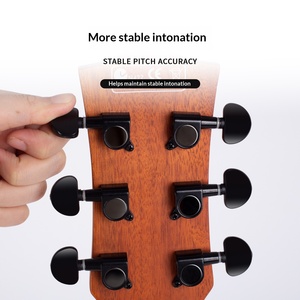
Acoustic & Ukulele

Explore our precision-machined string tuning mechanisms. Built for acoustic, electric, and bass architectures, our machine heads feature certified gear ratios, corrosion-resistant galvanic plating, and anti-backlash worm gearing.
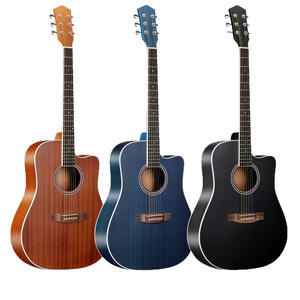
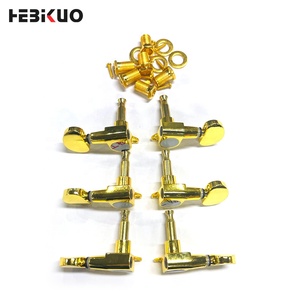
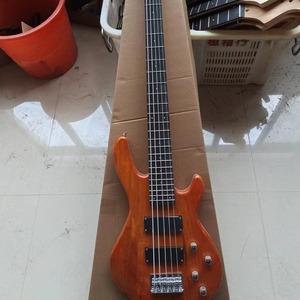
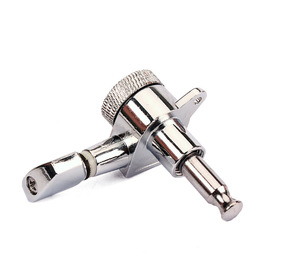
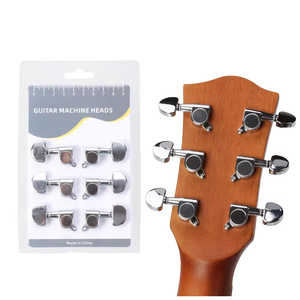
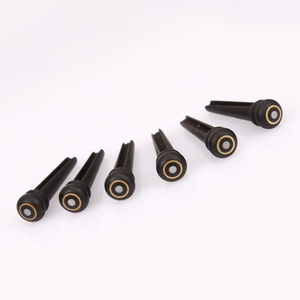
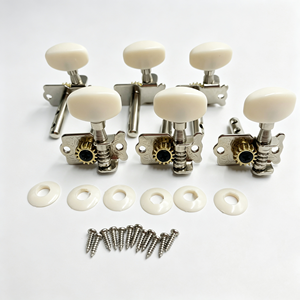
Beyond aesthetics, a guitar machine head is an essential precision mechanical actuator enduring between 70 to 180 lbs of continuous vector torque.
In mass stringed instrument manufacturing, pitch stability is fundamentally governed by mechanical friction coefficients and the shear modulus of machine head drive systems. As a prominent China Wholesale Guitar Tuning Pegs Manufacturer, our manufacturing protocols are anchored in Japanese technical governance developed over seven decades. When tuning down or pulling bends, mechanical failure usually manifests as "gear slip"—which is in fact rarely tooth slip, but rather longitudinal backlash hysteresis occurring along the worm shaft and ring collar.
Our high-precision manufacturing centers deploy automated high-speed cold-forging and multi-axis CNC hobbing machines to process worm gears with tolerances maintained strictly below ±0.015mm. Standard commercial zinc alloys (Zamak-3) often suffer micro-fissures and yield creep under sustained tension, particularly in high-register string installations. To counteract long-term structural deformation, our premium product tiers utilize hardened phosphated brass (CuSn8) internal worm rings mated to heat-treated high-carbon steel pinion shafts.
Galvanic surface engineering represents an equally vital dimension of performance longevity. Machine heads undergo multi-stage electroplating: an initial copper strike barrier, followed by intermediate acid nickel leveling (8–12 μm), and finalized with high-density hard chrome, 24K gold vacuum sputtering, or physical vapor deposition (PVD) black coatings. This multi-barrier matrix guarantees our components surpass 72-hour ASTM B117 salt spray immersion testing without pitting, blistering, or galvanic peeling, ensuring seamless operation in demanding stage climates worldwide.
Furthermore, internal lubrication formulations must survive decades without chemical dissociation. We utilize synthetic perfluoropolyether (PFPE) and high-viscosity polytetrafluoroethylene (PTFE) composite greases inside fully sealed die-cast housings. Unlike low-grade petroleum lubricants that liquefy in transit or evaporate over time, our temperature-stable compounds maintain a consistent kinematic viscosity profile from −30°C to +85°C, offering smooth, dead-spot-free turning resistance across the guitar's operational lifetime.
| Peg Architecture | Gear Ratio Options | Worm/Gear Material | Casing & Shaft | Operating Torque | Key Application |
|---|---|---|---|---|---|
| Sealed Die-Cast Mini | 1:14 / 1:16 / 1:18 | Manganese Bronze / 45# Steel | Zamak 5 / Anodized Aluminum | 1.2 – 1.8 N·m | Modern Strat/Tele Electric, Cutaway Folk |
| Vintage Open-Back | 1:15 / 1:18 | High-Tensile Cold Forged Brass | Pressed Cold-Rolled Sheet Steel | 0.9 – 1.4 N·m | Historic Reissue, Heritage Acoustics |
| Rear-Thumbwheel Locking | 1:18 / 1:21 | CNC Hardened Phosphor Bronze | Extruded Aircraft Alloy 6061 | 1.4 – 2.2 N·m | Tremolo Electric, Drop-Tuning Stages |
| High-Mass Bass Machine | 1:20 / 1:26 | Sintered High-Carbon Alloy | Reinforced Zinc-Aluminum Hybrid | 2.8 – 4.5 N·m | 4/5/6-String Electric Bass, Extended Range |
Global guitar brands and lutherie factories are shifting procurement criteria. Understand the five transformative forces defining bulk component purchasing over the next decade.
The days when 1:14 gear ratios were acceptable on mid-tier models are ending. OEM procurement departments are demanding 1:18 minimums for entry lines and 1:21 micro-adjustment ratios for professional instruments to facilitate rapid, precise stage micro-tuning under stage heat.
Headstock dive is a primary consumer complaint in modern ergonomic and lightweight electric models. Wholesalers are transitioning to ultra-lightweight hybrid aircraft aluminum housings and carbon-fiber reinforced peg buttons to strip up to 40% of physical headstock deadweight.
Factory-installed rear-locking pegs are quickly becoming standard equipment on guitars retailing above $300 USD. By locking strings inside the post, manufacturers eliminate multi-turn windings, radically speeding factory assembly lines and slashing downstream warranty tuning claims.
Western customs enforcement requires full elemental traceability. Tier-1 manufacturers must supply certified hexavalent chromium-free, cadmium-free, and lead-free electroplated hardware with complete spectrographic analysis certificates for friction-free EU and US customs entry.
Brand buyers require end-to-end hardware synchronization: laser-etched OEM logos on peg barrels, custom post heights matched to staggered non-string-tree neck geometry, and unified packaging that drops directly into lean assembly jigs.
The guitar tuner has evolved from friction bone pegs into high-precision, automated micro-transmissions. Discover how our manufacturing techniques lead the modern market.
Historical friction pins relied entirely on wood-on-wood tension, requiring constant humidity monitoring. The transition to sealed die-cast enclosures with permanent PFPE lubrication reservoirs guarantees that gear wear, airborne dust contamination, and seasonal atmospheric shifts never compromise performance.
Traditional electric guitars introduce undesirable friction points through stamped steel string retainers on headstocks. Modern manufacturing lines incorporate computer-controlled progressive string-post height stepping, establishing the optimal break-angle across the nut without secondary contact points.
Ecological regulations have catalyzed major R&D breakthroughs in high-durability nano-ceramic coatings and synthetic ebony or paua abalone shell composite buttons. These components deliver boutique aesthetic presentation without depleting endangered tropical hardwood reserves.
Combining seven decades of Japanese lutherie standards with high-throughput Chinese industrial infrastructure to deliver unmatched consistency, cost efficiency, and global supply chain security.
Drawing on seven decades of luthier instrument craftsmanship originating in Nagoya, Japan, our manufacturing DNA integrates professional musician feedback into every gear tolerance.
Every batch undergoes three-tier dimensional and torque inspection directed by Japanese QA protocols, guaranteeing torque balance variance of less than ±0.1 N·m across an entire set.
As authorized global export agents for premier Japanese components including GOTOH hardware and legendary Augustine strings, our supply chain is trusted at the highest echelon of the industry.
Our instruments and hardware configurations are stage-proven by elite international bassists and guitarists across rock, metal, jazz, and classical touring circuits worldwide.
Clear, technically rigorous answers to the critical engineering, quality control, and logistics questions raised by factory supply chain managers.
Connect with our technical engineering sales desk today to request sample verification kits, full mechanical CAD drawings, or tailored wholesale contract pricing for your brand's manufacturing pipeline.