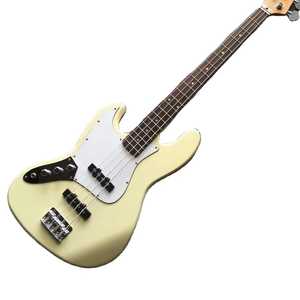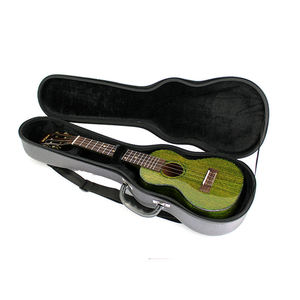
From micro-toleranced organic bone nuts to seasoned roasted maple necks and professional pickups, explore our high-precision components manufactured to stringent international OEM/ODM lutherie benchmarks.
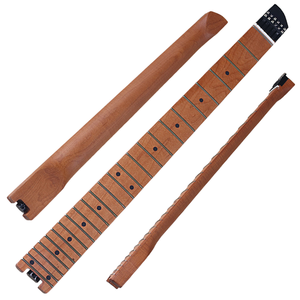
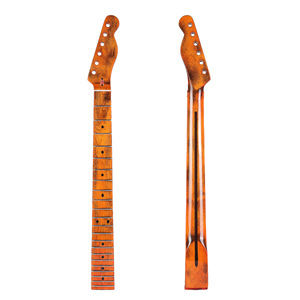
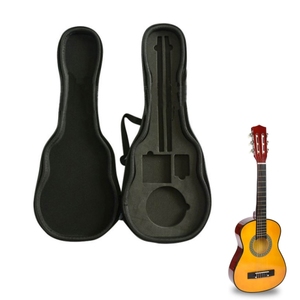
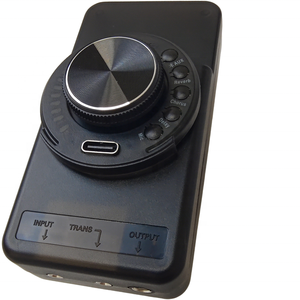
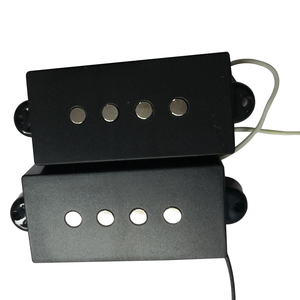
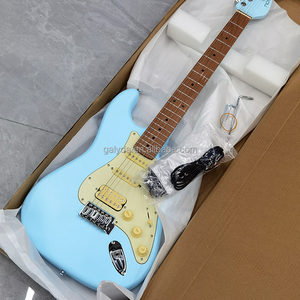
Tracing our lutherie roots back to 1956, we bridge old-world craftsmanship with high-volume five-axis CNC capability, providing tier-1 guitar manufacturers with zero-defect nut components and neck hardware.
We translate customer technical drawings (SolidWorks, AutoCAD, IGES, STEP) into optimized toolpaths. Whether requiring traditional flat-bottom nuts, curved radiused bases matching vintage neck designs, or compensated shelf-nuts, our automated lines guarantee repeatability across batches of 100,000+ units.
Improperly cured bone retains fats that dampen vibration and cause uneven string binding. Our state-of-the-art chemical and enzymatic bath processes extract subterranean lipoids under controlled vacuum pressure, delivering uniform structural density across unbleached vintage, bleached ivory, and stabilized amber variants.
Our raw bovine bone feedstock is exclusively derived from non-endangered pastoral cattle (Bos taurus) as an agricultural byproduct. Every commercial shipment is fully compliant with USDA, EU, and Asian quarantine standards, supplied with legal veterinary health declarations, fumigation certificates, and clear customs documentation.
The nut and bridge saddle constitute the primary boundary conditions governing vibrational energy transfer from the guitar string to the neck and soundboard. Understanding acoustic impedance mismatch is paramount for high-end instrument manufacturing.
In acoustic physics, the transfer efficiency of vibrating strings into the fundamental resonant modes of a tonewood instrument is quantified by specific acoustic impedance ($Z = \rho \cdot v$). When synthetic plastics like injection-molded ABS or Urea resin are employed, their high internal mechanical loss coefficient (damping factor $\tan \delta \approx 0.04 - 0.08$) dissipates high-frequency transients, muting harmonic overtone projection and dulling the open-string fundamental sustain.
Natural dense bovine bone (femur cortical bone) exhibits an optimal density ($\rho \approx 1.85 - 2.05 \text{ g/cm}^3$) paired with longitudinal acoustic velocity ($v \approx 3,400 - 3,800 \text{ m/s}$). This creates an ideal, low-loss acoustic boundary condition. Energy from open-string release translates cleanly through the neck joint with minimal phase dispersion, producing crisp top-end shimmer, articulate low-end definition, and enhanced fundamental sustain.
Engineering Directive: For premium electric guitars, classical nylon-string instruments, and acoustic dreadnoughts, structural consistency within the nut slot directly dictates action set-up stability, fret buzz prevention, and overall intonation precision.
| Nut Material Class | Density ($\text{g/cm}^3$) | Shore D Hardness | Acoustic Damping ($\tan \delta$) | CNC Machinability | OEM Sourcing Verdict |
|---|---|---|---|---|---|
| Organic Dense Bovine Bone | 1.85 – 2.05 | 84 – 88 | < 0.015 (Very Low) | Excellent (Micro-milling) | Industry Gold Standard (Luthier Choice) |
| Engineered Polymers (e.g. Synthetic Resin) | 1.60 – 1.75 | 78 – 82 | 0.022 – 0.030 | Good (Molded / Clean) | Acceptable for Mid-Tier Mass Production |
| Injection-Molded ABS / Urea | 1.05 – 1.25 | 68 – 74 | > 0.055 (High) | Soft (Prone to Burr) | Not Recommended for Quality Tiers |
| Bell Brass / Phosphor Bronze | 8.40 – 8.80 | 95 – 100 | < 0.008 (Extremely Low) | Requires High-Speed Coolant | Niche Heavy Metal / Bass Only |
Furthermore, from an ergonomic standpoint, bone is naturally self-lubricating due to micro-porosities that retain microscopic graphite or petroleum residues. When string trees and steep headstock break angles (common on 3+3 LP-style headstocks) exert vertical force upon string slots, our precision-slotted bone nuts minimize string-binding, preventing tuning slippage during aggressive string bending or heavy tremolo arm actuation.
As musical instrument production shifts toward increased factory automation, stricter environmental governance, and modern fretboard geometries, procurement managers must adapt their component sourcing strategies.
Global production lines are rapidly integrating Plek and automated fret-dressing machines. Guitar makers now demand bone nuts pre-slotted with precise take-off angles and 85% final slot depths, slashing assembly-line setup time from 15 minutes down to 90 seconds per guitar while extending nut filing tool life.
Modern progressive players are adopting fanned-fret and compound radius (e.g., 9.5" to 14" or 12" to 16") fretboards. This has catalyzed an unprecedented demand for custom-angled, multi-tiered bone nuts capable of maintaining uniform string take-off heights without manual secondary filing.
Supply chain transparency is no longer optional. Leading retail brands in North America and Western Europe require tier-1 suppliers to provide comprehensive ESG compliance, ISO 14001 certification, and verified veterinary byproduct chain-of-custody, preventing uncertified animal materials from entering commercial channels.
Vintage re-issue market segments favor unbleached, amber-tinted bone that retains natural organic hardness without chemical stripping. Simultaneously, factory pre-lubricated (vacuum oil-impregnated) bone nuts are gaining market share for non-locking tremolo electric guitars.
Distributors and e-commerce brands are prioritizing complete drop-in packaging for aftermarket luthiers: precision-ground nuts matched to specific historic specifications (Vintage ST 7.25", Modern TL 9.5", Archtop 12", Classical 52mm Flat), labeled with clear string-spacing and radiuses.
High-volume assembly facilities are adopting automated optical inspection (AOI). Our high-end OEM programs include micro-laser batch coding on unexposed nut bases, enabling automated optical sorting machines to verify dimension parameters before robotic neck slot insertion.
Critical engineering, compliance, and logistics specifications addressing the procurement requirements of guitar manufacturers, custom builders, and brand distributors.