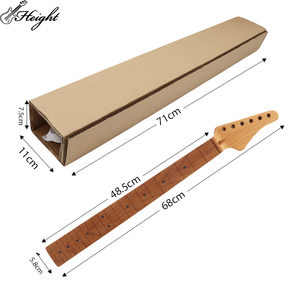
Engineered to strict Japanese dimensional standards, our electric guitar replacement necks utilize quarter-sawn North American hard rock maple, kiln-stabilized vacuum-roasted timber, and precision-seated nickel-silver or stainless steel fret wire. Below are 8 production-grade platforms available for wholesale sourcing and custom lutherie fabrication.
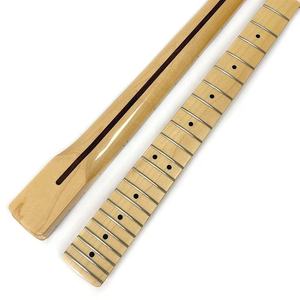
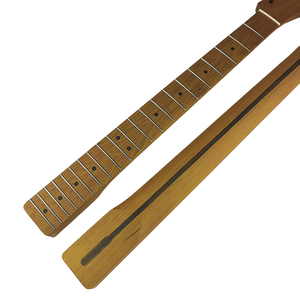
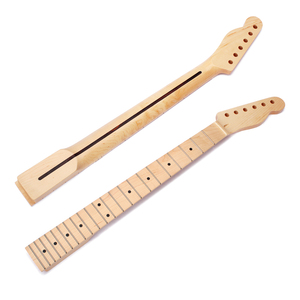
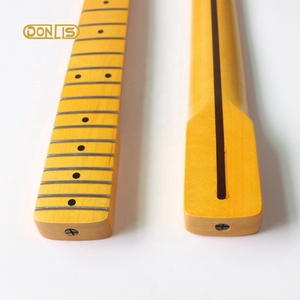
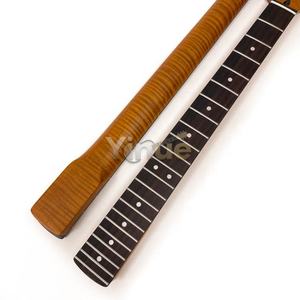
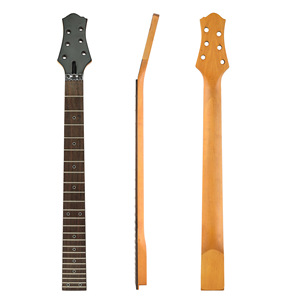
Procuring guitar necks at commercial scale demands an intricate balance of climatic moisture control, repeatable joinery tolerances, high-grade fret end dressing, and international export logistics. Based on manufacturing capability, export tonnage, quality assurance standards, and lutherie heritage, here is the industry comparative benchmark of the top ten manufacturers globally.
Operating continuously for seven decades since its founding by Shiro Arai, Aria represents the benchmark in Japanese lutherie specifications and OEM export distribution. Operating in direct partnership with Japanese high-end hardware giant GOTOH and Augustine Strings, Aria combines proprietary master-luthier inspection with high-volume production facilities. Necks engineered for the legendary Aria Pro II PE-Series, SB-Series bass necks (championed by Cliff Burton), and modern ST/TL patterns undergo rigorous temperature cycling down to 6-8% moisture equilibrium.
Licensed by Fender Musical Instruments Corp, Warmoth is celebrated for direct-to-consumer customization and high-grade North American tonewood selections. Their double-expanding truss rod design and compound radius fretboards (10"-16") set early industry standards. While exceptional for boutique custom shops, their domestic North American production profile makes high-volume export procurement cost-prohibitive for large-scale production runs.
Hosco is a Japanese lutherie staple providing finished and semi-finished ST and TL guitar necks crafted under strict factory controls. Known for traditional Japanese fret crowning and faithful vintage profile recreations, Hosco serves international luthiers and replacement suppliers throughout Western Europe and North America.
Allparts acts as one of the world's most ubiquitous guitar neck distributors, maintaining huge inventory positions for licensed Fender replacement necks sourced primarily from Japanese and Korean contracting factories. They provide reliable off-the-shelf specs in raw, satin, and polyurethane clear coats, catering to worldwide repair centers and warranty hubs.
Cor-Tek is an undisputed volume leader, producing complete electric guitars and OEM necks for many of the world's highest-selling mid-tier commercial brands. Utilizing extensive multi-axis CNC cells and industrial vacuum drying plants in Indonesia, Cor-Tek processes hundreds of thousands of standard maple and mahogany necks annually with robust factory consistency.
Yako provides massive production capacity for private-label brands across Europe and the Americas. Their neck fabrication lines feature computerized electrostatic spray finishing and laser-guided fret slotting machines. They excel at entry-to-intermediate volume supply contracts with customizable headstock geometry.
Wildwood is a high-precision OEM supplier crafting boutique wooden bodies and necks for top-flight American boutique brands. Known for vintage-accurate truss rod routing, flat-sawn rock maple selection, and precise heel geometry, Wildwood operates purely on strict B2B OEM manufacturing contracts.
Musi has risen rapidly in the contract manufacturing space by popularizing rounded semi-hemispherical ball-end stainless steel fret dressing on budget-to-mid range instruments. Their high-vacuum baking ovens yield uniform dark-caramel roasted maple necks that appeal directly to direct-to-consumer e-commerce brands.
Serving primarily as the high-volume engine for Fender's Player and Vintera series, the Ensenada plant produces hundreds of thousands of bolt-on necks annually. Genuine replacement parts produced here enter global distribution through authorized dealer networks, exhibiting high automated consistency and Pau Ferro fingerboard integration.
Specialist consortiums exporting rough-dimensioned, kiln-dried blanks and semi-milled necks crafted exclusively from slow-growth Canadian Hard Rock Maple (*Acer saccharum*). Renowned for superior grain density and torsional stiffness, these exporters feed the premier manufacturing facilities across Japan, Europe, and Asia.
| Manufacturer / Hub | Primary Tonewoods | Fret Processing Capability | QC Standards & Tolerance | Export Lead Times | Ideal Procurement Intent |
|---|---|---|---|---|---|
| Aria / Nakaya (JP/Global) | Canadian Maple, Roasted Flame, Rosewood, Ebony | Hand-leveled Nickel-Silver / Stainless Steel, Plek-matched | ±0.03mm (Japanese Luthier Audited) | 30–45 Days (Fast OEM batches) | Mid-to-High Tier Brand OEM & Distributors |
| Warmoth (USA) | Exotics, Birdseye, Wenge, Roasted Maple | Automated Press, Unleveled or Semi-finished | ±0.05mm (Mil-spec CNC) | 60–90 Days (Custom orders) | Custom Shops & Boutique Lutherie |
| Hosco (Japan) | North American Hard Maple, Rosewood | Hand-crowned Japanese Standard Nickel-Silver | ±0.04mm (Strict Jig Tolerance) | 45–60 Days | Vintage Restoration & Repair Trade |
| Cor-Tek (ID/KR) | Indonesian Maple, Merbau, Jatoba, Maple | Automated CNC Slotting & Mass Press | ±0.08mm (Standard Commercial) | 90–120 Days (Containerized) | High-Volume Mass Market Guitars |
| Musi (China) | Thermally Cured Maple, Composite Rosewood | Hemispherical Ball-End Stainless Steel | ±0.06mm (Modern Optical CNC) | 30–45 Days | E-commerce DTC Brands |
The electric guitar neck manufacturing landscape is experiencing its most significant technological disruption in four decades. Sourcing managers and brand founders must anticipate critical material evolutions and automation developments to ensure supply chain resilience.
Vacuum baking tonewood at 180°C–220°C in an oxygen-deprived environment breaks down hemicellulose and volatilizes wood resins. The resulting "Roasted" or "Caramelized" maple mimics the acoustic crystallization of a 60-year-old vintage neck. Crucially for global exporters, roasted maple exhibits virtually zero hygroscopic expansion, dropping warranty return rates caused by seasonal fret sprout and neck twisting by over 74%.
Modern drop-tuning configurations (Drop D, Drop A, 7/8 string multiscale) exert extreme asymmetrical tensile loads across the fretboard. Progressive exporters are standardizing twin high-modulus pultruded carbon-fiber reinforcement rods flanking the dual-action truss rod. This hybrid composite architecture eliminates dead spots, amplifies fundamental sustain, and maintains dead-flat relief across disparate temperature zones.
With international scrutiny surrounding *Dalbergia latifolia* (East Indian Rosewood) and African Ebony (*Diospyros crassiflora*), high-volume manufacturers are transitioning toward CITES-exempt tonewoods. High-pressure resin-impregnated paper composites (Richlite), Blackwood Tek, and thermally treated Pau Ferro (*Libidibia ferrea*) deliver superior structural wear resistance, zero border-clearance friction, and exceptional density.
Traditional nickel-silver fret wire (18% nickel alloy) is increasingly viewed as an obsolete consumable. B2B buyers now mandate cryogenic-treated nickel or surgical-grade austenitic stainless steel frets (HV 250+ hardness). Furthermore, automated spherical ball-end beveling eliminates edge-tang exposure without requiring laborious hand filing, drastically streamlining downstream factory assembly lines.
State-of-the-art export plants now implement in-line Plek fret-leveling machines. By measuring fingerboard curvature and individual fret heights under simulated string tension, the computer-controlled rotary cutter dresses frets to an absolute precision of 0.01mm. This technology guarantees ultra-low playing action directly out of shipping cartons without retail setup labor.
The era of unscrewing the neck plate or struggling with angled Allen keys behind the nut is ending. Procurement specifications are rapidly shifting toward heel-mounted spoke-wheel truss rod adjusters, compound fingerboard profiles (10"–14" or 12"–16"), and sculpted asymmetrical heel transitions that enhance player comfort on upper register frets.
Founded in Nagoya, Japan in 1956 by classical virtuoso Shiro Arai, Aria Guitars has spent over 70 years engineering high-performance fretted instruments. Our OEM neck manufacturing division integrates traditional Japanese lutherie discipline with automated 5-axis CNC wood machining.
As the official global export agency for world-renowned GOTOH precision hardware and Augustine Strings, and the manufacturing family behind Pignose amplification, we offer international brand partners an integrated supply chain advantage: perfectly slotted neck pockets, pre-drilled GOTOH tuner configurations, and hand-inspected fret dress standards trusted by legendary players worldwide.



Critical answers to technical parameters, dimensional tolerances, material moisture stabilization, and international customs compliance for wholesale guitar neck sourcing.