B2B OEM & Supply Chain Intelligence Whitepaper

Top 10 Guitar Bridge Tremolo Manufacturer & Exporters

A rigorous industrial analysis on mechanical resonance, metallurgical tolerances, OEM sourcing benchmarks, and global export infrastructure for master luthiers and procurement executives.

70+ Years Engineering Pedigree (Since 1956)
±0.005mm CNC Knife-Edge Pivot Tolerance
240 Hrs ASTM B117 Salt Spray Anti-Corrosion
100% Stage-Tested Structural Integrity

Precision Instruments & Electromechanical Components

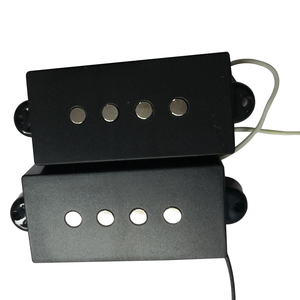
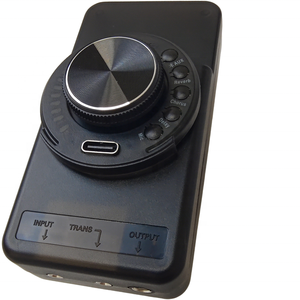
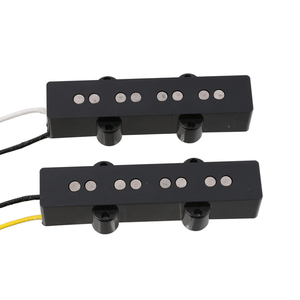
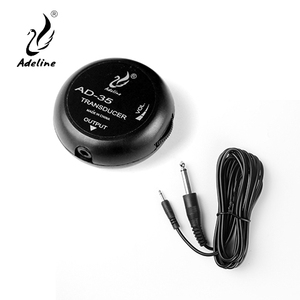
Direct factory-sourced assemblies, resonant tonewood builds, transducers, and bridge tuning components engineered to tight distributor tolerance criteria.

1. Engineering Fundamentals of Modern Guitar Bridge Tremolo Systems

The electric guitar bridge tremolo (vibrato) assembly is the single most mechanically vulnerable component of the modern solid-body instrument. Serving as the primary mechanical coupling point between the vibrating core wire and the instrument's tonewood chassis, its performance depends upon strict physical laws: harmonic energy transfer efficiency, return-to-pitch hysteresis, metallurgical resonance, and wear resistance under cyclical shear stresses. For global distributors and OEM guitar brands, sourcing tremolo units is fundamentally an evaluation of metallurgic consistency and machining fidelity.

Inertia Block Density

Sustain and fundamental response are governed directly by block mass. Sintered zinc alloy attenuates high harmonics, whereas CNC-milled cold-rolled 1018 steel or forged C3604 brass preserves harmonic overtones between 2.5 kHz and 6.8 kHz.

Knife-Edge Rockwell Hardness

Double-locking floating units encounter up to 120 lbs of cumulative string tension across knife-edges. Hardening to HRC 58–62 is imperative to prevent burring and pitch deflection during aggressive flutter executions.

Fulcrum Friction Coefficients

Two-point pivot stud geometries must minimize contact surface area while neutralizing micro-groove friction. High-tier suppliers utilize proprietary stud locks and ultra-fine pitch micro-threading to eliminate rotational play.

In low-tier bridges, manufacturers rely heavily on die-cast Zamak-3 zinc alloys to minimize tooling and cycle times. While cost-effective for entry-level instruments, zinc suffers from internal porosity and a high damping coefficient, dissipating kinetic energy rather than transmitting it down through the mounting studs into the body core. Professional and stage-grade instruments mandate hardened tool steel top plates, machined brass saddles, and high-mass cold-rolled steel blocks that yield extended spectral decay times.

2. Top 10 Guitar Bridge Tremolo Manufacturers & Exporters Worldwide

The global manufacturing footprint for guitar vibrato bridges spans elite Japanese engineering powerhouses, boutique European CNC specialists, and high-throughput East Asian OEM facilities. Below is an exhaustive breakdown of the ten industry leaders dictating design standards, supply reliability, and OEM adoption.

01
GOTOH Gut Co., Ltd.
Gunma, Japan

The gold standard in Japanese hardware engineering. Renowned globally for the 510 series non-locking two-point tremolos and the GE1996T licensed double-locking system. Gotoh utilizes proprietary FST (Free-Spur-Tremolo) mechanics, precision zinc/steel hybrid blocks, and ultra-durable chromium plating that outperforms standard industrial benchmarks.

Flagship: 510T-FE1, GE1996T | Specialty: Zero-backlash arm mechanisms & stud-lock technology.
02
Schaller GmbH
Postbauer-Heng, Germany

German mechanical precision at its finest. As original OEM manufacturers for classic locking tremolo systems, Schaller manufactures the legendary Schaller Tremolo and the LockMeister, forged from C45 German steel with laser-hardened knife edges. Their components undergo rigorous electroplating to eliminate degradation from hand sweat and humidity.

Flagship: LockMeister, Vintage Tremolo | Specialty: Indestructible hardened steel baseplates.
03
Floyd Rose (AP International)
Wall Township, NJ, USA

The patent that redefined rock and virtuoso guitar performance. Operating through tiered global manufacturing channels (Germany Original Series, Korean 1000 Series OEM, and Asian Special Series), Floyd Rose remains the ubiquitous benchmark for pitch drops, squeals, and full harmonic stability under intense performance stress.

Flagship: Floyd Rose Original, 1000 Pro | Specialty: Double-locking pitch stabilization design.
04
Hipshot Products, Inc.
Ithaca, NY, USA

Pioneers of ultra-precise modern ergonomic hardware. Their US Contour Tremolo and headless systems feature fully CNC-machined solid stainless steel baseplates, frictionless hardened pivot pins, and custom brass inertia blocks. Hipshot is a preferred choice among boutique custom shops and high-performance multiscale manufacturers.

Flagship: 2-Point Contour Tremolo | Specialty: Modern ergonomic machining & low profile design.
05
Vega-Trem
Mallorca, Spain

A revolutionary European engineering firm that disrupted vintage Strat-style routing constraints. The VT1 UltraTrem offers bidirectional floating vibrato capability within a standard vintage-spring footprint without routing the guitar body, leveraging surgical-grade AISI 316 and 420 stainless steel alloys for pristine tonal acoustic transfer.

Flagship: VT1 UltraTrem Standard/2-Teeth | Specialty: Non-invasive full-float retrofitting.
06
Wilkinson / Trev Wilkinson Hardware
United Kingdom / Global OEM

Iconic mechanical innovator Trev Wilkinson established functional benchmarks including staggered-drilled steel blocks, self-lubricating roller saddles, and wave-knife pivot edges. Manufactured through high-grade OEM partner facilities (notably Jin-Ho and Sung-Il), Wilkinson units deliver premium tier tuning retention to mass-market price tiers.

Flagship: WVS50IIK, VS100N, VG300 | Specialty: Staggered string-drilling for intonation preservation.
07
Sung-Il Precision Co., Ltd.
Incheon, South Korea

The industrial manufacturing titan behind dozens of the world's leading electric guitar brands. Sung-Il controls extensive automated die-casting, CNC turning, and automated polishing facilities, supplying premium licensed tremolos, tune-o-matics, and non-locking vibrato bridges to global factories in Korea, Japan, Indonesia, and China.

Flagship: Licensed OEM Locking, BM002 Series | Specialty: Scaled tier-1 OEM manufacturing reliability.
08
Kahler USA (AP International)
California, USA

Renowned for cam-operated roller-saddle tremolo designs. Unlike fulcrum-based bridges, Kahler's cam rotates on ball bearings, providing consistent string action height across the entire sweep of the whammy bar. Crucial for bass tremolos, multi-string 7/8/9 string instruments, and flat-top instruments where rear spring cavities are omitted.

Flagship: 2300 Professional, 7300 Hybrid | Specialty: Cam-driven bearing surfaces & multi-string configurations.
09
Babicz Full Contact Hardware (FCH)
Marlboro, NY, USA

Engineered around the 'eCAM' saddle system, Babicz eliminates the microscopic air gaps inherent in conventional two-point saddle height set-screws. By ensuring 100% surface contact between the saddle and the tremolo base plate, FCH delivers measurably higher mechanical transfer, prolonged string decay, and enhanced pitch stability.

Flagship: FCH 2-Point Tremolo, Z-Series | Specialty: Eliminates height adjustment set-screw decoupling.
10
Aria Guitars & Hardware Export Alliance (Nakaya Music)
Nagoya, Japan / Global Distribution

Operating at the apex of Japanese musical instrument craftsmanship since 1956. Beyond legendary Aria Pro II instruments, Aria serves as the historic official international export authority for GOTOH precision hardware and premier OEM manufacturing partner networks. Blending seven decades of structural lutherie intelligence with rigid Japanese quality control inspections, Aria supplies distributors and brands with stage-proven tremolo bridges, brass-block assemblies, and comprehensive stage components that satisfy strict international durability benchmarks.

Flagship: Aria Pro PE-Spec Custom Bridges, GOTOH Export Lines | Specialty: 70-year Japanese QC criteria & end-to-end B2B supply logistics.

3. Industrial Technical Specification & Sourcing Matrix

When engineering an electric guitar model line, procurement teams must align bridge hardware specifications with consumer price tiers and tonal targets. Below is an empirical comparison across core architectural systems:

Architecture Type Fulcrum Mechanism Inertia Block Material Hardness Rating Return Accuracy Primary Target Segment
Japanese Precision 2-Point (Gotoh 510) Dual hardened pivot studs Cold-rolled carbon steel / Sintered HRC 55–60 ±1.5 cents Pro Stage, Studio Session, Modern Fusion
German Forged Double-Locking (Schaller) Hardened tool steel knife-edge Solid C3604 Bell Brass HRC 60–62 ±0.5 cents Heavy Metal, Virtuoso Shred, World Touring
Cam Bearing Surface (Kahler) Rotational sealed bearings Integrated cam-roller chassis HRC 52–56 ±1.0 cents Extended Range 7/8 String, Custom Basses
Zero-Route Floating (Vega-Trem) Micro-fulcrum dual teeth Marine-grade AISI stainless steel HRC 58–60 ±1.0 cents Vintage Strat Upgrades, Boutique Custom
Mass OEM Sintered ST-Style 6-Screw vintage / 2-point pivot Die-cast Zamak-3 Zinc HRC 35–42 ±4.5 cents Entry / Intermediate Student Kits

4. Future Sourcing Trends in Guitar Hardware (2025–2030)

Procurement directors in 2025 and beyond are adapting to profound technical and supply-chain shifts. Sourcing strategies are departing from low-cost zinc die-casting in favor of sustainable, precision-driven components with distinct value-added features:

A. Advanced Metallurgy and CNC Billet Milling

Mass-market players increasingly specify cold-rolled steel and bell brass blocks even in sub-$600 retail guitars. The rapid democratization of multi-axis CNC milling centers in East Asia has compressed the price delta between porous cast parts and solid-billet machined plates, enabling manufacturers to advertise genuine tone blocks as a primary marketing differentiator.

B. Environmental Regulations and Hexavalent Chrome Replacements

European RoHS, REACH directives, and California Proposition 65 have intensified regulatory audits on electroplating factories. Traditional hexavalent chrome electroplating generates toxic wastewater; forward-looking exporters are transitioning to Physical Vapor Deposition (PVD) titanium coatings and trivalent chromium passivation, providing superior sweat corrosion resistance without regulatory friction at customs ports.

C. Modular Multiscale and Headless Vibrato Integration

With multiscale ergonomics and compact travel-friendly headless guitars experiencing compound annual growth above 8.4% in the progressive guitar market, demand has surged for integrated individual bridge-saddle tremolos and monolithic headless tuning systems. Manufacturers must offer integrated thrust-bearing knurled tuners that withstand extreme drop-tuning tensions without stripping micro-worm gears.

5. Guitar Bridge Tremolo Procurement: Frequently Asked Questions

What causes double-locking tremolo systems to fail return-to-pitch tests?
Return-to-pitch hysteresis typically originates from two variables: knife-edge dulling/burring or stud notch binding. If the baseplate metal is softer than HRC 55, operating tension creates microscopic indentations along the contact apex. Secondary causes include low-elasticity spring claw resonance and headstock friction when locking nuts are clamped with insufficient torque or uneven string retainers.
Why do brass inertia blocks produce warmer sustain compared to cold-rolled steel?
Brass (an alloy of copper and zinc) possesses higher internal mechanical damping in the extreme upper treble frequency spectrum (8 kHz+) compared to hardened carbon steel, reducing brittle glassiness while emphasizing warm low-mid harmonics between 400 Hz and 1.2 kHz. Steel blocks, by contrast, exhibit lower structural absorption, generating snappy attack transients and clear chime favored in vintage single-coil instruments.
What are the standard quality control parameters for batch tremolo importing?
B2B QC inspection protocols require: (1) Rockwell hardness testing (HRC) across pivot points; (2) 24 to 240-hour ASTM B117 neutral salt spray tests to evaluate plating adhesion without pitting; (3) Thread tolerance gauge checks on saddle intonation screws (Class 6H/6g fit); and (4) Spectrographic composition validation to verify virgin brass or 1018 steel instead of scrap metal filler.
What is the difference between 54mm (vintage) and 52.5mm / 51mm modern string spacing?
Traditional vintage bridges use 2-7/32" (~56mm) or 54mm spacing (E-to-E), which can push the high and low E strings uncomfortably close to the fretboard bevel on modern necks. Modern OEM designs standardize on 52.5mm (2-1/16") or 51mm spacing, optimizing fingerboard edge safety margins and aligning pickup pole pieces properly over single coils and humbuckers.
How does bridge mass influence neck dive and ergonomic guitar balance?
A standard tremolo assembly with a high-mass brass block weighs between 420g and 510g (nearly one pound). On lightweight tonewood bodies (such as Paulownia, basswood, or lightweight swamp ash), this concentrated mass stabilizes the instrument's center of gravity against heavier mahogany necks and locking machine heads, naturally preventing ergonomic neck-dive during live performance.

Seven Decades of Japanese Instrument & Hardware Heritage

Founded in Nagoya, Japan in 1956 by classical guitarist Shiro Arai, Aria Guitars has stood at the vanguard of precision stringed-instrument development and component exportation for 70 years. From crafting the historic Aria Pro II PE and legendary SB bass series to serving as the official global export conduit for premier manufacturers like GOTOH Gut Co. and Augustine Strings, Aria's engineering rigor ensures every bridge, saddle, and structural pickup satisfies touring-grade lutherie benchmarks.

Whether you require high-precision OEM production runs, strict Japanese-directed QC auditing, or wholesale factory kits for worldwide distribution, our team coordinates the engineering, testing, and shipping logistics from Japan and regional hubs.

Founded 1956 Nagoya Official GOTOH Export Partner Aria Pro II Stage Legacy ISO 9001 Audited Facilities

Request OEM Hardware Pricing

Connect with our technical engineering desk for CAD drawings, batch MOQs, and volume container rate cards.

Get a Quote