
Explore high-specification OEM/ODM instruments, tonally calibrated strings, machine heads, and replacement parts engineered for global distributors.
A benchmark evaluation of production capabilities, luthier credentials, tonewood processing, and OEM/ODM capacity across Japan, Spain, Germany, and key global hubs.
Benchmark data to assist procurement directors in balancing craftsmanship, production lead times, and structural specifications.
| Manufacturer / Brand | Primary Origin | Key Acoustic Architecture | CITES Compliant Tonewoods | Average Lead Time | Target Market Segment |
|---|---|---|---|---|---|
| Aria Guitars | Nagoya, Japan / Asia | Hauser Fan, Spanish Foot, GOTOH Hardening | Fully Certified (Ovangkol/Rosewood) | 30–60 Days | Conservatory, Retail Chains, OEM/Private |
| José Ramírez | Madrid, Spain | Asymmetric Ramirez Fan, Thick Rim Soundboard | Documented Spanish Stocks | 90–180 Days | Concert Soloists, Collector Boutiques |
| Alhambra Guitars | Muro de Alcoy, Spain | CNC Roughing + Hand Tuning, 7-Fan Array | FSC & CITES Verified Alternatives | 45–75 Days | Institutions, Global Distributors |
| Hanika Gitarrenbau | Baiersdorf, Germany | Nomex Double-Top, Carbon Core Neck | Thermo-Treated European Maple/Spruce | 60–120 Days | Audiophile Concertists, Pro Audio Dealers |
| Martinez Guitars | Guangzhou, China | Lattice Bracing, Elevated Fingerboard | Compliant Indian Rosewood, Ebony | 40–60 Days | High-Volume OEM, Academic Programs |
| Kohno / Sakurai | Tokyo, Japan | Complex Cross-Lattice, Natural Age Cure | Vintage Certified Seasoned Stocks | 180–360 Days | Elite Performance Boutiques |
| Hermanos Camps | Girona, Spain | Traditional Spanish Fan + Piezo Isolation | Controlled Spanish Cypress/Cedar | 45–90 Days | Stage Musicians, Crossover Dealers |
| Esteve Guitars | Valencia, Spain | Spanish Heel, Carbon Braced Fan | Certified Pau Ferro, Cocobolo | 60–90 Days | Specialist Spanish Classical Shops |
| Altamira Lutherie | International | Australian Lattice, French Polish (Shellac) | European Alpine Spruce/Cedar | 45–75 Days | Advanced Students, Concert Stage |
| Cordoba Iberian | Spain / USA | Torres Light Bracing, Radiused Necks | CITES Pre-Cleared Rosewood & Maple | 30–60 Days | Commercial Retailers, Modern Crossover |
Key technical advances transforming modern classical guitar design and international volume production.
Concert classical guitars increasingly use double-top soundboards. By sandwiching an aerospace-grade Nomex honeycomb core between two paper-thin layers of solid spruce or cedar (each roughly 0.6mm thick), luthiers reduce the top's mass by up to 30% while maintaining structural stiffness. This creates immediate transient response, extended sustain, and broader dynamic headroom that allows nylon strings to project clearly in modern concert halls without amplification.
While traditional Torres and Hauser fan patterns produce warm, woody, and nuanced traditional tone, radial carbon-fiber-reinforced balsa lattice bracing offers higher volume and consistent string balance. Factories catering to international classical competitions now offer dual-line options: traditional Spanish fan bracing for purists seeking tonal color, and lightweight lattice bracing for performers requiring projection, fast articulation, and even string-to-string balance.
To prevent wood cracking and structural deformation from cross-continental shipping, factories use kiln-torrefied soundboards. By baking spruce or cedar tops in an oxygen-deprived chamber at 150°C–180°C, the wood's hemicellulose decomposes, crystallizing internal resins. This artificial aging replicates the acoustic velocity and low internal damping of a 50-year-old cured instrument while making the wood less susceptible to fluctuating ambient relative humidity.
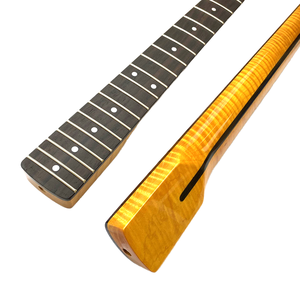
Contemporary classical players frequently demand access to the upper register above the 12th fret. Builders address this through elevated fingerboards that rise above the soundboard plane. This architectural update gives the left hand better clearance for frets 12 through 20 while changing the string pull angle over the saddle, which drives the bridge downward for stronger soundboard excitation.
Strategic purchasing insights for volume importers, institutional contractors, and commercial instrument brands.
Due to strict CITES Appendices covering Rosewoods (Dalbergia) and ebony export limitations, enterprise buyers are pivoting to sustainable hardwoods such as Ovenkol, Granadillo, Pau Ferro, and Australian Blackwood. Modern heat treatments deliver harmonic profiles matching aged Indian rosewood while simplifying international customs compliance and expediting freight clearance.
Traditional French polish shellac yields superior acoustic transparency but scratches easily and struggles in humid retail environments. Manufacturers are adopting ultra-thin, photo-initiated UV-cured polyester and polyurethane lacquers applied at thicknesses below 80 microns. This protects the instrument while allowing open top vibration and cutting finishing times from three weeks down to minutes.
Demand for hybrid crossover models is rising faster than traditional 52mm flat-fingerboard classical guitars. Commercial buyers are specifying 48mm–50mm nut widths, slight 16-inch fretboard radiuses, Venetian cutaways, and discreet onboard preamps to serve fingerstyle guitarists, jazz musicians, and steel-string players seeking nylon-string tone.
Clear, practical answers to common technical, logistics, and quality assurance questions in global classical guitar sourcing.
Reputable factories maintain dedicated climate-controlled wood processing, glue curing, and assembly rooms kept at 45%–50% Relative Humidity (RH) and 20°C–24°C. Raw soundboards, backboards, and neck blanks undergo 6 to 24 months of natural seasoning, followed by specialized dehumidification kilns. This controlled environment balances the wood's moisture content at approximately 8%–10% Equilibrium Moisture Content (EMC), ensuring the soundboard withstands dry winters in North America or humid summers in East Asia without cracking or collapsing.
In a true Spanish Heel (integral neck construction), the neck block is carved directly from the neck timber itself, and the body's sides are slotted into the foot of the neck before the soundboard and back are glued. This creates a unified wooden chassis that transfers string energy cleanly into the body, maximizing bass resonance and harmonic bloom. In contrast, bolt-on or dovetail joints build the soundbox first, adding the neck afterward. While dovetails simplify warranty neck resets and lower factory labor costs, the traditional Spanish heel remains the gold standard for concert instruments.
For fully customized private-label production (custom rosette patterns, proprietary headstock shapes, selected neck carves), entry MOQs typically range from 50 to 100 units per spec run for mid-tier factories, with production lead times running 60 to 90 days to allow for finish curing. For master-grade all-solid concert instruments, MOQs drop to 10–20 units, though bench production cycles can extend to 120–180 days due to hand-voicing and French polishing.
High-grade soundboards are graded from A up to Master (AAAAA) based on runout, ring density, grain parallelism, and cross-grain medullary rays (silking). Top manufacturers complement visual sorting with physical deflection testing: applying calibrated gram weights to measure soundboard flex and using digital acoustic tap analysis to register fundamental pitch resonance (target range ~F#2 to G2 on unbraced spruce plates).
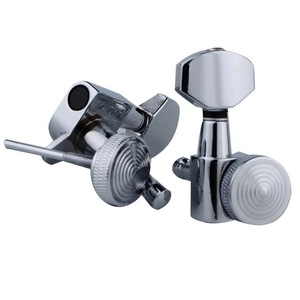
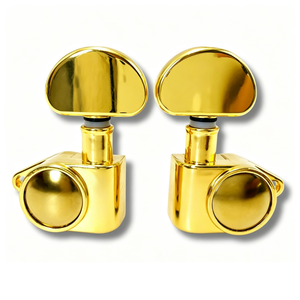
Nylon strings have greater elasticity than steel strings, making tuning machines with high gear ratios critical. Sourcing specs should mandate a minimum 1:16 or 1:18 gear ratio, moving to 1:21 on professional models (such as GOTOH or Guyker premium sealed lines). The worm shafts must use frictionless brass, aluminum, or stainless bearings with reinforced friction plates to prevent backlash slippage under concert tension.
Importers must confirm that all woods fall outside CITES Appendix I prohibitions (such as Brazilian Rosewood, Dalbergia nigra, which requires extensive pre-convention permits). For woods listed under Appendix II (such as certain Dalbergia species or Bubinga), the factory must provide CITES Export Permits issued by the country of origin, which are validated by the importer's customs authority upon entry. Reputable factories supply Lacey Act declarations (USA) and EU Timber Regulation (EUTR) chain-of-custody documentation verifying legal harvest origins.
Whether you require all-solid concert classical instruments, institutional conservatory programs, or dependable private-label OEM/ODM string supply, our technical team is ready to assist.
Get Catalog