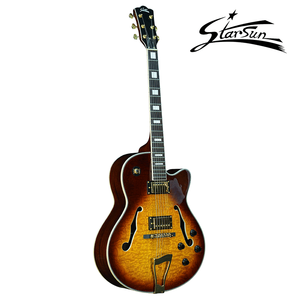

Explore high-demand production models, custom drop-ship necks, precision hardware, and acoustic foundations built to exacting ISO-compliant tolerances for global OEM and wholesale distribution.
The international musical instrument market has experienced an aggressive shift toward high-performance, compact, and ergonomically balanced instruments. The electric bass—historically characterized by heavy tonewood planks, unwieldy 34-to-37-inch scale levers, and massive headstocks prone to dead spots and rotational neck dive—is undergoing its most significant structural evolution since Leo Fender popularized the solid-body instrument in the 1950s. At the center of this movement is the headless electric bass. Sourcing agents, OEM brand managers, and commercial procurement directors require uncompromising insight into how modern production hubs engineer, machine, and assemble these technically challenging instruments.
Unlike traditional basses where neck construction allows broader mechanical forgiveness, a headless bass redistributes the entire tensioning apparatus from the peghead down to the base of the body. The tuning mechanics, string anchor collars, and bridge saddles become a unified mechanical system subject to tremendous sheer load. In this comparative industry whitepaper, we dissect the manufacturing tiers, production competencies, and engineering philosophies governing the world's leading headless bass manufacturers and partner factories.
Originating from Nagoya, Japan in 1956, Aria's engineering division combines 70 years of lutherie pedigree with state-of-the-art CNC precision. Known globally for legendary bass innovations like the SB series and the SB-CLB (celebrated by Cliff Burton), Aria's modern manufacturing facilities lead in structural rigidity, multi-laminate neck stability, and high-spec OEM assembly.
The pioneer of the entire headless category. Ned Steinberger revolutionized the sector through carbon-composite integration and synchronous tuning bridges. NS Design remains the benchmark for conceptual ergonomics, minimalist geometry, and high-tension balance metrics across professional concert stages.
Famous for their patented EndurNeck™ trapezoidal neck architecture and multiscale (fanned-fret) ergonomic systems. Strandberg utilizes high-grade assembly factories across Asia and Europe, utilizing aerospace-grade aircraft aluminum modular bridge systems that maximize fundamental string resonance.
The undisputed authority in multiscale fan geometry. Dingwall basses employ scale lengths spanning from 37 inches on the B-string down to 34 inches on the G-string. Their headless variants offer unmatched low-frequency clarity, eliminating phase smearing and harmonic muddiness in Drop-A and lower registers.
With their EHB series, Ibanez brought headless ergonomics to the mainstream commercial catalog. Produced via advanced contract factories with high-spec robotic multi-axis shaping, these models prioritize chambered lightweight bodies, roasted tonewood stability, and versatile active EQ circuit arrays.
Operating a modernized direct-to-consumer and rapid-batch facility in Southern California, Kiesel's Zeus and Osiris headless series are known for rapid single-piece CNC chambering, extensive exotic top laminates, and proprietary one-piece clamping systems designed for double-ball or standard strings.
European boutique manufacturing agility at scalable contract pricing. Their 'Frog' and 'Cazpar' headless variations showcase artisan hand-finishing, custom magnetic pole spacing, and bespoke preamp configurations utilizing Delano and Glockenklang electronic topologies.
As one of the world's largest contract musical instrument builders, Cort's mega-plants produce high-volume headless models for numerous Tier-1 labels alongside their proprietary Artisan Space series, excelling in automated electrostatic lacquering and lean manufacturing cost efficiencies.
The definitive British luthier house for monocoque carbon-fiber weaving and headless composite execution. Made famous by Mark King of Level 42, Status provides reference-level slap attack, lightning-fast transient response, and immunity to atmospheric thermal fluctuations.
Exemplifying ultra-luxury tonewood selection and hyper-precise neck-through joints. Mayones produces headless basses characterized by multi-piece wenge-purpleheart laminates, individually grounded brass bridge saddles, and low-noise active preamps tuned for modern progressive metal.
In traditional headstock manufacturing, poor wood drying can be masked behind truss-rod adjustments and tuner gear ratios. In headless manufacturing, any torsional twist along the neck blank causes severe bridge-tuner binding and localized intonation breakdown. Sourcing teams must prioritize facilities with dedicated kiln-drying stabilization and certified metallurgical hardware sourcing over sheer low-cost wood finishes.
| Manufacturing Tier | Neck Reinforcement Method | Bridge Metallurgy & Tolerances | Scale Length Capabilities | Target Procurement Market |
|---|---|---|---|---|
| Japanese Flagship (Aria / Fujigen) | Multi-ply roasted maple with dual carbon rods | Precision CNC machined solid bell brass / ±0.01mm | 34", 35" Extended & Multiscale | Professional Touring, Collectors, Tier-1 Retail |
| European Custom (Mayones / Status) | Monocoque carbon composite or wenge core | Individually isolated aircraft aluminum pods | 34.25" Ergonomic / Custom Fanned | Boutique High-Margin Showrooms |
| Direct-to-Scale Hubs (OEM Industrial) | Thermo-treated hard rock maple + dual action rod | Zinc die-cast or cold-rolled steel alloy | Standard 34" or 30" Short-scale | Global Wholesale, Retail Chains, Educational |
| Proprietary Specialized (Dingwall / Strandberg) | Asymmetrical trapezoidal / Carbon wrapped | Modular monorail string-lock saddles | 37" - 34" Progressive Multiscale | Modern Progressive Metal, Solo Bassists |
As commercial brands prepare their five-year product roadmaps, several industrial disruptions are dictating supply-chain investments. Buyers are no longer purchasing single-model inventory; they are sourcing integrated modular platforms capable of rapid customization. The key procurement developments include:
Early headless basses required proprietary double-ball end strings, frustrating consumers and limiting after-market sales. Next-generation factory tooling centers on universal head-collars that accept standard single-ball strings via micro-set screws without sacrificing tuning stability.
Wood stability is paramount. Vacuum-pyrolysis (roasting tonewood at 180°C–220°C in an oxygen-depleted kiln) removes volatile hemicellulose and bound moisture. The result is a neck blank practically impervious to trans-oceanic shipping humidity spikes and climatic shifts.
Because headless bass bodies feature reduced physical wood mass, factories are integrating onboard active preamps with switchable mid-frequency sweeps (250Hz vs 800Hz) and passive tone bypass circuits to compensate for lost physical low-end acoustic mass.
Navigating foreign manufacturing networks requires proven trust, institutional stability, and stringent quality governance. Rooted in the lutherie principles established in Nagoya, Japan in 1956, our factory network provides enterprise OEM and distribution partners with a decisive competitive advantage:
Product specifications, tolerance guidelines, and acoustic performance thresholds are governed under our Japanese inspection framework. Every production batch undergoes laser straightness measurement, multi-point fret dressing, and complete electrical isolation testing before container loading.
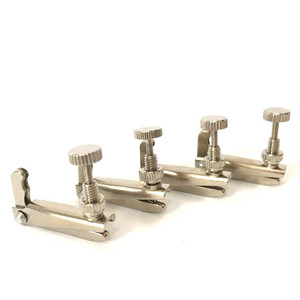
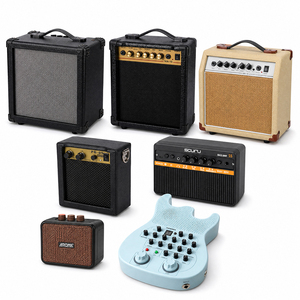
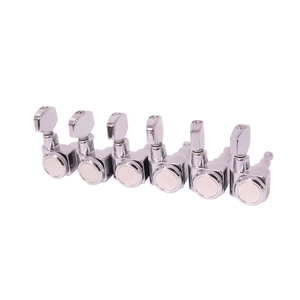
As the official export partner for GOTOH parts and Augustine strings, and the steward of iconic brands like Aria Pro II and Pignose portable amplifiers, our manufacturing network provides seamless access to world-class tuning systems, custom-cast bridges, and premium hardware without middleman markups.
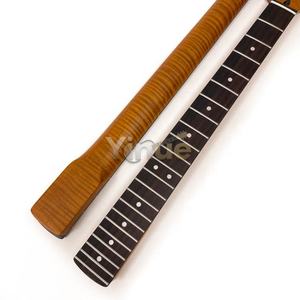
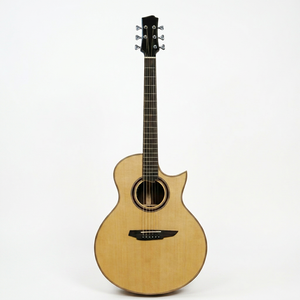
Whether you require full OEM design and custom-cast tooling for a boutique headless bass line or low-MOQ access to roasted maple replacement necks, jazz guitars, and micro amplifiers, our multi-tiered fulfillment operations support distributor expansion worldwide.
Detailed technical and commercial answers addressing common bottlenecks faced by importers, retail merchandisers, and private label developers.
Connect directly with our engineering and procurement team to request custom OEM sample builds, comprehensive factory audit data, or wholesale volume tier pricing.
Get a Quote