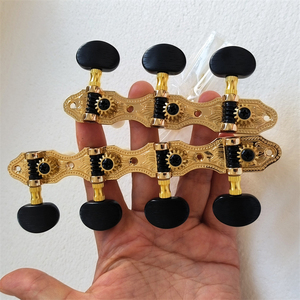
Procure premium mini amplifiers, precision guitar necks, hardware, and performance guitars designed to meet rigid international market compliance.
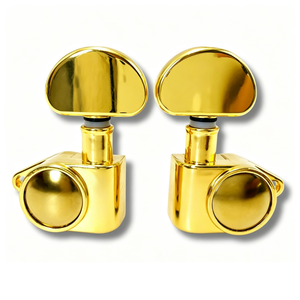
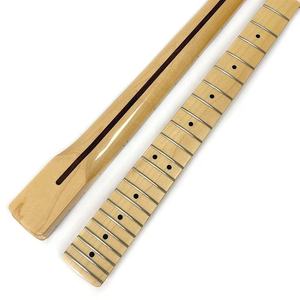
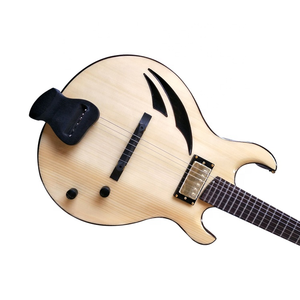
Critical architectural benchmarks, solid-state efficiency, and digital convergence shaping the OEM audio supply chain.
The global musical instrument industry is witnessing a structural migration toward ultra-portable, multi-functional amplification units. Commercial buyers, enterprise procurement directors, and tier-one importers increasingly face a market where conventional low-wattage practice amps are obsolete. Today’s international consumers demand micro-footprint desktop devices that combine ultra-low latency digital signal processing (DSP), advanced analog simulation, and robust battery power architecture capable of sustaining uncompromised high-fidelity gain stages.
Historically originated through pioneering compact solutions such as the iconic Pignose 7-100—a core family brand preserved and supported under our corporate umbrella—miniature amplifiers have transitioned from novelty items into pro-tier stage monitors and mobile studio workstations. Leading manufacturers must balance internal electromagnetic interference (EMI) shielding within compact enclosures while preventing heat-induced throttling across high-output Class-D topologies.
Modern mini amplifiers leverage Gallium Nitride (GaN) switching circuits and Class-D stages to deliver up to 300W peak handling without the thermal overhead or cabinet weight associated with linear toroidal transformers.
Direct loss-less USB Audio Class 2.0 (UAC2) protocols enable on-the-fly On-The-Go (OTG) stereo tracking directly to iOS, Android, and macOS/Windows platforms without external multi-channel audio interfaces.
Moving away from legacy alkaline cells, export units integrate intelligent battery management systems (BMS) with high-density Lithium Iron Phosphate cells, offering 8+ hours of playback and safe global ocean/air transport certification.
Critical shifts in global regulatory standards, consumer adoption patterns, and component supply chains.
As enterprise retailers streamline warehouse turns and target cross-border DTC sales, mini guitar amp sourcing relies heavily on miniaturized, software-enhanced hybrid hardware. B2B buyers must evaluate production roadmaps against three dominant macro shifts:
| Evaluation Metric | Legacy Practice Amps (2015-2020) | Current Enterprise Generation (2021-2024) | Next-Gen Intelligent Units (2025-2030 Trend) |
|---|---|---|---|
| Power Topology | Class AB Linear ICs (High Dissipation) | Standard Class-D (Pulse-Width Modulated) | GaN-Driven Hybrid PWM (94% Efficiency) |
| DSP & Modeling | Fixed Op-Amp Overdrive, Basic Spring Reverb | 24-bit / 48kHz Fixed Impulse Response (IR) | Floating-Point 32-bit/96kHz Neural Network Profiling |
| Battery Systems | 6x AA Batteries or External 12V Wall Wart | 18650 Li-ion Packs (Non-regulated BMS) | Certified LiFePO4 / USB-PD 65W Rapid Charge Support |
| Direct Connectivity | 3.5mm Analog Headphone Out (Unbalanced) | Bluetooth 4.2 / Micro-USB 1.1 Out | Bluetooth 5.3 Low-Latency Audio + USB-C OTG Direct Stream |
| Cabinet Materials | MDF Board with Polyvinyl PVC Tolex | Injection Molded ABS Plastic | Acoustic-Grade Resonance Woods & Sustainable Bio-composites |
From an international shipping economics standpoint, the transition to high-efficiency Class-D enclosures directly yields up to 42% reductions in container freight volume, substantially reducing CBM landed costs for importers. Coupled with universal USB Type-C Power Delivery (PD 3.0), distributors bypass the expensive regional inventories traditionally caused by stocking incompatible UK, EU, US, and AU AC plug adapters.
Combining the heritage of Japanese guitar building with an industrial OEM/ODM supply chain network.
Founded in Nagoya, Japan in 1956 by classical guitarist Shiro Arai, our operations oversee globally recognized lines including Aria, Aria Pro II, and the iconic Pignose amplifier line—trusted by legendary artists such as Cliff Burton.
Beyond instrument assembly, we serve as the authorized global export partner for premier hardware giants including GOTOH Gut Co. Japan and Augustine Classical Strings, ensuring verifiable component authenticity throughout your builds.
Every lot manufactured under our umbrella adheres to strict quality inspection manuals directed out of our Nagoya technical headquarters, ensuring our partners receive stable, low-RMA batches suitable for distribution into regulated Western markets.
Speak directly with our technical engineering and international B2B export team to request wholesale price catalogs, OEM/ODM parameter sheets, or distributor exclusivity assessments.
Clear, direct solutions covering export certifications, OEM/ODM customizations, and supply chain logistics.