
Direct factory production lines, master-grade concert fretted instruments, and export-ready stage equipment certified for global distributors.


The international supply chain for Spanish fretted acoustic instruments has experienced a seismic paradigm shift over the last decade. Professional musical instrument distributors, boutique labels, and institutional retailers across North America, the European Union, and Australasia are increasingly relocating their mid-to-high-tier Spanish guitar procurement to premier Chinese manufacturing hubs. This migration is driven not merely by cost arbitrage, but by a radical upgrade in precision lutherie, botanical supply-chain integration, and climate-adaptive acoustic assembly.
Historically, the production of flamenco guitars was confined to artisan workshops across Andalusia, Madrid, and Valencia. While these master luthiers established the aesthetic, percussive tonal signature, and geometric parameters of the flamenco Blanca and Negra, European artisan guilds have faced severe structural bottlenecks: aging artisan workforces, prohibitive labor overheads, erratic lead times, and inability to deploy digital hygroscopic kiln tracking. China's top tier of specialized stringed instrument manufacturers—anchored by Japanese manufacturing lineage and precision quality-control frameworks originating back to 1956 through the foundational legacy of Aria Guitars—has successfully resolved this bottleneck.
Modern Chinese exporters operate under dual-track production philosophies. High-volume institutional and student flamenco lines leverage 5-axis CNC routing for neck profiles and bridge placements within tolerances of ±0.02mm, while dedicated master lutherie ateliers execute hand-voicing of harmonic fan braces, traditional Spanish heel slipper neck joints (tacón), and ultra-thin shellac French polish applications. As a result, European and American brand owners can procure high-end, responsive flamenco instruments with consistent intonation, immediate dynamic response (duende), and absolute environmental stability across disparate global climate zones.
Precise acoustic architecture differentiates genuine flamenco guitars from conventional nylon-string classical instruments.
| Acoustic Metric / Parameter | Flamenco Blanca (Traditional) | Flamenco Negra (Concert Soloist) | Stage Hybrid (Electro-Cutaway) |
|---|---|---|---|
| Primary Soundboard Tonewood | Solid German Spruce (Grade AAA/Master) | Solid European Spruce or Western Red Cedar | Solid Engelmann Spruce / Sitka Spruce |
| Back & Side Acoustic Plates | Spanish Cypress (Cupressus sempervirens) | Solid Indian Rosewood / Cocobolo | Flamed Sycamore / Select Walnut |
| Body Depth (Upper / Lower Bout) | 88mm – 93mm (Shallow cavity resonance) | 92mm – 97mm (Extended bass projection) | 80mm – 88mm (Anti-feedback thin profile) |
| Action Setup at 12th Fret (6th/1st) | 2.4mm – 2.7mm (Ultra-low, percussive rasp) | 2.8mm – 3.0mm (Balance of snap and sustain) | 2.2mm – 2.5mm (Fast fingerstyle crossover) |
| Internal Bracing Architecture | Asymmetric 7-Fan Traditional Torres/Hauser | Modified Radial Fan or Carbon-Reinforced | Lattice or Parallel Braced with Bridge Plate |
| Protective Tap Plates (Golpeadores) | Dual transparent PVC/Mylar (0.15mm) | Dual high-gloss clear or white electrostatic | Extended ergonomic clear wrap-around |
| Nut / Saddle & String Spacing | Bone / 52mm nut / 58mm at saddle | Bone / 52mm nut / 59mm at saddle | Compensated Bone or Tusq / 48mm–50mm nut |
Procurement directors must understand that the distinction between a classical and flamenco instrument is structural, not cosmetic. The flamenco soundboard is shaved significantly thinner—often between 2.0mm and 2.3mm—allowing for an instantaneous, explosive attack with rapid transient decay. The integration of transparent golpeadores (tap plates) on both the treble and bass flanks of the top accommodates violent golpe percussive strikes without compromising soundboard integrity. In our Chinese facilities, every top is gauged using digital deflection acoustic indexing to match bracing stiffness to the specific elasticity modulus of the timber batch.
Integrating seven decades of Japanese management discipline with scalable Chinese export infrastructure.
Rooted in the historical instrument design lineage established in Nagoya, Japan in 1956. We maintain absolute continuity across structural neck stability, tonal voicing, and acoustic resonance across seven decades of master lutherie.
Tonewood blanks undergo multi-stage RF-vacuum dehydrating and seasoning chambers, locking wood equilibrium moisture content (EMC) strictly between 7% and 9% to permanently eradicate fret bloom and wood checking in export markets.
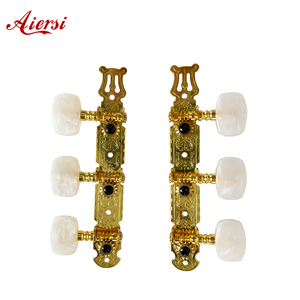
Official direct export synergy with premium global suppliers including Japanese GOTOH machine heads, Augustine high-tension nylon strings, and Savarez carbon formulations, guaranteeing authentic stage-ready performance right out of the carton.
Every neck block, traditional Spanish heel joint, and fingerboard radius is cut utilizing multi-axis high-speed CNC centers, eliminating human error in string-to-fret clearance and neck angle geometry for effortless rasgueado execution.
Comprehensive chain-of-custody documentation on all tonewoods. Complete pre-cleared CITES Appendix II permits and Lacey Act verification files accompany every export container, preventing port customs delays.
From private-label branding, customized headstock carvings, and localized nut widths (50mm vs. 52mm) to boutique lacquer formulations, our dual assembly workshops facilitate custom batch runs starting at low minimum container allocations.
Anticipating regulatory updates, ergonomic demands, and smart acoustic technologies shaping global distributor margins.
Due to harvesting restrictions on Dalbergia and Spanish Cypress, demand is surging for torrefied thermal-cured European Maple, Monterey Cypress, African Blackwood alternatives, and FSC-certified Richlite composite fingerboards offering superior environmental stability.
Modern stage performers require live percussive amplification. The factory integration of internal cardioid condenser microphones paired with under-saddle piezo ribbons allows pure capture of both string rasp and body percussion without feedback anomalies.
While traditional conservatory players demand a flat 52mm fretboard, commercial market data reveals expanding demand for crossover profiles: 48mm–50mm nut widths, subtle 16" fingerboard radii, and ultra-slender Spanish neck contours that accommodate steel-string players.
Transition away from thick polyurethane coatings toward micro-thin (under 0.08mm) UV-cured acrylic and nitrocellulose hybrids. This achieves the breathability and acoustic openness of traditional French polish while providing superior scratch resistance against flamenco picado strikes.
Distributors seeking long-term margin defense must evaluate Chinese manufacturing partners not merely on FOB unit pricing, but on their proactive research and development in climate resilience. With fluctuating global shipping containers encountering severe humidity swings across ocean transit, our factory implements vacuum-sealed inner vapor bags and calibrated micro-desiccants, ensuring that every guitar arrives at Western retail stores at optimal setup pitch, free from neck warping or top sinkage.
Detailed technical answers to common queries submitted by corporate buyers, importers, and procurement directors.
Connect with our senior engineering and OEM export team to request full wholesale price catalogs, request physical master sample instruments, or discuss proprietary private label manufacturing specifications.
Contact Us