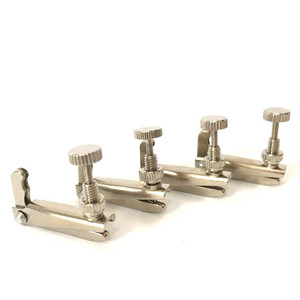
Orchestral Hardware
White Violin Fine Tuner Accessories Viola Tuner Cello Tuner
Lightweight micro-adjustment tailpiece hardware engineered with smooth thread engagement for rapid orchestral calibration.

The definitive 2026 industrial whitepaper for luthiers, OEM brands, and musical instrument distributors sourcing ultra-precision locking machine heads engineered to stringent acoustic specifications.
Explore our high-demand machine heads and micro-tuning components. Manufactured under rigorous Japanese-managed tolerance parameters to guarantee pitch stability across high-tension electrics, archtops, and orchestral acoustics.
Lightweight micro-adjustment tailpiece hardware engineered with smooth thread engagement for rapid orchestral calibration.
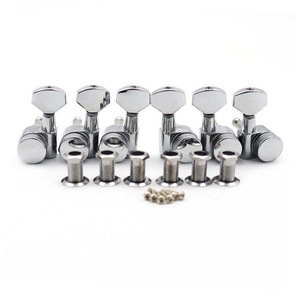
Sealed zinc-alloy die-cast body equipped with rear knurled mechanical thumbscrew locking system for stage stability.
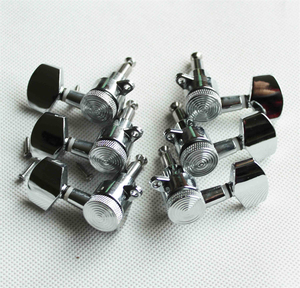
High-torsion internal gear assemblies suited for dreadnought and concert acoustics with high-gauge bronze winding.
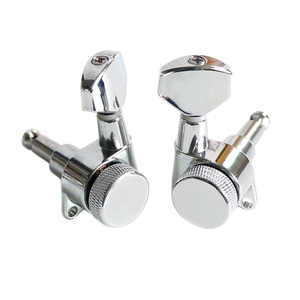
Heavy-duty CNC brass pinion and worm gears that prevent mechanical wear and maintain zero-backlash feedback.
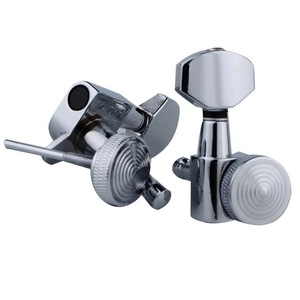
Permanent synthetic lubrication reservoir with sealed O-ring structure resisting stage perspiration and humidity shifts.
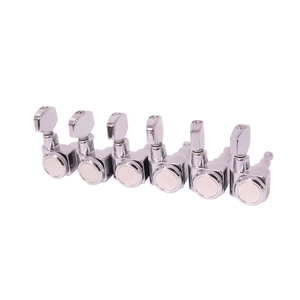
Modern dual-pin retention architecture enabling drill-free direct replacement on American standard headstocks.
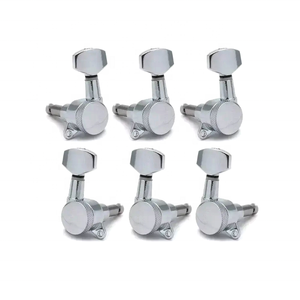
Optimized string-post heights and rear thumb knobs tailored specifically for angled 3-per-side headstocks.
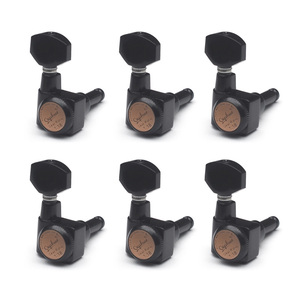
Revolutionary pin-indexing mechanism eliminating mounting screws for clean aesthetics and rapid guitar factory assembly.
A comprehensive technical analysis bridging metallurgical composition, torque backlash tolerances, and OEM lutherie requirements for volume global importers.
In modern guitar manufacturing, the machine head is not merely a string-retention peg; it is the definitive terminal of the vibrational string path. For professional luthiers, OEM brand owners, and guitar parts distributors, purchasing locking guitar tuners from China has evolved far beyond raw unit-cost economics. Today, the global musical instrument supply chain demands micro-radian precision, advanced gear metallurgical integrity, and strict thermal dimensional stability.
The transition from conventional slotted capstans to locking assemblies was spurred by heavy vibrato tremolo usage, expressive string bending, and stage touring realities. When sourcing from Chinese export hubs such as Guangdong, Zhejiang, and Shandong, technical buyers must scrutinize three fundamental internal mechanisms:
A. Rear Thumbscrew Internal Pin Architecture: Modern locking designs (such as the GALYDA and Donlis series) utilize an internal hardened steel rod actuated by a knurled base dial. As the player tightens the dial, the rod clamps the string inside the post hole, requiring less than a half-turn of string wrap. This eliminates the slippage and elasticity inherent in traditional multi-wrap posts. Engineering audits must verify that the internal pin tip is deburred to prevent high-E core breakage.
B. Gear Hobbing Tolerances & Backlash Reduction: Backlash is defined as the dead movement of the tuner button before the string capstan rotates. Premium Chinese exporters deploy CNC multi-axis gear hobbing machines rather than standard die-cast stamping. While entry-level tuners settle for a 1:14 gear ratio with cast pot-metal gears, professional OEM export tiers utilize CNC-machined solid brass or manganese bronze worm gears paired with hardened steel pinions at a 1:18 or 1:21 gear ratio. This delivers ultra-granular tuning fidelity down to ±1 cent.
Die-cast zinc bodies (Zamak-3) must be electroplated with nickel-chromium barriers exceeding 48 hours of ASTM B117 salt spray tests to resist sweat-induced pitted corrosion.
Exporting to progressive custom shops requires staggered string posts (different post heights) which create optimal downward break angles at the nut without needing parasitic string trees.
Fully sealed enclosures must be injected with synthetic fluorosilicone damping grease that retains a stable viscosity profile across extreme temperature swings (-20°C to +60°C).
As the electric and acoustic guitar markets evolve toward extended-range instruments (7, 8, and 9 strings), drop tunings, and multi-scale headless ergonomics, hardware procurement must align with emerging technological advancements:
1. Screwless & Pin-Indexed Headstock Formats: The rise of automated CNC routing in guitar mass production has made legacy rear screw-flange fasteners obsolete. Manufacturers are switching rapidly to dual-pin or single-indexing dowel machine heads (like the SAPHUE screw-free architecture). This cuts factory cycle times by up to 22 seconds per guitar and prevents neck wood split failures.
2. Lightweight Aircraft Aluminum & Titanium Alloys: Headstock weight is a critical factor in instrument ergonomics and "neck dive" prevention. Heavy hardware dampens harmonic resonance. Next-generation Chinese suppliers are replacing heavy zinc buttons with cold-forged 6061-T6 aircraft aluminum or carbon-composite thumbscrews, reducing overall headstock mass by 28% without sacrificing gear-tooth torque capacity.
3. Dual-Thread Auto-Trimming Innovations: The next paradigm in locking peg manufacturing integrates an internal shearing blade within the capstan post. As the knurled lock engages and the button is turned, the surplus string end is automatically trimmed flush. This drastically accelerates guitar stringing on stage and in the repair workshop.
| Evaluation Parameter | Standard Commercial Grade | High-Tier OEM Export (China) | Aria / GOTOH Japanese Specification |
|---|---|---|---|
| Internal Gear Material | Die-cast Zinc / Pot Metal | CNC Machined Solid Brass / Manganese | Hardened Micro-Alloy Phosphor Bronze |
| Gear Ratio Precision | 1:14 to 1:16 Ratio | 1:18 High-Resolution Smooth Ratio | 1:18 to 1:21 Ultra-Fine Ratio |
| Post Backlash Play | > 0.35 mm axial play | < 0.08 mm zero-slop threshold | < 0.03 mm calibrated zero-drag |
| Plating Durability | Flash chrome / <12 hrs salt spray | Triple-Layer PVD / 48 hrs salt spray | Cosmo Black / Gold Anti-Sweat Armor |
| Mounting Pattern | 45° or 90° single screw tabs | Dual hidden pins / Screwless index | Universal retrofit & vintage spec |
Grounded in seven decades of Japanese guitar-making tradition and global parts distribution leadership.
Our operational architecture combines China's scalable, state-of-the-art CNC manufacturing capacity with the world-renowned acoustic quality standards established by Aria Guitars in Nagoya, Japan since 1956. We don't just export guitar hardware; we engineer it from the perspective of master guitar builders.
Product planning, metallurgical specifications, and multi-point tension checks are directed under Japanese acoustic standards, ensuring consistent feel batch after batch.
Reflecting our trusted industry standing, we serve as the authorized global export partner for legendary Japanese components including GOTOH parts and Augustine strings.
Custom gear laser logos, specialized gear ratios (1:18 to 1:21), custom button profiles (vintage butterbean, keystone, or modern hex), and electroplating colors.
Streamlined logistics routes with complete commercial documentation, RoHS and REACH metallurgical certifications, and custom retail packaging solutions for top international brands.
Key technical and transactional answers regarding locking tuner supply chains, minimum order quantities, and custom hardware engineering.
Connect with our OEM technical sales engineers. Receive comprehensive product specification blueprints, rapid sample prototypes, and wholesale tier-volume pricing for your brand or retail catalog.
Get a Quote