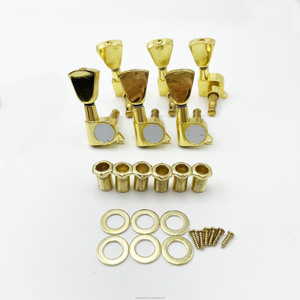

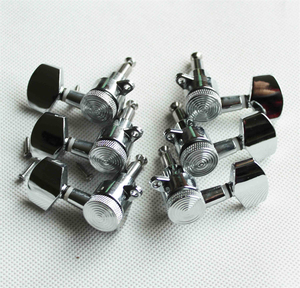
Achieving flawless intonation and zero-buzz action requires an integrated approach to frets, neck stability, and precision running hardware. Discover benchmark-grade models, high-gear-ratio machine heads, and responsive pickups built to tight tolerances.
Fretwire is not merely bent wire; it is the ultimate point of mechanical contact between player articulation and resonant timber. Procurement managers evaluating OEM factories must balance alloy chemistry, cold-drawing work hardening, and crown uniformity to eliminate dead spots, premature grooving, and high-register buzz.
The worldwide standard for vintage and contemporary frets relies on a 62% Copper, 18% Nickel, and 20% Zinc formulation. Top-tier mills deploy vacuum induction melting to eradicate microscopic air inclusions, guaranteeing uniform Vickers hardness across the coil and avoiding soft zones that wear flat during string bending.
Next-generation OEM facilities incorporate sub-zero deep cryogenic treatments (-196°C) post-drawing. This process aligns the crystalline lattice of non-ferrous alloys, raising hardness from standard 140-160 HV up to 180-200 HV without generating the brittle micro-fractures often associated with poorly annealed stainless steel.
Automated fret pressing lines depend on consistent tang width and barb pitch. Advanced stamping dies preserve a true 0.50mm to 0.60mm tang with alternating undercut barbs. This provides tenacious bite into rosewood, ebony, or baked maple without splitting delicate grain or yielding end pop-ups during seasonal humidity shifts.
| Material Category | Typical Composition | Vickers Hardness (HV) | Acoustic Character | Tooling Wear Factor | Primary Industrial Application |
|---|---|---|---|---|---|
| Standard Nickel-Silver | 62% Cu, 18% Ni, 20% Zn | 130 – 155 HV | Warm, organic string dampening, vintage tone | Baseline (1.0x) | Traditional acoustics, vintage electric reissues |
| Hardened 18% Nickel | Cold-rolled extra hard Ni-Ag | 160 – 185 HV | Balanced overtone spectrum, fast recovery | Moderate (1.3x) | Production line workhorse for high-end OEMs |
| Sintoms Bronze Alloy | Copper-Tin-Phosphor alloy (Zero Ni) | 165 – 180 HV | Punchy mid-presence, hypoallergenic acoustic clarity | Moderate (1.2x) | Niche acoustic boutique luthiers, players with nickel allergies |
| Austenitic Stainless (304/316) | 18% Cr, 8% Ni, Low Carbon Fe | 280 – 330 HV | Ultra-bright, infinite sustain, mirror sliding action | Severe (4.5x) | Modern prog-metal, 7/8-string guitars, lifetime wear models |
Shifts in environmental regulations, factory roboticization, and changing consumer tastes are altering how international instrument brands and parts distributors manage their supply pipelines.
Bulk coiled fretwire is yielding to automated precision-cut, pre-clipped, and edge-beveled packs keyed to exact fretboard arcs (7.25", 9.5", 12", 16", or compound conical curves). Factories are eliminating manual fret end clipping, reducing neck binding damage and slashing buffing station cycle times by up to 35%.
Copper-tin-iron compounds (often branded as CuSn15Fe or EVO Gold) continue to gain market share among top distributors. Offering mid-tier hardness (~250 HV) between nickel and stainless steel, EVO delivers smooth string bending, high resistance to corrosive perspiration, and distinctive boutique aesthetics without destroying fret nippers.
With luxury bound fingerboards transitioning onto high-throughput production lines, factory integration of optical vision systems ensures fret tang notches sit precisely 1.5mm inside the fretboard margins. This automation prevents binding displacement caused by wood expansion and contraction over time.
Since Shiro Arai established instrument manufacturing operations in Nagoya, Japan in 1956, our organizational philosophy has emphasized rigorous consistency. For seven decades, this player-first, engineer-backed culture has guided every run of guitars, basses, and export-grade hardware components.
With origins dating back to 1956, our team has steered landmark designs from the celebrated Aria and Aria Pro II lines (including the PE electrics and the SB basses chosen by legends like Cliff Burton) to high-precision export hardware. Our inspection workflows ensure dimensional tolerances that resist seasonal warping.
Serving as the official export arm for GOTOH Japan hardware and Augustine strings, our supply chain is deeply anchored in international standards. We streamline procurement for tier-1 distributors by pairing custom fretwire, machine tuners, and electronics in consolidated shipments with verified certificates of origin.
Every production batch undergoes laser micrometer checks across crown width, height, tang thickness, and bead center. We log complete material heat numbers and alloy test reports in our central technical archive, giving commercial clients full traceability for their long-term supply chains.
Detailed answers to primary technical, metallurgical, and logistic questions asked by production engineers and sourcing managers.
Partner directly with a Japanese-led manufacturing collective with seven decades of proven heritage. Request complete engineering dimensional schematics, metallurgical test certificates, and wholesale pricing books for our full range of fretting components, machine heads, and finished instruments.
Get Catalog