
Engineered for distributors, lutherie institutions, and regional retail networks serving Greater Nagoya and international ports. Fully integrated with CE-certified finishing and environmental timber control.

Pure natural rush-grass resonance absorption flooring designed for traditional rehearsal salons, acoustic recording suites, and boutique studio decoupling in Japanese urban spaces.
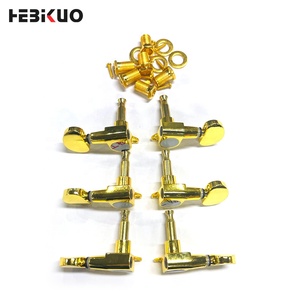
Ultra-stable gold vintage-finished geared machine heads featuring precision internal brass gears, micro-pitch tuning stability, and corrosion-resistant CE-grade alloy casting.
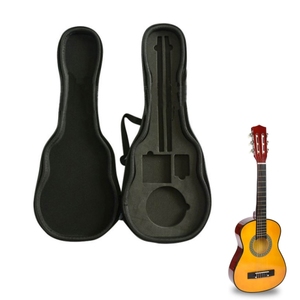
Hermetically sealed, impact-resistant EVA thermoformed construction protecting acoustic soundboards against rapid relative humidity swings during ocean transit and seasonal shifts.
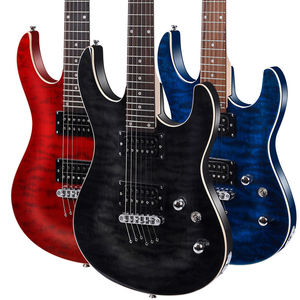
Kiln-dried Okoume tonewood body delivering punchy midrange acoustic resonance, paired with high-output pickup sets and RoHS-certified non-toxic poly satin finishing.
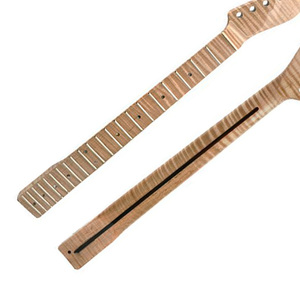
Quarter-sawn flame maple with hand-dressed nickel-silver fretwork, bone nut slotting, and dual-action carbon-steel truss rod stabilization for elite workshop assembly.
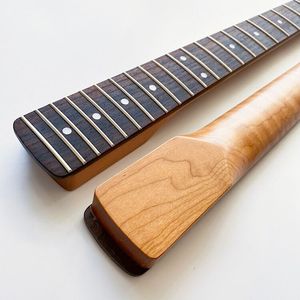
Thermo-vacuum roasted to 6% equilibrium wood moisture content, delivering unmatched structural rigidity against humidity and road-ready resonance for concert instruments.
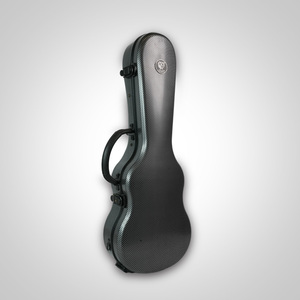
Ultra-lightweight structural shell featuring high-density shock cushioning, water-tight rubberized perimeter zippers, and ergonomic reinforced webbing straps.
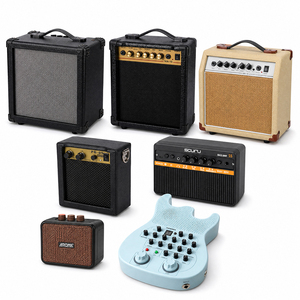
Lithium-ion powered acoustic modeling amplifier with low THD, Bluetooth audio streaming, CE EMC directive conformity, and crystal-clear piezo voicing circuitry.
An authoritative evaluation of acoustic tonewood stabilization, non-destructive resonance testing, chemical lacquer safety, and EU/JIS certification parameters.
Acoustic guitar manufacturing for global distribution demands a rigorous fusion of organic materials science and mechanical engineering. When supplying professional wholesale instruments into demanding consumer markets—such as Japan's Chūbu region and the European Union—procurement teams must navigate complex statutory frameworks. A CE marking on an electro-acoustic guitar is not a decorative badge; it validates total conformity with the RoHS Directive 2011/65/EU (and amendment 2015/863), the Electromagnetic Compatibility (EMC) Directive 2014/30/EU for onboard active preamps, and the General Product Safety Regulation (GPSR).
At our manufacturing facility, raw lumber undergoes an extensive multi-stage kiln desiccation procedure. Solid Sitka Spruce (Picea sitchensis), Engelmann Spruce, and African Mahogany (Khaya ivorensis) are maintained inside computer-controlled dehydration vaults for up to 90 days, locking internal equilibrium moisture content (EMC) between 7.5% and 8.5%. This precise threshold prevents soundboard concavity, fret sprouting, and soundboard seam separation when instruments travel across oceanic containers through the Port of Nagoya into varying indoor climatic environments.
Each top plate is thickness-sanded to a uniform tolerance of 2.7mm ± 0.05mm. We utilize quartersawn parabolic scalloped X-bracing configured at an 88-degree intercept angle. Using Fast Fourier Transform (FFT) acoustic response mapping, top resonances are tuned to balance fundamental air modes (100 Hz – 110 Hz) and structural dipole modes (190 Hz – 215 Hz), ensuring that dreadnought, OM, and auditorium bodies yield explosive acoustic projection without structural compromise under high-tension bronze strings.
Chemical safety forms the second pillar of our CE certification protocol. Traditional nitrocellulose lacquers and substandard solvent polyurethanes present severe volatile organic compound (VOC) hazards. Our automated electrostatic finishing chambers utilize low-VOC, UV-cured acrylic polyurethane coatings. Third-party laboratory testing according to EN 71-3:2019+A1:2021 certifies the total absence of migrateable heavy metals (lead, cadmium, mercury, hexavalent chromium) and polybrominated diphenyl ethers in our varnishes, bindings, and biological adhesive joints.
| Evaluation Parameter | Statutory Norm / Directives | Engineering Specification | Nagoya Port Import/Export Status |
|---|---|---|---|
| Preamp EMC Emissions | EN 55032:2015 / EN 61000-6-3 | < 30 dB(μV/m) Quasi-Peak @ 10m | Fully Certified (CE / VCCI Harmonized) |
| Piezoresistive Transducers | RoHS Directive 2011/65/EU | Zero Lead (Pb) Solder & PZT Elements | Meets METI & European Directives |
| Lacquers & Resins | EN 71-3 / REACH SVHC 235 | UV-Cured Polyurethane < 0.01 mg/kg Lead | Eco-Certified for School & Commercial Use |
| Wood Legality Verification | CITES Appendix II / EU Timber Reg | FSC-Certified Rosewood/Ebony Equivalents | Pre-Cleared Nagoya Customs Documentation |
| Environmental Stability | JIS Z 2371 / ASTM D2244 | Thermal Shock (-10°C to +45°C, 85% RH) | Zero Delamination / Structural Warranty |
Strategic deployment profiles engineered to satisfy the commercial, educational, and performance infrastructure of Aichi Prefecture.
Nagoya hosts distinguished musical institutions, including Nagoya College of Music and Aichi Prefectural University of Fine Arts and Music. Our CE-certified acoustic lines provide stable neck reliefs, low action (1.8mm at 12th fret treble), and robust intonation, offering music departments durable, concert-ready instruments that withstand continuous student rehearsal cycles.
From the intimate jazz clubs of Imaike to the bustling indie live stages in Sakae and Osu, acoustic musicians require instruments with dynamic range and feedback-resistant active preamps. Our electro-acoustic models feature dual-source under-saddle pickups paired with internal phase-inversion EQ, rejecting standing-wave feedback common in compact urban live houses.
Leveraging proximity to the Meiko container terminals at the Port of Nagoya, our bulk shipments integrate containerized moisture desiccant protocols and barcode serialization. Regional logistics distributors in Komaki and Kasugai receive standardized palletized cartons ready for swift domestic transit via the Tomei and Meishin Expressways.
Navigating raw material sustainability, consumer acoustic preferences, and digital supply chain integration.
Global CITES enforcement on Dalbergia species has catalyzed rapid adoption of thermo-cured alternatives. Our factory leads this shift with torrefied maple necks and certified Ovangkol fingerboards. Thermal roasting crystalizes wood hemicellulose, mirroring the cellular resonance of vintage pre-war acoustics while offering imperviousness to high summer humidity in Japan.
Modern Japanese home musicians demand versatile recording options without acoustic spillover. We offer hybrid acoustic configurations integrating internal USB-C low-latency audio interfaces, high-definition impulse response (IR) cabinet simulations, and direct headphone monitoring, enabling silent studio-grade performance in high-density urban apartments.
Japanese procurement leaders prioritize supply partners providing complete ESG transparency. Every acoustic guitar shipped to our Nagoya partners features full lot traceability, tracking the wood from legally verified FSC concession reserves through our automated CNC machining, hand-voicing stations, and solvent-free finishing lines.
Combining high-volume production scalability with artisanal voicing, strict Japanese quality control, and turn-key OEM/ODM customization.
Rooted in the historical Nagoya guitar crafting traditions initiated in 1956, our team pairs time-tested hand lutherie skills with modern CAD/CAM automated machining for unrivaled dimensional uniformity.
Through longstanding domestic business alliances, we supply factory-fitted genuine GOTOH machine heads and Augustine classical strings, ensuring immediate professional-grade tuning accuracy right out of the box.
Every acoustic instrument undergoes a 14-point pre-shipment inspection in climate-stabilized rooms: bridge adhesion tensile testing, strobe-tuner intonation checks, fret-level micrometer scanning, and pickup grounding tests.
From custom headstock contours, proprietary abalone inlays, and laser-engraved rosette motifs to custom soundhole EQ labeling and branded EVA hard cases, we handle end-to-end bespoke product line development.
Clear, technical answers regarding import documentation, CE certificates, logistics timelines, and timber regulations.
Initiate a factory direct procurement consultation. Our bilingual engineering and export desk is ready to provide comprehensive technical datasheets, CE conformity dossiers, sample prototyping, and freight estimates to Port of Nagoya.
Send an Inquiry