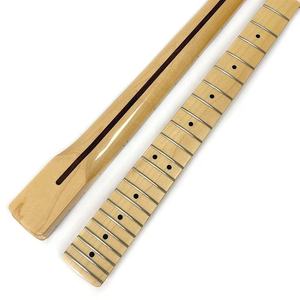

Sourced from high-latitude North American tonewood reserves, machined with automated 5-axis CNC routers, and stabilized to 8%–10% equilibrium moisture content to thrive in maritime temperate microclimates.
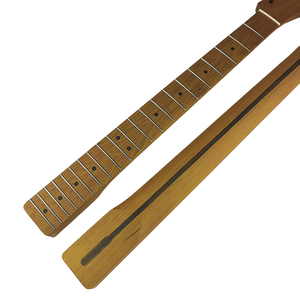
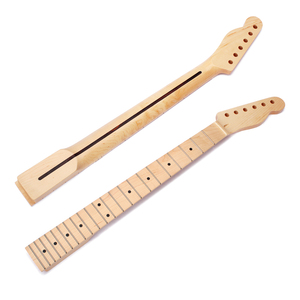
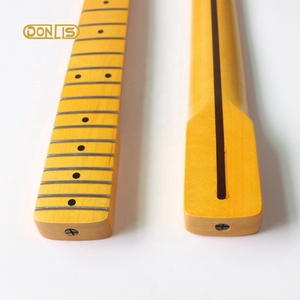
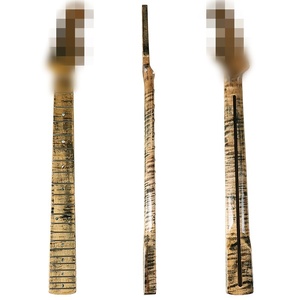
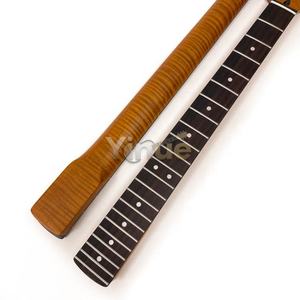
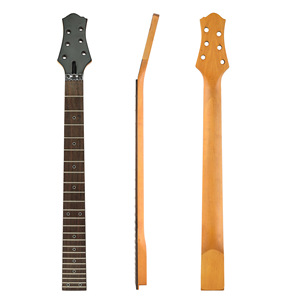
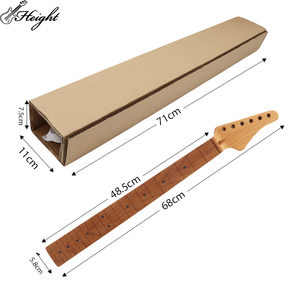
The musical instrument ecosystem in the United Kingdom, specifically anchored across the Greater London metropolitan area—from the historic guitar ateliers on Denmark Street to dynamic custom workshops in Camden, Hackney, and Deptford—is experiencing a structural evolution. Rising local operating costs, commercial rents, and the labor-intensive nature of precision neck carving have forced guitar makers, boutique builders, and repair networks to re-evaluate their supply chains. The guitar neck represents the single most mechanically sensitive and structurally volatile component of any fretted instrument. It bears the tension of six to eight high-tensile steel strings (typically 75 to 110 lbs of static pressure) while demanding absolute geometrical accuracy to prevent fret buzz, intonation drift, and neck twist.
Historically, importing aftermarket guitar parts into the UK was fraught with quality discrepancies, such as inadequate wood stabilization leading to severe fret sprout during English winter heating cycles, warping truss rod channels, and loose heel-pocket tolerances. However, modern Tier-1 Chinese electric guitar neck factories have systematically bridged this gap. By deploying multi-axis German and Japanese CNC routers, advanced thermo-vacuum kilns, and comprehensive hygrometric controls, these production facilities now offer custom luthiers and high-volume brands in London OEM/ODM manufacturing that meets or exceeds European workshop tolerances.
Technical Information Gain: Wood equilibrium moisture content (EMC) in London fluctuates between 65% relative humidity in damp autumns and below 35% in centrally heated interior studios during winter. China’s premier manufacturing plants pre-stabilize Canadian Hard Rock Maple (Acer saccharum) through controlled torrefaction (200°C roasting under anaerobic conditions), ensuring negligible hygroscopic expansion and eliminating fret sprout for London distributors.
By leveraging Chinese manufacturing powerhouses, London guitar brands unlock scalable unit economics without sacrificing luthier-grade tactile feel. Whether providing standard 56mm Stratocaster-style heel dimensions, 55.6mm Telecaster flats, or 24-fret extended range ergonomic necks, these facilities integrate seamless customization with strict quality benchmarks.
Electric guitar necks produced by China's leading manufacturing facilities are deployed across varied, highly specialized commercial and industrial channels throughout the United Kingdom:
Artisanal guitar builders leverage premium pre-carved AAA tiger flame and bird's eye maple necks, applying their own custom headstock cuts, hand-rubbed nitrocellulose lacquer, and boutique fret-dressing to command premium prices on retail shop floors.
Repair facilities across London replace twisted, broken, or stripped-truss-rod necks on vintage instruments with exact-spec replacement components featuring vintage 7.25" to modern 9.5" and compound 10"-14" radii, restoring instruments to gigging condition rapidly.
Institutions offering guitar maintenance and construction certifications across the UK utilize bulk-imported, precision-mortised maple necks with pre-installed, leveled medium-jumbo frets to instruct apprentice luthiers without running dangerous heavy milling equipment.
The manufacturing architecture deployed by premier Chinese factories centers on four non-negotiable industrial pillars: tonewood selection, thermo-chemical stability, sub-millimeter machining, and environmental surface finishing.
Necks are exclusively milled from certified Acer saccharum (Hard Maple) originating from sustainable forests in eastern North America. Unlike fast-growing soft maples, Canadian Hard Rock Maple exhibits a Janka hardness rating exceeding 1,450 lbf, offering exceptional longitudinal rigidity and mechanical damping qualities. For high-end export batches destined for the UK, tonewood billets undergo vacuum torrefaction (roasting) at temperatures varying between 180°C and 215°C in an oxygen-deprived nitrogen atmosphere. This process thermally degrades hemicellulose, crystallizes natural resin deposits, and seals vascular channels. The resulting neck is completely impervious to relative humidity shifts, lighter in total mass, and delivers faster fundamental acoustic resonance.
Precision heel dimensions represent the critical interface between body and neck. Utilizing dual-spindle multi-axis CNC routers equipped with real-time laser tool-wear sensors, factories achieve heel widths held to an exact 55.6mm (±0.02mm) for TL designs and 56.0mm for ST configurations. Truss rod cavities are cut with deep, double-action steel/aluminum rod enclosures equipped with two-way spoke-wheel or Allen-head adjusting nuts. This configuration permits active concave and convex neck relief tuning, providing London musicians with instant adjustability against seasonal string tension variances.
One of the legacy weaknesses of mass-produced guitar necks was poorly finished fret ends. Modern Chinese factories have integrated automated fret pressing and cryogenic nickel-silver (18% CuNiZn alloy) or stainless steel wire. Frets are installed with precise tang undercutting to ensure frets seat cleanly over bound or unbound fretboards without edge gaps. Computer-controlled end-beveling tools cut fret bevels to a consistent 35° or 45° angle, followed by spherical micro-dressing to ensure smooth, fatigue-free movement along the entire fingerboard.
The guitar ecosystem in the UK is among the most demanding in Europe. To maintain strong sales and customer retention, procurement teams must align their orders with current market preferences:
Touring artists in the UK club circuit increasingly mandate 304/316 grade stainless steel frets. Resisting groove wear from nickel and steel strings, these frets reduce service intervals for professional musicians and rental backline providers.
With strict CITES regulations enforced at UK Border Control, modern production lines employ ethically sourced Indian Rosewood, roasted maple, or engineered high-density black techwood to guarantee zero customs delays under Lacey Act and CITES Appendix II guidelines.
Musicians have moved away from thick polyester finishes. London workshops increasingly demand breathable, open-pore nitrocellulose or micro-thin satin polyurethane coatings that eliminate playing friction and encourage natural wood aging.
Backed by an industrial lineage dating back to 1956, our guitar production facilities leverage seven decades of acoustic engineering, OEM partnership heritage, and global instrument distribution. When sourcing through our factory network, UK clients secure direct advantages grounded in industry-tested methodologies:
Every tonewood slab is seasoned in multi-stage, climate-controlled kilns for 90+ days prior to carving, ensuring minimal internal moisture stress.
Custom OEM headstock carving, laser engraving, mother-of-pearl or abalone inlaying, and private branding tailored for boutique UK marques.
Every single neck is checked on granite surface plates for flatness, relief uniformity, fret seating depth, and heel pocket tolerance before dispatch.
Dedicated air and sea freight logistics delivering directly to warehouses across London, Essex, and Kent with streamlined UK VAT and import customs clearances.
Consult with our engineering technicians to review technical drawings, request precision sample specimens, or tailor a high-volume manufacturing contract built specifically for the UK music retail and luthier trades.
Contact Us