
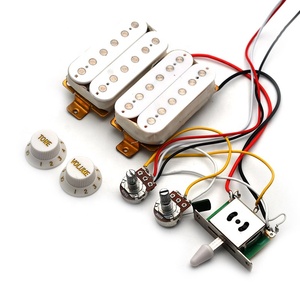
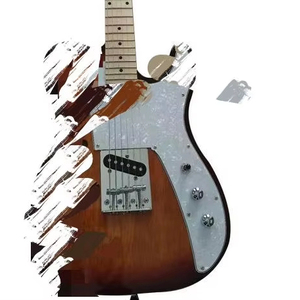
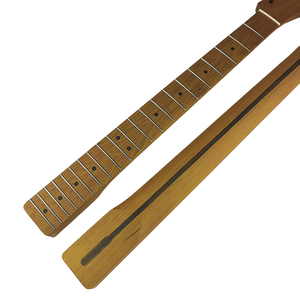
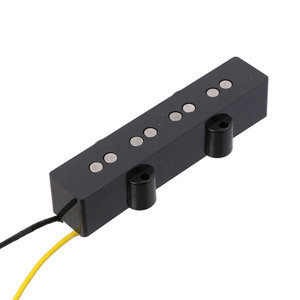
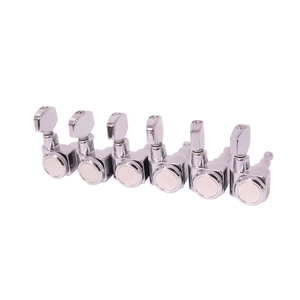
From bespoke CAD/CAM pickguards and pre-wired scratchplates to high-grade magnetic pickups and matched tonewood assemblies, discover our high-demand OEM products crafted for Australian workshop standards.

A deep-dive technical brief on polymer thermodynamics, high-speed CNC perimeter beveling, EMI shielding protocols, and reliable cross-border supply chain logistics for the Australian musical instrument trade.
The manufacturing of electric and acoustic guitar pickguards (scratchplates) is frequently misunderstood as a purely cosmetic stamping discipline. In commercial-scale lutherie, brand manufacturing, and high-turnover instrument repair networks across Australia, the pickguard functions as a complex mechanical foundation. It serves as the primary structural chassis for electronic component mounting, potentiometers, selector switches, and transducer pickups, while acting as the initial defensive barrier against pick attrition, body finish wear, and microphonic RF interference.
For Australian boutique luthiers, high-output production factories, and aftermarket retail distributors—ranging from independent repair benches in Melbourne and Sydney to major industrial distribution hubs in Queensland and Western Australia—sourcing custom guitar pickguards requires navigating unique engineering hurdles. Australia’s extreme environmental gradient presents intense atmospheric shifts: tropical humidity in Darwin and Cairns, dry desert thermals in the interior, high oceanic salinity along coastal tour corridors, and aggressive ultraviolet indexes across all southern capital cities. Standard low-grade celluloid and recycled PVC scratchplates procured from generic vendors routinely suffer from premature plasticizer migration, warping, cupping around mounting screws, and chemical crazing under these regional conditions.
To eliminate post-installation warping and seasonal screw-hole stress fractures, modern OEM scratchplate production relies on tightly calibrated multi-ply co-extrusion and high-rigidity polymer laminates. When producing custom units for Australian distribution, raw material selection is governed by molecular density, coefficient of thermal expansion (CTE), and resistance to photo-oxidative degradation.
Multi-ply laminates (3-ply White/Black/White, 4-ply Tortoiseshell, Mint Green, and Vintage Parchment) utilize virgin suspension-grade PVC core sheets vulcanized under uniform pressure. This prevents ply delamination even when exposed to high summer heat during Australian interstate road transport.
Specified for clear back-painted designs, custom graphic prints, and retro solid-color single-ply pickguards. Optical-grade cast PMMA offers zero residual internal stress, allowing precision laser and diamond-bit cutting without microscopic edge crazing or surface clouding.
Increasingly demanded by Australian modern custom builders for premium ST, TE, and J-Bass builds. Aluminum scratchplates provide natural intrinsic 360-degree RF shielding, structural rigidity that braces thin guitar tops, and an exceptional resistance to sweat-induced galvanic corrosion.
Technical Insight for Australian Master Builders: Nitrocellulose lacquer compatibility is mandatory for premium Aussie custom lutherie. Our virgin plastic formulations are 100% free of volatile, unstable plasticizers that react chemically with nitro finishes, preventing sticky pickguard footprints and cloudy chemical bleed on expensive Australian native tone wood tops such as Tasmanian Blackwood, Queensland Maple, and Bunya Pine.
Precision fitment is where OEM manufacturing either excels or breaks down. Discrepancies as minor as 0.3mm across pickup routing centers or control pot collar openings can halt factory assembly lines or force luthiers to spend valuable workshop hours hand-filing finished plastics.
| Manufacturing Parameter | Standard Market Specification | Our OEM Industrial Standard | Benefit for Australian Builders |
|---|---|---|---|
| CNC Dimensional Tolerance | ±0.25mm – ±0.40mm | ±0.05mm (Micron Calibrated) | Instant drop-in fitment; zero chassis modification required on production lines. |
| Perimeter Edge Beveling | Straight saw or rough 30° cut | Uniform 45° or 60° Diamond Polish | Exposes multi-ply contrast lines evenly without chatter marks or burs. |
| Countersink Depths | Manual hand-drill counterbore | Automated Depth-Stop CNC Drilling | Screw heads sit flush with zero plate distortion or localized stress bulging. |
| Underside EMI Shielding | Partial or thin spray-on conductive paint | Full-Coverage Conductive Aluminum Foil | Superior attenuation of 50Hz single-coil hum under high Australian line voltages. |
| Protective Surface Film | Single-layer light polythene | Dual-Layer High-Tack Peelable PE | Resists workshop scratches during soldering, assembly, and transport. |
From boutique artisan workshops along the east coast to high-volume distribution centers, see how our OEM guitar pickguards and assemblies fulfill critical industry roles.
Custom lutherie shops in Melbourne and Sydney often construct instruments using indigenous Australian timbers. Our short-run CNC prototyping service allows luthiers to submit custom DXF or DWG files for non-standard pickup configurations (such as P-90 necks with humbucker bridges or mini-toggles) and receive pre-screened pickguards cut to precise neck pockets with zero tooling delays.
Commercial Australian brands require pallet-tier consistency across thousands of units. We provide comprehensive OEM contracts where scratchplates arrive pre-shielded, laser-etched with brand serials or logos, and pre-packaged with custom barcode packaging for immediate fulfillment through warehouse channels in Brisbane, Adelaide, and Perth.
Australia’s grueling national tour circuits expose guitars to open-air festivals, sudden rainstorms, and intense stage pyrotechnics. Luthier service centers trust our heavy-gauge 4-ply and solid anodized pickguards as drop-in upgrades that resist sweat, beer spills, and aggressive plectrum strikes without micro-delamination.
As the Australian musical instrument sector evolves, purchasing directors and instrument designers are placing higher demands on both aesthetics and raw material origin:
Anchored in seven decades of Japanese musical instrument development dating back to Nagoya in 1956, our manufacturing ecosystem brings together master-level engineering with high-capacity OEM capabilities. We serve tier-one guitar brands, distributors, and custom luthiers across Oceania with uncompromised quality standards.
Rooted in our deep heritage overseeing legendary Japanese electric, bass, and classical guitar programs, every pickguard mold and tooling fixture is engineered by luthiers for luthiers.
From resin batch chemical analysis to optical comparator coordinate measurement and laser planar testing, every production run meets tight dimensional thresholds before packing.
As authorized export agents for premier hardware brands like GOTOH parts and Augustine strings, we ensure our pickguard mounting geometries, bridge cutouts, and control spacings match world-standard hardware perfectly.
Fast ocean pallet shipping and priority air-freight corridors directly to Sydney, Melbourne, Brisbane, and Fremantle, backed by complete Australian customs documentation and prompt B2B customer service.
Everything procurement managers, guitar manufacturers, and commercial importers need to know about purchasing custom OEM pickguards for the Australian market.
Importing guitar components into the Commonwealth of Australia requires compliance with the Australian Border Force (ABF) regulations, Department of Agriculture, Fisheries and Forestry (DAFF) biosecurity mandates, and consumer warranty laws. When partnering with us, our enterprise export team handles all pre-clearance documentation to ensure seamless clearance at Australian ports.
Under the Harmonized Tariff System (HS Code 9209.92 for Musical Instrument Parts & Accessories), guitar pickguards imported into Australia generally enter with a standard duty rate of 0% to 5%. Where Free Trade Agreements (FTA) apply, we provide verified Certificates of Origin (COO) to minimize or eliminate customs tariffs on commercial volume shipments.
All bulk freight pallets shipped to Australia adhere strictly to the International Standards for Phytosanitary Measures No. 15 (ISPM 15). Pallets utilize heat-treated (HT) certified timber or durable composite plastic to eliminate biosecurity inspection delays and quarantine fumigation surcharges at local container terminals.
To withstand humidity changes during equatorial ocean transits to Australian waters, our pickguards are packed flat with anti-static interleaved tissue, sealed in vacuum-rated moisture-barrier polybags, and supported by rigid corrugated edge protectors to prevent edge cracking or corner warping.
Common technical, commercial, and logistical questions asked by Australian lutherie companies, parts importers, and repair franchises.
Whether you are launching an exclusive series of custom instruments, retrofitting an established production line, or expanding an aftermarket distribution catalog across Australia, our engineering team is ready to review your CAD files and supply chain requirements.