
Precision Frets & Hardware Components
Manufactured under stringent Japanese tolerances to supply New York custom shops, repair centers, and volume guitar factories.
±0.015mm
Crown & Tang Tolerance
18% & 304
Nickel-Silver & Stainless Alloys
70 Years
Precision Heritage Since 1956
24hr-48hr
Tri-State Rapid Fulfillment
Engineering Whitepaper
Structural Metallurgy & Cold-Drawing Dynamics in Modern Fret Production
In high-grade fretted instrument manufacturing, the dimensional fidelity of the fretwire dictates not only harmonic sustain and register intonation, but also factory installation efficiency and production yield rates. When evaluating guitar fretwire factories for procurement in New York, precision engineering teams examine the microstructure of drawn profiles. Every cold-drawn pass must eliminate internal stress nodes to prevent crown warping, barbed tang deformation, or springback upon radiusing.
Drawing on seven decades of manufacturing heritage originating with Aria’s technical standards established in Nagoya in 1956, our metallurgical processes align modern profile extrusions with structural stability. Fret installation requires an exact interference fit within slot widths ranging between 0.021 inches and 0.024 inches (0.53mm to 0.60mm). If the tang width, barb relief angle, or stud offset fluctuates by more than 0.001 inches (0.025mm), factory work stations experience fret lift, fingerboard compression back-bow, or fret sprout under seasonal vapor pressure variances.
"The mechanical coupling between a precisely calculated fret tang and a dried hardwood fingerboard represents the foundational acoustic transfer point on any fretted instrument. In high-humidity maritime regions like coastal New York, metallurgical stability and barbed anchor symmetry determine fingerboard longevity."
Our industrial production methodology applies triple annealing cycles between cold-drawing steps. This process mitigates work hardening across both 18% Nickel-Silver (Cu-Ni-Zn) alloys and cryogenic Grade 304/316 Stainless Steel wire. The result is a profile that seats flush under a single compression blow or arbor press stroke, removing the need for aggressive post-installation leveling and dressing passes.
Meeting the Demands of the New York Luthier Infrastructure
Custom instrument builders, metropolitan repair facilities, and industrial OEMs face distinct regional climate and mechanical performance challenges.
Metro Manhattan High-Turnover Repair Shops
48th Street legacy technicians and Brooklyn repair studios require bulk coils and pre-radiused 24-piece packs that match vintage specs (0.078" x 0.043") and jumbo frets (0.110" x 0.057") without requiring hand-burr removal prior to installation.
Upstate Custom Bass & Guitar Builders
Boutique workshops crafting multi-scale extended range instruments in the Hudson Valley rely on high-yield stainless steel fret stocks capable of enduring multi-radius compounds (10" to 16") without crown flattening or edge lifting.
Tri-State Commercial OEM Production
Automated CNC fret-slotting lines across New York regional manufacturers demand dimensional wire symmetry delivered in 1-pound, 5-pound, or continuous 50-pound precision-spooled reels optimized for automatic tang-notching machines.
Technical Specifications: Wire Alloys & Profile Geometries
Precision data points designed for automated insertion heads, manual lutherie presses, and CNC-radiused fingerboards.
| Profile Designation | Crown Width (mm / in) | Crown Height (mm / in) | Tang Width (w/ Barbs) | Standard Alloy Options | Recommended Scale Use |
|---|---|---|---|---|---|
| Vintage Narrow | 2.00 mm / 0.079" | 1.00 mm / 0.039" | 0.95 mm / 0.037" | 18% Nickel-Silver / CuNi18Zn20 | Vintage Restoration, Classical & Archtop |
| Medium Professional | 2.40 mm / 0.095" | 1.20 mm / 0.047" | 0.98 mm / 0.038" | Hard 18% Ni-Ag / Grade 304 SS | Production Solid Body, Acoustic Steel String |
| Modern Jumbo | 2.79 mm / 0.110" | 1.45 mm / 0.057" | 1.02 mm / 0.040" | Grade 304 Stainless / Gold-Evo Bronze | Drop-Tuned Electric, Modern Lead, Hardcore |
| Extra Jumbo Bass | 2.90 mm / 0.114" | 1.52 mm / 0.060" | 1.05 mm / 0.041" | Cryogenic Stainless Steel / Hard Ni-Ag | 4-String / 5-String Extended Bass Guitars |
Evolution of Fretwire Procurement in New York State
How macroeconomic pressures, environmental considerations, and material engineering are retooling regional supply chains.
The Shift Toward Cryogenic Stainless Steel
Driven by touring musicians passing through NYC venues who demand lifetime wear resistance against nickel-wound and stainless strings, local luthiers are shifting production standard offerings to hardened stainless alloys (Vickers HV 280+).
Mitigating Fingerboard Sprout from Winter Dryness
New York winters cause rapid relative humidity drops down to 15-20% indoors, shrinking ebony and rosewood. Sourcing wire with trapezoidal tang profiles and symmetrical anchor teeth prevents edge extrusion and keeps instruments playable year-round.
Hypoallergenic & Nickel-Free Alternatives
A growing demographic of professional session artists in the Brooklyn and Long Island sectors seek copper-tin "Evo" alloys that eliminate nickel allergy issues while retaining warmer mechanical friction properties under heavy vibrato bends.
The Enterprise Foundation
Why Major Manufacturers & New York Luthiers Depend on Our Infrastructure
For more than 70 years, since our foundation in Nagoya, Japan in 1956, our industrial family has stood at the intersection of craftsmanship and technical discipline. While best known for creating timeless performance series like the Aria Pro II PE guitars and the legendary SB Basses played by artists including Cliff Burton, our foundational strength resides in parts metallurgy, precision hardware, and export-grade OEM supplies.
As the official export partner for elite Japanese components including GOTOH hardware and Augustine Strings, our manufacturing standards are grounded in high-precision metrics. This institutional discipline applies directly to our fretwire production facilities:
Automated Optical Laser Inspection
Every meter of extruded wire passes through multi-axis laser micrometer checks, ensuring zero deviations in crown curvature, tang height, or barb pitch before coil winding.
Standardized Surface Polish
Our micro-finished crowns reduce post-installation bench labor by 40%. Frets arrive pre-buffed to a mirror 4000-grit finish, allowing luthiers to seat and crown with minimal dressing time.
Full-Catalog Hardware Synergy
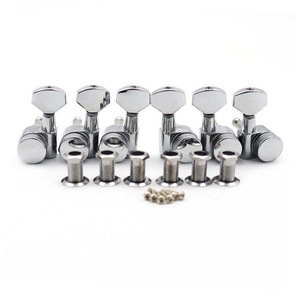
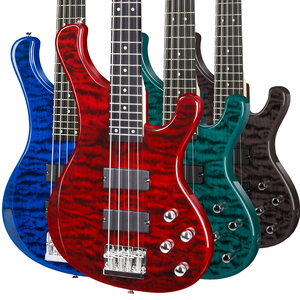
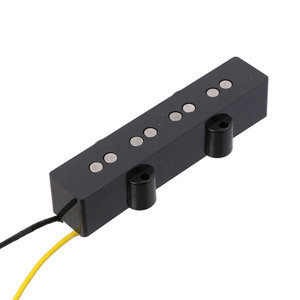
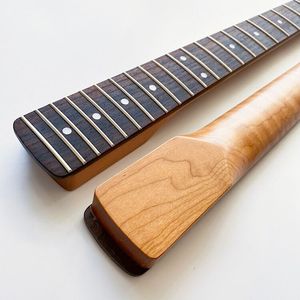
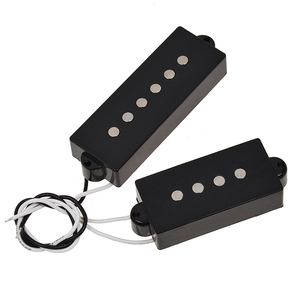
Beyond fret stock, we supply comprehensive instrument ecosystems—including ceramic pickups, locking tuners, seasoned roasted maple necks, and custom machine heads under one vetted trade framework.
Whether you operate a high-volume assembly plant along the East Coast or manage a dedicated specialty repair bench in Manhattan, our direct-from-factory logistics eliminate intermediaries, deliver metallurgical trace certificates, and provide custom pre-radiused dimensions matched to your workshop fret press dies.
Frequently Asked Questions: Sourcing Fretwire in New York
Direct answers to technical procurement, alloy choices, installation variables, and local logistics.
What tang thickness matches standard fret saws used in New York workshops?
Our standard production fretwire features a baseline tang core width of 0.020" to 0.021" (0.50mm to 0.53mm), expanding to 0.037" to 0.040" (0.94mm to 1.02mm) across the barbs. This profile seats securely in common 0.023" kerf slots cut by standard Japanese pull saws and CNC fret-gang saws without requiring wood glue fills or causing fingerboard back-bow.
How does winter indoor heating in New York affect fret choice?
Heated New York environments cause wood shrinkage, leading to exposed sharp fret ends (fret sprout). We recommend selecting our pre-chamfered, triple-annealed wire paired with blind-slotting or undercut tang profiles. This geometry anchors within the slot channel without allowing the crown overhang to catch players' hands as fingerboards shrink.
Can we request custom radius coils for production fingerboards?
Yes. In addition to standard straight 2-foot lengths and bulk spools, our factory supplies pre-radiused stock contoured to 7.25", 9.5", 12", 14", 16", and compound curve curves. This pre-bend configuration minimizes edge springback during installation on automated fret press machines.
What is the wear life difference between 18% Nickel-Silver and Grade 304 Stainless?
Standard 18% Nickel-Silver exhibits a Vickers hardness of approximately HV 140–160, typically requiring dress passes after 3–5 years of regular play. Our Grade 304 Stainless Steel wire delivers a Vickers rating above HV 250–280, providing 10+ years of high-wear performance under round-wound steel strings without developing grooving beneath the G and B strings.
What are the minimum order quantities (MOQ) for New York commercial accounts?
For standard medium and jumbo nickel-silver wire, our factory stocks allow minimum orders from 25-pound spools or 500-piece pre-cut sets. Custom metallurgical draws (custom tang barbs, specific alloy chemistry, or specialized crown profiles) operate with a 200-pound production run minimum.
Do factory shipments include batch metallurgy certificates?
Yes. Every industrial trade delivery comes with full mill test certificates verify chemical percentages (Copper, Nickel, Zinc, Chromium) along with tensile strength measurements and Rockwell/Vickers hardness validation to meet strict quality control requirements.
Partner with Our Factory Supply Division
Equip your workshop or manufacturing line with precision-engineered fretwire, hardware components, and tone assemblies designed to strict Japanese quality standards.