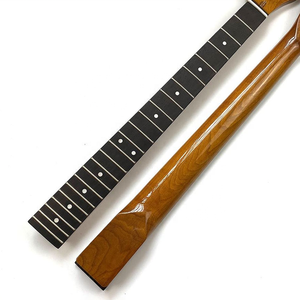

Engineered for direct export to music retail chains, luthier ateliers, and institutional buyers across San José, Alajuela, and Guanacaste.
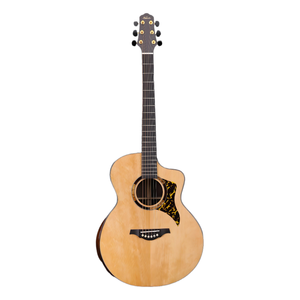

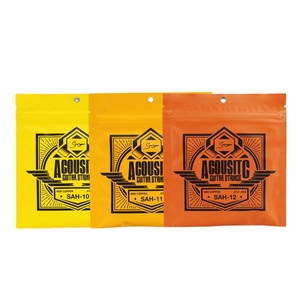
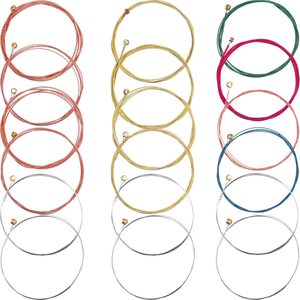
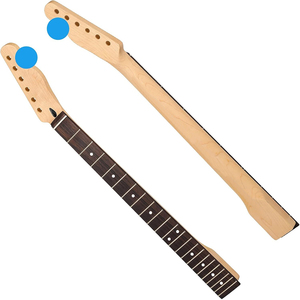
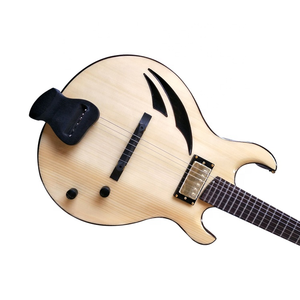
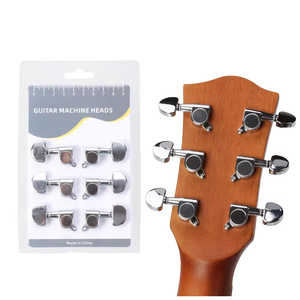
Why modern headless low-end systems are replacing conventional bass silhouettes in high-stress tropical touring environments.
Traditional electric basses exhibit pronounced "neck-dive" due to 4 or 5 heavy steel machine heads extended across a 34" or 35" moment arm. By eliminating the traditional peghead and anchoring individual monorail tuning machines at the bridge tailpiece, headless architecture rebalances the instrument’s physical center of gravity directly over the player’s right hip. For performing bassists navigating long residency sets across Costa Rican festival circuits, this shifts spinal torsional load away from the lumbar spine and trapezius, dramatically mitigating repetitive strain injuries while providing flawless sitting and standing balance.
Tropical sea-level humidity regularly exceeds 85% in Costa Rica's coastal provinces (Puntarenas, Limón) before descending to 50% within air-conditioned recording studios in the Central Valley. Untreated maple necks undergo lateral twisting and fret sprouting under these rapid osmotic pressure changes. Our factory integrates vacuum-sealed thermal torrefaction (baking maple at 180°C–220°C in an oxygen-deprived nitrogen atmosphere). This process crystallizes hemicellulose and eliminates residual resins, yielding a rigid, hydrophobic timber cell matrix that resists axial warpage and preserves micro-intonation regardless of ambient vapor saturation.
In standard bass bridges, string vibrations cross a singular shared plate, triggering sympathetic harmonic interference and phase cancellation—particularly destructive on low-B fifth strings. Our headless bass platforms employ individual CNC aircraft-grade aluminum/brass monorail bridge assemblies. Each string saddle is acoustically isolated, delivering zero crosstalk, lightning-fast transient punch, sustained fundamental fundamental resonance, and sub-micron intonation adjustments via micro-threaded knurled rear tuners with an ultra-smooth 1:18 mechanical gear ratio.
Optimized for domestic transit constraints, coastal salinity resilience, and regional musical ecosystems.
Navigating puddle-jumper regional flights from San José (SJO) to Puerto Jiménez, Nosara, or Tamarindo imposes extreme overhead luggage restrictions. A compact 38-inch overall length headless bass bypasses oversized sports equipment surcharges and fits safely within regional aircraft passenger cabins, offering touring musicians unmatched mobility.
Live music residencies across Guanacaste and Jacó expose electric instruments to open-air salt air. Standard zinc-pot hardware degrades quickly in maritime fog. Our instruments feature dual-anodized aluminum assemblies, stainless steel fretwire (57110-grade), and encapsulated humbucking coils sealed against galvanic oxidation.
From modern jazz fusion collectives at the Universidad Nacional to Latin urban/reggae sessions in San José recording facilities, session bassists demand razor-flat EQ responses. Our headless architectures deliver extended high-frequency extension and low-end definition, pairing seamlessly with direct modeling units without parasitic hum.
Empirical insights for wholesale instrument distributors and commercial instrument procurement specialists.
Market data across Central American instrument imports indicates a 42% year-over-year surge in consumer demand for multi-scale (34"-37") extended range headless configurations. Latin pop, contemporary gospel, and modern prog require clear lower fifth notes without "mud." Our factory leads OEM supply lines capable of multi-scale headless production lines with customized pickups wound to prevent phase drop-offs along angled string paths.
Historically, Costa Rican musicians relied on individual import brokers to acquire boutique American or European headless instruments, absorbing heavy import markups and custom taxes. Modern wholesale distributors in San José are partnering directly with high-standard Asian manufacturing facilities to offer premium roasted woods, carbon-fiber neck reinforcement rods, and multi-laminate construction at retail price points under $800 USD, unlocking broad mid-tier market dominance.
Synthesizing seventy years of luthier discipline with high-throughput modern manufacturing.
Rooted in our deep Japanese manufacturing roots dating back to 1956 in Nagoya, our operational ethos prioritizes string feel, fret dressing, and tonal authority above all else. Whether constructing the iconic SB series played by Metallica's Cliff Burton or pioneering ultra-modern, featherweight headless instruments, our design specifications emerge from direct feedback from touring international artists.
Every headless production run undergoes a documented four-phase quality inspection process before containerized palletization: climatic stabilization monitoring, laser-guided neck relief verification, microscopic fret crown polishing, and an active audio phase check on an automated test-rig. We eliminate shipment-to-shipment variance, guaranteeing out-of-the-box readiness.
Beyond our primary instrument lines, we maintain prestigious international distribution and export partnerships with GOTOH Guitar Parts and Augustine Strings, while engineering world-renowned portable stage platforms like Pignose. When ordering custom headless guitars, clients leverage our access to tier-one industrial hardware, ensuring durable, high-spec gear.
Whether you require localized brand badging, customized electronics (active/passive bypass preamps, coil taps), specialized scales (headless 4-string, 5-string, or 6-string multiscale), or specific FSC-certified chambered tonewood bodies, our flexible production architecture handles both specialized small-batch runs and volume commercial shipments.
Clear answers on tariffs, freight routing, tropicalization, and minimum order terms.
Request factory-direct spec sheets, landed cost estimates for Puerto Caldera/Limón, or sample evaluations from our international B2B sales team.
Inquire Now