
Engineered to withstand northern Vietnam’s tropical monsoon conditions while delivering peak dynamic articulation. Direct factory dispatch for dealers, studios, and educational academies.



Why standard export acoustic and solid body guitars fail in Northern Vietnam without specialized manufacturing interventions.
Hanoi presents one of the most mechanically demanding environments in Southeast Asia for acoustic musical instruments. Throughout the spring period—known locally as mùa nồm—relative humidity across the Hoàn Kiếm, Cầu Giấy, and Đống Đa districts regularly spikes above 90%, saturating wood cells with atmospheric water vapor. Conversely, during dry winter winds or inside air-conditioned recording studios and performance stages, ambient humidity drops sharply to under 45% within hours.
Under these extreme conditions, conventionally built imported guitars suffer catastrophic failures: bridge lifting, fret sprouting, neck warping, soundboard bellying, and finish checking. As a leading manufacturer and exporter supplying the Hanoi dealer landscape, our workshop addresses this challenge through advanced thermal modification. By utilizing vacuum thermo-kiln drying processes, we modify the cellular composition of our tone timbers—transforming Sitka Spruce, Engelmann Spruce, African Mahogany, and Canadian Roasted Maple into stable, crystalline structures that exhibit near-zero hygroscopic swelling.
Our solid tops undergo a multi-stage torrefaction protocol that crystallizes internal hemicellulose resins, mimicking decades of natural aging while eliminating vulnerability to dampness.
Every solid-wood neck exported to Hanoi features bidirectional dual-action truss rods flanked by aerospace-grade carbon fiber stabilizing rods, ensuring dead-straight neck geometry.
We deploy ultra-thin polyurethane (PU) and UV-cured thin-skin polyester finishes that let the tonewood vibrate naturally while creating a durable barrier against tropical mold and moisture penetration.
Connecting high-performance Chinese lutherie engineering with dynamic consumption touchpoints across the capital city.
Hanoi’s bustling live music venues, indie cafes along Tạ Hiện, and boutique bars around West Lake (Hồ Tây) demand instruments that cut through complex acoustic mixes without microphonic feedback, delivering steady intonation during humid nighttime performances.
Students and faculty at the Vietnam National Academy of Music require authentic harmonic resonance, ergonomic action, and exact fret dressing to master demanding classical fingerpicking, romantic transcriptions, and modern jazz harmonies.
Wholesale distribution partners along the historic "music streets" of Hào Nam and Nguyễn Thiện Thuật need high stock turnover. They rely on reliable solid-top models that require zero pre-sale fret leveling and maintain long shelf lives in non-climate-controlled showrooms.
Deep data insights driving wholesale procurement decisions across the Indochina corridor.
Historically, entry-level buyers in Hanoi opted for ultra-cheap all-laminate instruments due to fear of climate-induced cracks. However, with rising disposable income among young Vietnamese consumers and the rapid spread of acoustic fingerstyle content across platforms like TikTok and YouTube, the buying pattern has evolved. Intermediate musicians are bypassing all-laminate guitars entirely. The dominant market demand is now centered on solid Sitka spruce or mahogany tops with high-grade multi-ply resonance backs, delivering solid-wood dynamic range alongside roadworthy structural durability.
Compared to musical instrument shipments from North America or Europe, which take weeks to transit sea routes and clear Haiphong port, direct manufacturing hubs in southern China leverage dedicated road-freight corridors via the Pingxiang–Lạng Sơn border gate. Transit times from our manufacturing facilities to central Hanoi distribution warehouses average just 4 to 6 business days. This near-shore supply loop reduces freight exposure, prevents transport-related climate shock, and allows Vietnamese retailers to run lean, agile inventory cycles.
Hanoi players increasingly expect dual-source acoustic amplification straight from the factory. Integrated piezo pickups combined with internal condenser mics and acoustic Impulse Response (IR) preamps are becoming the standard specification for intermediate to professional solid wood guitars. Our production lines integrate these electronic elements cleanly during final assembly, pairing premium tonewood with stage-ready versatility.
Rooted in 70 years of Japanese design philosophy, advanced manufacturing facilities, and world-class component supply lines.
Founded on standards established in Nagoya in 1956, our product engineering combines vintage Japanese craftsmanship with high-precision CNC lutherie tooling, ensuring neck pockets, bracing angles, and fret finishes remain completely uniform across large production runs.
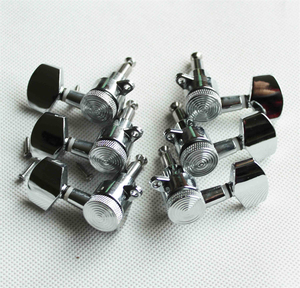
We serve as an official global export provider for industry-standard GOTOH tuning mechanisms and Augustine classical strings. Our solid-wood instruments leave the facility equipped with rock-solid tuning hardware that holds pitch even in variable microclimates.
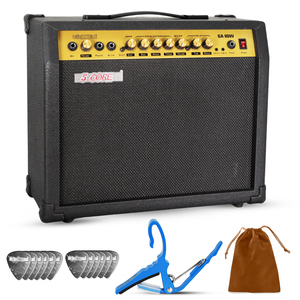
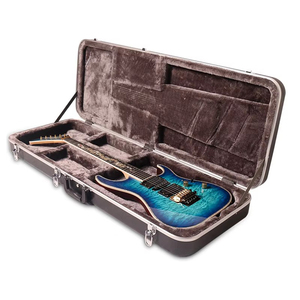
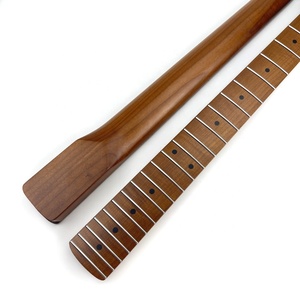
From the iconic Aria Pro II PE and SB series to all-solid acoustic dreadnoughts, student classical guitars, roasted maple replacement necks, and portable Pignose amplification, we offer complete catalog procurement through a single dedicated account manager.
Clear, actionable answers addressing logistics, warranty terms, and climate preparation for importers across northern Vietnam.