
Explore production-ready electric guitar necks, high-ratio locking machine heads, high-output passive transducers, and custom wood platforms engineered to standard North American imperial/metric dimensional profiles.
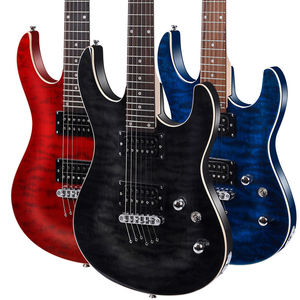

The North American musical instrument manufacturing sector requires components that bridge industrial scalability with artisanal acoustic precision. Our factory parts integrate directly into diverse commercial environments across the fifty states.
For commercial facilities in California, Tennessee, and Maryland, assembly throughput requires strict drop-in tolerances. Our necks, bridges, and pre-wired pickguards feature standardized mounting hole patterns matching historical US templates. This eliminates hand-fitting bottlenecks, accelerates conveyor cycle times, and keeps factory rejection rates below 0.3%.
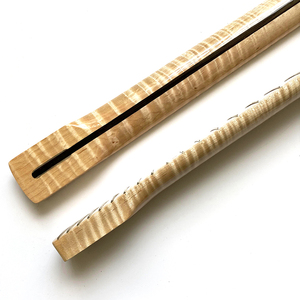
High-end bespoke shops catering to professional touring artists demand exotic tonewood aesthetics and superior micro-acoustics. Utilizing hard-rock Canadian flamed maple, resonant Okoume cores, and hand-buffed nitrocellulose lacquer finishes, our components provide small-scale luthiers with elite-tier raw materials without the cost overhead of in-house kiln curing.
Authorized nationwide service centers like Sweetwater MRO, independent luthier networks, and regional guitar stores frequently perform hardware upgrades. Our 1:18 ratio locking tuners and 9mm hex-pole pickups are engineered to drop directly into standard 10mm pegheads and vintage soapbar routes without requiring structural wood re-drilling.
Hardware is the mechanical anchor of string vibration. Poor metallurgical density dampens critical harmonic overtones. We deploy cold-rolled steel, high-purity bell brass, and hardened zinc alloys to optimize mechanical energy transfer into the instrument body.
| Component Group | Core Material / Metallurgical Spec | Acoustic & Mechanical Performance | US Industry Compliance |
|---|---|---|---|
| Tremolo Sustain Blocks | CNC Cold-Rolled Steel / Extruded Bell Brass (CuZn39Pb3) | Eliminates mid-frequency dampening; increases vibrational sustain duration by up to 28% compared to die-cast pot metal. | RoHS 2.0 Lead Limit (<0.1%), Prop 65 Clear |
| Machine Head Gears | Phosphor Bronze Worm Gear with 1:18 Mechanical Ratio | Near-zero backlash (axial backlash <0.02mm); smooth micro-tuning under high-tension string drop tunings. | ISO 9001:2015 Gear Tooth Uniformity |
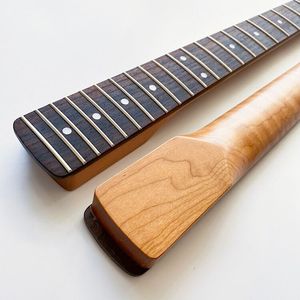
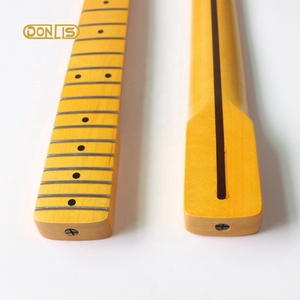
| Neck Tonewoods | Torrefied / Roasted Canadian Rock Maple (Thermo-treated at 210°C) | Moisture content stabilized at 4–6%; internal cell structure crystallized to resist climate-induced neck bowing. | US Lacey Act Certified, USDA APHIS Documented |
| Fretboard Wires | 18% Nickel-Silver / Cryogenically Treated Stainless Steel | Rockwell Hardness HV 190–220; crowned fret crowns buffed to mirror polish for frictionless string bending. | REACH Candidate List (SVHC) Free |
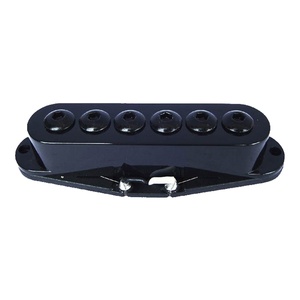
| Pickup Transducers | Custom Calibrated Ceramic & Alnico V / 42 AWG Formvar Wire | Inductance 6.4H–8.2H; vacuum wax potted with 80/20 paraffin-beeswax to eliminate microphonic feedback at stage volume. | UL94V-0 Flame Retardant Bobbin Polymers |
Procurement executives must stay ahead of shifts in guitarist preferences, regulatory scrutiny, and climate volatility. Our research highlights four core macro trends driving hardware specification across North America.
Musicians touring from humid southern states (e.g., Florida, Louisiana) to arid desert regions (e.g., Arizona, Nevada) frequently experience severe fret sprout and neck twisting. US brands increasingly mandate roasted necks across standard product tiers. By driving out hemicellulose through oxygen-deprived thermal baking, our roasted flame maple blanks ensure permanent structural stability and lower aftermarket warranty claims.
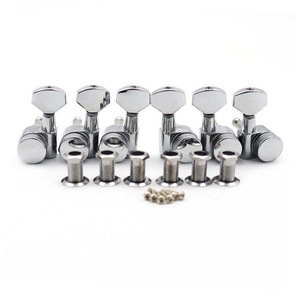
Traditional non-locking tuners that require multiple string wraps around the peg are rapidly declining in consumer preference. American buyers prioritize staggered-height locking machine heads. Staggered post heights eliminate the need for string trees, thereby reducing contact friction points at the headstock nut and ensuring maximum tuning fidelity during aggressive whammy bar usage.
US Federal Lacey Act enforcement penalizes importers of non-documented timber products. Brands can no longer risk utilizing questionable rosewood or ebony species without bulletproof chain-of-custody documentation. We provide complete botanical declaration documentation (genus and species), verifiable CITES non-endangered certificates, and harvest origin trails for every batch of Canadian maple and alternative Okoume hardwoods.
The market has moved away from thick, tone-dampening polyester coatings. Modern builders require thin-skin formulations. We produce necks and bodies with both vintage-correct breathable nitrocellulose lacquer (for relic and vintage models) and micro-thin polyurethane coats under 0.12mm in total film thickness, preserving the open resonance of underlying wood grains.
Founded in Nagoya, Japan in 1956 by classical guitarist Shiro Arai, Aria has defined professional musical instrument manufacturing for over 70 years. From the historic Aria Pro II PE and SB series basses played by rock icons like Cliff Burton, our design ethos pairs Japanese quality control with industrial export scale.
As the official export partner for legendary GOTOH precision hardware and Augustine Strings, and the manufacturing powerhouse behind Pignose amplification, our export operations supply distributors, factory lines, and boutique builders worldwide with uncompromised Japanese specification standards.



Clear, definitive technical answers covering tariffs, HTS customs classifications, plating tests, and prototype sampling workflows.
Musical instrument parts imported into the US fall predominantly under HTS Heading 9209.92 ("Parts and accessories for the musical instruments of heading 9202; tuning pins, bridges, nuts, machine heads"). Pickups are categorized under HTS 8543.70 or 9209.92.80. We provide commercial invoices, packing lists with verified net metal/wood weights, and customs-ready classifications to prevent border clearance holds.
All our metal hardware (Cosmo Black, Chrome, Gold, and Nickel) undergoes rigorous ASTM B117 neutral salt spray (NSS) testing for a minimum of 48 to 96 hours. By utilizing a multi-stage electroplating process that lays down an acid-copper barrier before dense nickel sealing, our finishes resist premature pitting, bubbling, and galvanic corrosion far beyond typical market standards.
Yes. We ingest 3D CAD files (.STEP, .IGS) or physical master prototypes. Our multi-axis CNC routers reproduce proprietary neck profiles (e.g., modern C, soft V, asymmetrical shred profiles) with a profile variance within ±0.05mm. We also execute custom radius profiling (from vintage 7.25-inch to modern compound 10–16 inch) and fret slotting calibrated for both nickel and stainless steel wire tangs.
For standard catalog hardware (e.g., locking machine heads, fixed bridges, pickups), stock sample quantities begin at 50 to 100 sets, shipping within 7 business days via air freight. Fully customized OEM neck runs or branded guitar bodies typically carry an MOQ of 200 units, with a standard CNC production turnaround of 35 to 45 calendar days following pilot sample sign-off.
Whether you are scaling a nationwide retail brand, expanding a custom luthier series, or replacing compromised sub-tier hardware suppliers, leverage our seven decades of manufacturing heritage, verified Lacey Act compliance, and direct factory pricing.
Contact Us