
Tested mechanical endurance featuring sealed die-cast housings, open-gear steel assemblies, and authentic decorative pins compatible with acoustic, classical, and electric configurations across Ontario.
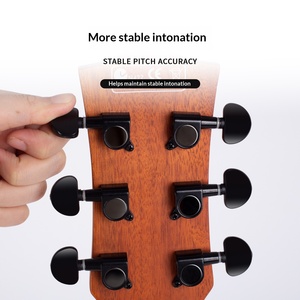
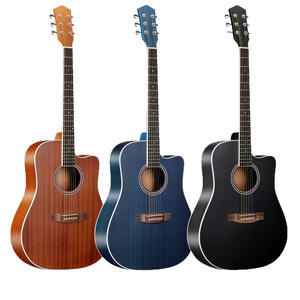
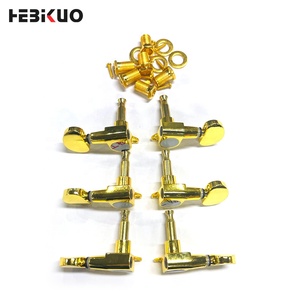
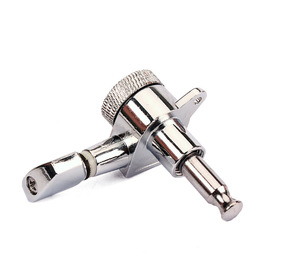
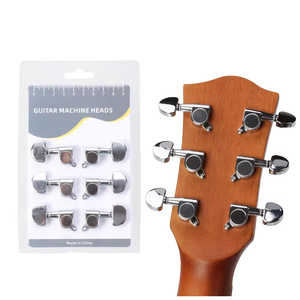
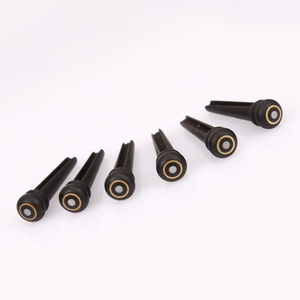
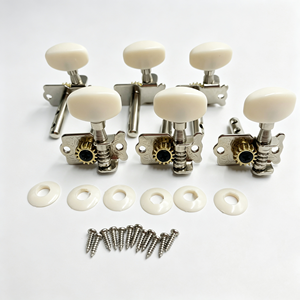
Procuring instrument hardware within the Greater Toronto Area (GTA) requires an analytical understanding of metallurgy, mechanical mechanical backlash, and environmental physics. As Southern Ontario shifts from severe sub-zero winters characterized by low relative interior humidity (often plunging below 20% RH) to sweltering, hyper-humid summers along the Lake Ontario basin, instruments undergo drastic dimensional changes. While tonewoods contract and expand across seasons, structural hardware—specifically the guitar tuning pegs (machine heads)—must maintain unchanging worm-gear friction coefficients and zero radial axle deviation.
Aria's mechanical heritage, established in Nagoya in 1956 and honed through decades of professional performance lines including the historic Aria Pro II series, addresses this fundamental mechanical problem through rigorous manufacturing controls. The gear-meshing tolerance within our sealed lubrication chambers is machined to within ±0.02mm. This prevents gear binding during thermal shifts and completely eliminates the slippage common in uncalibrated die-cast zinc imports. By integrating high-tensile brass gears with mirror-polished steel worm shafts, our machine heads provide consistent rotational torque (0.8 to 1.3 N·m), guaranteeing pitch stability for touring session players across Queen Street West venues, educational facilities in York, and regional luthiers throughout Richmond Hill and Markham.
Furthermore, our official distribution alignments with industry benchmarks such as GOTOH guitar hardware elevate our technical capabilities. Standard mass-market pegs regularly suffer from post slippage caused by loose tolerances between the post axle and the headstock bushing. Aria’s specialized supplier pipelines utilize high-density hex-threaded and press-fit collar bushings that maintain axial rigidity under full pitch tension (exceeding 80 kg total string load on standard acoustic sets). Whether supplying individual luthier workshops restoring heirloom dreadnoughts or retail chains managing inventory turnover across Canada, Aria delivers components engineered to eliminate return rates and enhance acoustic resonance transfer.
Engineered to satisfy specific operational workflows—from Toronto recording studios to high-volume commercial repair shops.
Boutique luthier studios along Queen Street West, Spadina Avenue, and the Junction require direct drop-in replacement tuners that conform to legacy vintage screw patterns (such as 3L+3R open gears and 45-degree offset tabs). Aria provides exact-dimension footprints, minimizing the need for headstock doweling and re-drilling while resolving dead-spot resonances.
From university music departments in Downtown Toronto to community music schools across Scarborough and Mississauga, student instruments endure constant retuning by untrained hands. Fully enclosed ABS/iron combinations and sealed lubricated housings withstand continuous torque over-rotations without stripped teeth or bent string shafts.
Touring ensembles navigating regional transitions—such as winter legs moving from Ottawa and Montreal through Toronto's Scotiabank Arena—require hardware that preserves intonation through freezing trailers and hot stage illumination. Our sealed units incorporate high-viscosity synthetic fluorocarbon lubricants that resist thermal breakdown.
The musical instrument parts market in Ontario is transitioning away from anonymous drop-shipped goods toward audited, traceable hardware. Repair shops and regional guitar brands face tighter margins and rising customer expectations; guitar owners will not tolerate string drift or stiff machine heads. Consequently, precision gear ratios have emerged as a primary selling point. While traditional entry-level gears relied on loose 1:14 architectures, professional technicians across the GTA now insist upon 1:18 and 1:21 micro-adjustment ratios for acoustic and electric instruments, allowing surgical control over microtonal adjustments and alternate tunings (such as DADGAD or drop calibrations).
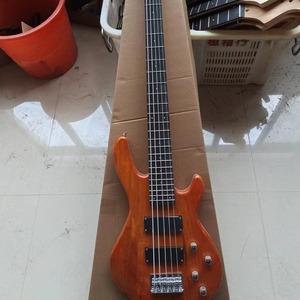
Simultaneously, weight distribution along the headstock has become a critical focal point for contemporary custom builders. Excessive tuner mass creates neck dive, especially on contoured hollow-body instruments like the Aria TA-TONIC, as well as lightweight 5-string basses. Modern supply specifications demand lightened structural housings without sacrificing the structural integrity of the steel worm and brass drive gears. By combining lightweight zinc alloy housings with reinforced internal steel sleeves, Aria offers balanced headstock dynamics that optimize fundamental acoustic sustain.
Additionally, the tightening of global environmental compliance guidelines (such as RoHS and European REACH standards) has direct implications for hardware imported into Canadian ports. Aria machine heads adhere to verified non-cyanide, heavy-metal compliant electroplating techniques. This guarantees that our vintage gold, chrome, and cosmo black finishes resist perspiration corrosion and oxidation without hazardous residue—providing Toronto musical instrument enterprises with completely compliant commercial stock.
Seven decades of Japanese guitar engineering delivering consistent component performance to distributors and luthier supply depots worldwide.
Rooted in our 1956 founding lineage, all physical tolerances, metallurgic specifications, and surface finishing protocols originate under strict Japanese engineering oversight.
Aria operates as the authorized export distributor for GOTOH machine parts and Augustine strings, verifying our structural expertise across the highest echelons of guitar mechanics.
Internally machined worm assemblies guarantee that turning motion transmits directly into post rotation, preventing dead zones, pitch slippage, and mechanical settling.
We work directly with Canadian wholesale importers, educational suppliers, and multi-location retail chains to provide competitive volume pricing and rapid restock capability.
Direct technical answers to common questions asked by Canadian procurement managers, workshop luthiers, and wholesale distributors.
Our fully sealed machine head series utilize synthetic low-viscosity greases sealed inside die-cast chambers with internal O-ring barriers. This design prevents atmospheric moisture absorption during humid Ontario summers and stops lubricants from solidifying during dry, sub-zero winters, ensuring smooth, predictable resistance throughout the year.
For standard steel-string folk and dreadnought acoustics, we recommend our 1:18 high-precision ratio pegs. This ratio provides the ideal balance between rapid re-stringing and micro-adjustment capability, allowing touring guitarists and recording session players to tune quickly and precisely.
Yes. In addition to our catalog items, we offer custom button head carvings, specialized electroplating (including matte gold, vintage nickel, distressed bronze, and cosmo black), and customized shaft lengths for quantity wholesale orders, complete with comprehensive specification sheets.
Our modern sealed machine heads require standard 10mm (13/32") headstock peg holes with screw-in threaded bushings. Our vintage open-gear models fit traditional 8.5mm to 9mm vintage-style press-fit bushings, making them well-suited for drop-in restorations without altering the headstock timber.
Looking to secure reliable, factory-direct shipments of high-tolerance guitar tuning pegs for your Toronto distribution channel, repair network, or manufacturing line? Request technical schematics, wholesale price schedules, and trial evaluation sets today.
Inquire Now