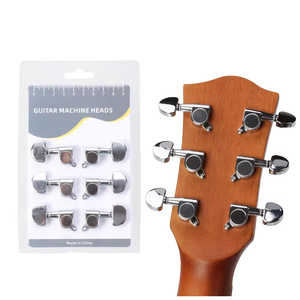
Machine Heads
Hot Sale Guitar Tuning Machines, Electroplated Silver Round Head Guitar Pegs with Metal Gear for Acoustic Electric Guitar Parts
View Specifications

Direct OEM/ODM catalog spanning high-precision classical strings, handcrafted tonewood bodies, electroplated precision machine heads, and protective logistics accessories compliant with worldwide market regulations.
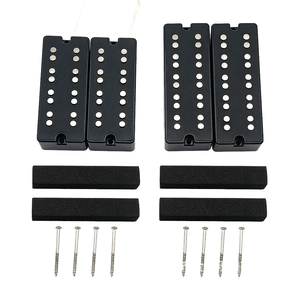
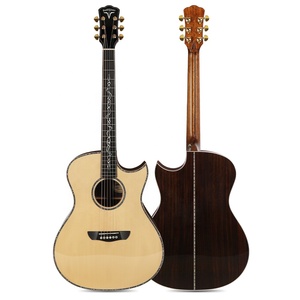
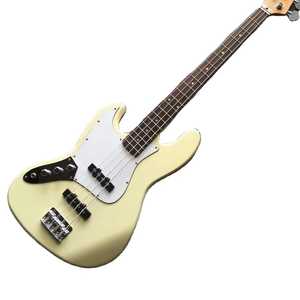
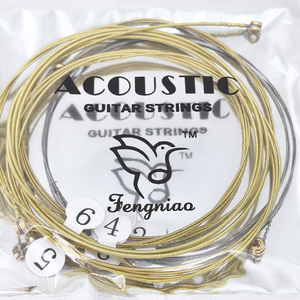
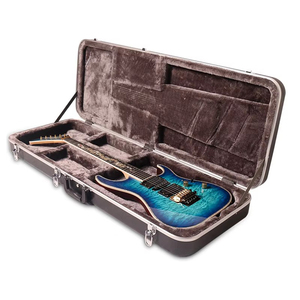
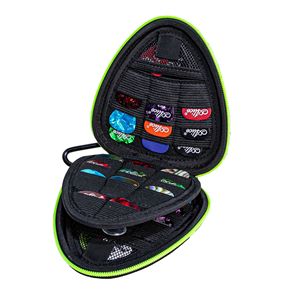
In classical concert instruments, tone generation hinges entirely on the string's mechanical impedance, kinetic inertia, and linear mass density. As premier CE certified classical guitar strings manufacturers, our metallurgical and polymer laboratories bridge the lineage of master Japanese luthier specifications with the rigorous non-toxic chemical mandates of European standard EN 71-3 and RoHS Directive 2011/65/EU.
Classical guitar strings do not benefit from magnetic coil induction; their auditory projection relies strictly on kinetic energy transfer across the bridge saddle into the spruce or cedar soundboard. A deviation of just 0.008 mm in treble diameter causes intonation skewing across upper harmonic registers. Our manufacturing lines implement computerized laser caliper feedback loops that control the extrusion of rectified nylon, high-modulus polyvinylidene fluoride (PVDF fluorocarbon), and bio-based synthetic polyamides.
For the wound basses (E6, A5, D4), tensile stability is governed by multifilament nylon core stabilization. Hundreds of continuous micro-filaments are grouped under calibrated tension while high-purity silver-plated copper wire (99.9% Cu with a uniform electroplated 20-30 micron pure silver shell) is wound with precise pitch consistency. This eliminates dead spots, maximizes harmonic resonance, and stabilizes longitudinal elasticity.
Comparative breakdown of linear core density, Young's modulus, and dynamic elongation rates verified under CE technical testing protocols:
Musicians maintain direct dermal contact with wound alloys for hours daily. International distributors importing into the European Union and North America require complete toxicological safety documentation.
| Regulatory Directive | Assessment Parameter | Testing Standard | Classical Guitar String Specification | Compliance State |
|---|---|---|---|---|
| CE Toy & Instrument Safety | Heavy Metal Migration (Lead, Cadmium, Mercury) | EN 71-3:2019+A1:2021 | Non-detectable (< 0.5 mg/kg) on all treble filaments & wound silver wraps | Certified Passed |
| EU RoHS Directive | Restriction of Hazardous Substances (2011/65/EU) | ICP-OES Spectrometry | Zero hexavalent chromium (Cr6+), PBBs, or PBDEs in packaging and alloys | Certified Passed |
| EU REACH Regulation | Substances of Very High Concern (SVHC List) | EC No 1907/2006 | Zero plasticizers, phthalates (DEHP, BBP, DBP), or hazardous monomer residues | Certified Passed |
| Dermal Contact Nickel Release | Allergic Dermatitis Prevention on Plated Wire | EN 1811:2011+A1:2015 | Nickel migration < 0.05 μg/cm²/week on all wound bass strings | Certified Passed |
| Tensile Rupture Tolerance | Cyclic Dynamic Strain Resistance (C to B tuning) | ISO 527-1 / ASTM D638 | Tensile elongation before rupture > 28%; dynamic tension drop < 1.2% at 72h | Certified Passed |
Anticipate geopolitical raw material fluctuations, eco-packaging compliance mandates, and advancing player demands with proactive procurement strategies.
Global musical brands are pivoting away from petroleum-derived polyamides toward bio-polymers such as castor-oil-derived PA1010. These resins slash production carbon footprints by up to 52% while offering acoustic flexural elasticity identical to traditional extruded nylon.
Bulk paper envelopes are obsolete for high-end export. Sourcing directors are prioritizing individual nitrogen-purged multilayer barrier pouches. This locks out maritime humidity during intercontinental container shipping, guaranteeing 36-month zero-tarnish shelf life.
Procurement teams are shifting from ambiguous "Medium/Hard" labels to kilogram/pound-force mathematical grading. Modern conservatories require precise bridge load data (±0.2 kgf per string) to safeguard delicate antique soundboards and modern lattice-braced tops.
Mid-tier retailers and boutique distributor brands are bypassing trading middlemen. Direct integration with CE-certified manufacturers empowers custom tension voicing, personalized ball-end or tie-end configurations, and bespoke FSC-certified packaging graphics.
From nano-scale electro-chemical passivations to hybrid core composites, string design is experiencing its most significant material renaissance in 50 years.
Traditional polymer coatings muffled treble acoustic velocity. Next-generation PVD (Physical Vapor Deposition) and plasma-enhanced anti-oxidation barriers deposit a protective layer under 1 micron in thickness. This locks out fingertip lactic acid and ambient moisture without sacrificing the crisp acoustic attack or dampening harmonic overtone decay.
Modern players require the round, warm bass projection of silver-wound silk-like cores paired with the laser-focused cut of high-density fluorocarbon trebles. Hybrid set pairing allows concert classical players to achieve projection parity against orchestral accompaniment, eliminating muddy low-mid acoustic masking.
The core-to-wrap interface determines how cleanly a wound string responds to vibrato. Computer-controlled micro-stepping motors maintain ultra-stable torque tensions across the entire winding sequence. This avoids uneven microscopic gaps that create unwanted wolf tones and erratic string buzzing along the lower frets.
When classical concert guitarist Shiro Arai founded our lineage in Nagoya, Japan, in 1956, his core motivation was overcoming the post-war shortage of concert-grade classical guitar strings and concert instruments. That player-centric philosophy has underpinned seven decades of technical innovation across classical guitars, acoustics, and world-renowned electric instruments like Aria and Aria Pro II.
Our long-term global alliances as an official export partner for Augustine Strings—the legendary creators of the world's first nylon guitar string—and Japan's premier machine-head manufacturer GOTOH Parts demonstrate our unmatched standing in acoustic physics and global component distribution.
Every batch of classical guitar strings and precision hardware produced under our supervision undergoes rigorous multi-tier inspection protocols: raw wire metallurgical purity checks, laser micrometer treble dimensional audits, tensile rupture threshold testing, and acoustic spectrogram timber verification.
Every production master run follows strict Japanese specifications and quality control parameters, ensuring zero variance in tension, pitch integrity, and linear diameter between separate seasonal production batches.
From custom winding tensions (Light, Normal, Hard, Extra-Hard) to custom gauge combinations, private silk screening, custom colored ball-ends, and multi-lingual retail packaging designed for instant distribution compliance.
Direct consolidated maritime and air freight shipments supported by bonded warehousing, centralized EU customs clearance documentation, and authorized distributor territory protection.
Clear answers on minimum order quantities, CE test reports, raw material origins, packaging shelf life, and distributor credit agreements.
Whether you require CE-certified classical guitar string distribution rights, OEM private label manufacturing, or bulk supplies of musical hardware and accessories, our international trade division is ready to serve your market.
Send an Inquiry