Engineered for premier projection, structural ergonomics, and high-frequency fretboard accessibility across commercial tiers.
The global musical instrument trade has seen a permanent pivot toward Venetian (curved, smooth) and Florentine (sharp, horn-style) cutaway acoustics. While traditional non-cutaway dreadnoughts provided maximum air volume inside the soundbox, modern acoustic composition, fingerstyle performance, and hybrid acoustic-electric soloing demand unhindered upper-fret navigation up to the 20th and 22nd frets. Achieving this without introducing acoustic phase cancellation or low-frequency attenuation is the ultimate test of an OEM supplier's technical chops.
As premier Chinese acoustic guitar manufacturers, our production workflows resolve the historical trade-off between cutaway ergonomics and lower-bout resonance. Through proprietary parabolic scalloped X-bracing, modern CNC routing of the upper treble bout, and finite element acoustic analysis (FEA), our production lines reinforce the soundboard around the cutaway curvature without deadening top-plate vibration. The result is an instrument offering pristine access to higher registers alongside the warm harmonic overtones of a classic full-body acoustic.
Merging seven decades of lutherie discipline with scalable industrial manufacturing.
Founded on rigorous acoustic design standards established in 1956, our production philosophies inherit legacy Japanese QC frameworks, standardizing string actions, relief consistency, and fret crowning across large-batch runs.
Every tonewood blank undergoes multi-stage dehumidification and baking down to strict equilibrium moisture content (EMC 8%–10%). This mitigates body cracking, neck warpage, and fret sprouting across extreme destination climates.
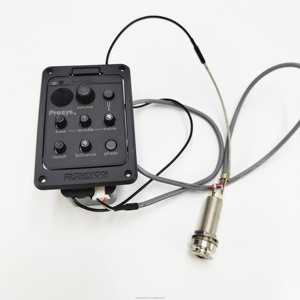
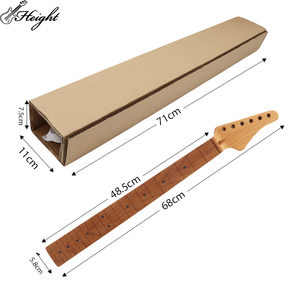
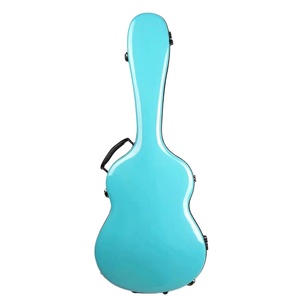
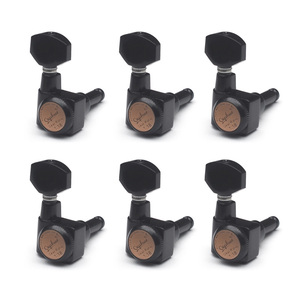
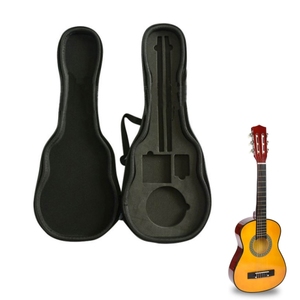
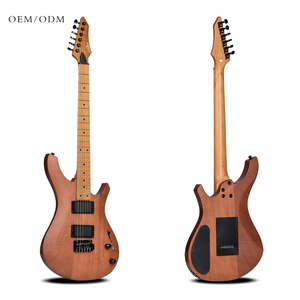
Beyond wood bodies, we offer end-to-end integration of tier-1 components including Fishman active transducer systems, proprietary screwless locking tuners, heavy-duty fiberglass flight cases, and precision roasted maple necks.
Market projections and production realignments shaping B2B instrument procurement through 2026–2030.
International environmental regulations have accelerated the adoption of responsibly harvested tonewoods. Sourcing roadmaps now prioritize thermo-treated roasted maple, Paulownia cores, engineered blackwood fingerboards, and FSC-certified Sitka spruce tops to ensure customs clearance without port detention.
Pure mechanical acoustics are giving ground to smart hybrid cutaways. Importers are expanding orders for instruments with integrated undersaddle piezos, onboard impulse-response (IR) preamps, built-in Bluetooth audio transducers for ambient effects without external amplification, and dual XLR/Jack outputs.
Wholesale buyers increasingly require factory-level Drop-Test Certified (ISTA 3A) packaging. Instruments must withstand multi-hub logistics intact. We incorporate fitted custom EVA and high-density foam architectures directly at the final assembly line to reduce return rates for e-commerce distributors.
The perception of Chinese guitar manufacturing has evolved from budget assembly lines to computer-integrated advanced craft centers. Today, high-precision automated multi-axis CNC machines execute neck profiling, bridge slotting, and rosette purfling within 0.02mm tolerances. This mechanical accuracy eliminates setup discrepancies that previously burdened distributor repair hubs.
Simultaneously, electrostatic thin-film UV curing facilities replace traditional nitrocellulose and polyurethane lines. UV lacquering produces an ultra-thin protective coat (down to 0.15mm) that protects tonewoods from atmospheric shifts without suffocating the instrument's resonant breath. Partnering with a supplier operating cleanroom-grade UV lines ensures that wholesale shipments arrive with mirror-smooth, durable finishes that meet clean-air import standards across North America and the European Union.
Actionable criteria for distributors, retail chains, and OEM brand owners.
For entry-tier retail, laminate spruce tops with sapele backs/sides offer the highest structural resistance to humidity shifts. For professional catalog tiers, specify solid Sitka or Engelmann spruce tops paired with bone nuts/saddles to provide a clear upgrade path for players.
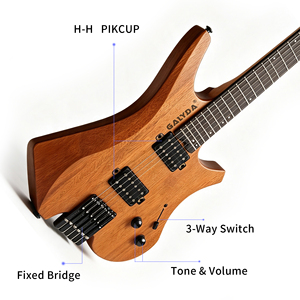
The cutaway design removes structural support from the treble shoulder. Ensure your supplier implements double-locking dovetail joints or bolt-on internal reinforcement plates to maintain long-term neck angle integrity under string tension.
Save shipping and secondary installation costs by having preamps factory-installed and tested. Factory-shielded compartments prevent ground hum, while volume/tone preamps ensure instruments are stage-ready out of the box.
Clear answers to common questions about factory minimums, logistics, testing, and private labeling.
For standard stock models with custom silkscreened or laser-engraved logos, our MOQ typically starts at 50 units. For fully customized OEM orders involving non-standard body profiles, custom rosettes, bespoke tonewood combinations, or specialized onboard electronics, the baseline MOQ is 100 to 200 units per specification to optimize automated tooling setups.
Every guitar is conditioned inside our climate-controlled staging rooms at 45%–55% relative humidity for 72 hours before boxing. Instruments are wrapped in vapor-barrier poly bags with industrial desiccant sachets, enclosed in five-ply double-corrugated export cartons, and loaded in container moisture-control liners to prevent condensation damage during trans-equatorial shipments.
Yes. Our engineering department can work directly from your CAD/SolidWorks files or reverse-engineer physical prototypes. We optimize internal rib bracing and side-block kerfing to ensure structural stability along the non-standard cutaway angle without muffling top-plate resonance.
All active electronic components (such as our Fishman 201 EQ units and onboard preamps) comply with CE, RoHS, and FCC Part 15 regulations. Shielding cavities are lined with conductive shielding paint to keep the signal-to-noise ratio within professional studio-recording tolerances.
Standard production cycles range between 35 and 45 business days following final sample and technical drawings sign-off. Bulk orders requiring exotic roasted woods or specialized sunburst lacquer finishing may require 50 to 60 days to allow for proper finish curing and post-lacquer stabilization.
Whether you need container-load replenishment of ready-to-ship models or customized private-label cutaways engineered to your exact brand blueprints, our sales engineering desk is ready to support your sourcing plan.