
Explore our industrial baseline models and specialized component fabrication pipeline. All specifications support customized core wire diameter, outer wrap alloy profiles, and customized commercial packaging.
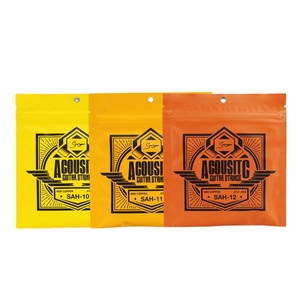
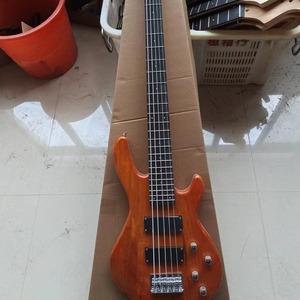
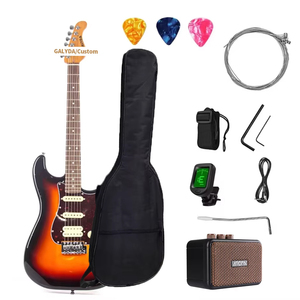
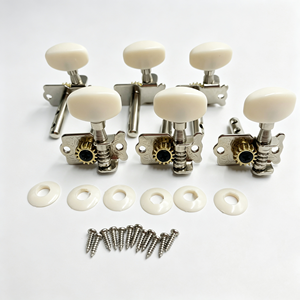
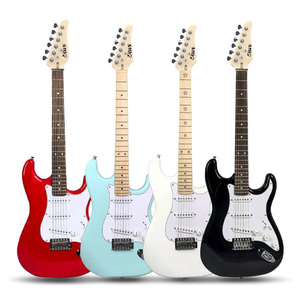
Why modern OEM bass strings are metallurgical marvels: how our manufacturing methodology directly impacts string sustain, core-to-wrap coupling, fundamental frequency retention, and resistance to fingerboard attrition.
Unlike conventional round cores that allow outer windings to slip under heavy slapping, our precision-drawn Swedish high-carbon tin-plated steel hex cores provide sharp 60-degree edges. This mechanical lock prevents internal lateral slip, maintaining uniform pitch integrity even during multi-octave drop-tunings.
Skin lipids, sweat acids, and ambient moisture migrate into the microscopic valleys between winding wraps, deadening the upper-register harmonics. Our factory applies an sub-micron uniform fluoropolymer barrier layer prior to final winding, ensuring the strings preserve their bright, metallic bite up to 5 times longer without affecting tactile feel.
Using proprietary multi-stage heat treatment, our Alloy-52 and Type 430 Stainless Steel wire formulations optimize electromagnetic induction efficiency. Pickups register stronger output, tighter low-mid definition, and cleaner transient attacks, eliminating muddy sub-bass anomalies across large PA environments.
Data-driven market intelligence for musical instrument brands, large-scale distributors, and OEM contractors preparing their inventories for next-generation player demographics.
Procurement volumes for fanned-fret and 37"-to-34" scale bass strings have increased over 42% year-on-year, mandating extended taper lengths and tailored winding gauges.
Brands are eliminating standard paper inner envelopes in favor of nitrogen-purged, aluminum foil multi-barrier pouches to ensure a 5-year retail shelf life with zero oxidation.
Retail chains demand low-MOQ, high-mix OEM runs allowing them to brand their strings alongside instruments, capturing gross margins exceeding 60% at point-of-sale.
Color-coded brass ball ends and laser-etched alloy sleeves are becoming mandatory brand signatures to deter counterfeit batches in the global market.
Our ongoing R&D investments bridge traditional Japanese craft heritage with computer-automated metallurgical science.
Infusing outer layers with conductive graphene matrices to deliver ultimate corrosion deterrence without dulling high-frequency transient response.
Engineered to generate greater magnetic interaction than traditional nickel-plated steel, elevating acoustic energy capture across high-output active preamps.
Real-time optical micro-interferometers verify rotational tension across computerized spinning lattices, minimizing batch-to-batch tension delta under 0.8%.
Sub-zero liquid nitrogen thermal cycling alters the crystalline grain structure of raw metals, closing interstitial vacancies for improved elasticity and fatigue resistance.
Transitioning from complex non-recyclable multi-layered plastics to plant-derived bio-barrier composites that maintain hermetic seals without ecological footprint.
Rooted in our parent group's inception in Nagoya in 1956, our string and instrument manufacturing operations have armed global distributors with relentless consistency, iconic artist endorsements, and certified quality controls.
Every single gauge specification, core-to-wrap ratio, and raw wire alloy ingot is subjected to strict Japanese industrial quality standards. With over 7 decades of lutherie lineage, our instruments and string configurations have passed through the hands of legendary bassists, from the iconic SB series played by Metallica's Cliff Burton to modern touring professionals like Manel Gomes.
Beyond string winding, our enterprise acts as an official export conduit for industry standard components like GOTOH guitar parts and Augustine classical strings, alongside the distribution of legendary Pignose portable amplifiers. This multi-category ecosystem allows wholesale partners to consolidate hardware, fretted instruments, and custom-labeled strings in unified shipping containers.
From custom winding machine programming for balanced-tension drop-tuning setups to full CMYK blister, tin, and pouch printing, our industrial factory handles complete design workflows. We provide dedicated engineering teams, low initial trial batch quantities (low MOQ), and consistent replenishment cycles supported by international trade infrastructure.
Clarifying questions for distributors, instrument manufacturers, and brand purchasers.
Connect directly with our manufacturing engineering division to request custom sample sets, factory capacity reports, and wholesale OEM pricing matrices tailored to your distribution territories.
Contact Us