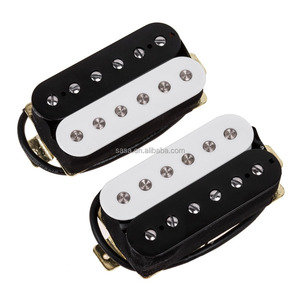
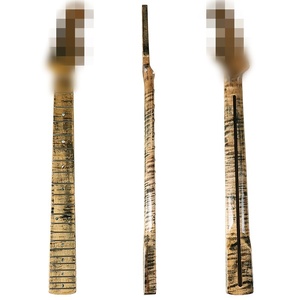
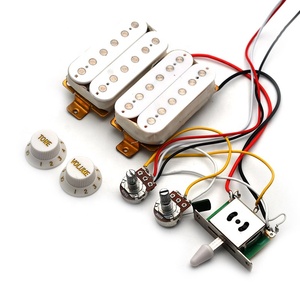
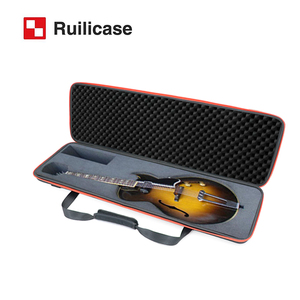
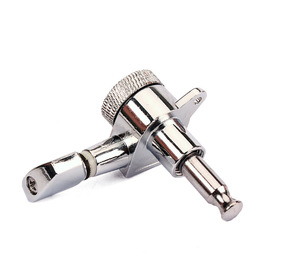
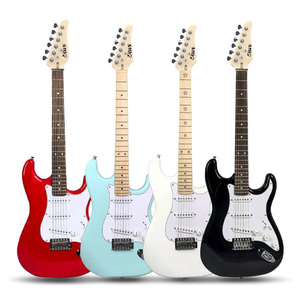
Explore precision-engineered electric guitar assemblies, electro-acoustic pickups, premium tonewood necks, and heavy-duty flight storage built to complement high-fidelity amplifier export contracts.
A deep dive into analog valve topologies, solid-state transconductance circuits, high-speed DSP impulse response convolution, and Class-D switch-mode acoustic delivery systems.
In the contemporary musical instrument ecosystem, sourcing an OEM/ODM electric guitar amplifiers exporter demands a comprehensive understanding of both psychoacoustic tone production and rigorous consumer electronics compliance. The guitar amplifier market has evolved far beyond rudimentary analog clipping stages. Today's commercial distribution networks require manufacturing facilities capable of delivering hybrid signal topologies: pristine analog front-end JFET preamplifiers, authentic high-voltage vacuum tube saturation, digital signal processing (DSP) convolution engines for cabinet impulse responses (IR), and ultra-efficient Class-D power amplification stages designed with Gallium Nitride (GaN) switching transistors.
For procurement officers, category directors, and brand developers, establishing an original equipment manufacturing (OEM) or original design manufacturing (ODM) partnership involves critical technical trade-offs. The acoustic signature of a guitar amplifier depends heavily on how the output transformer saturates under transient inductive loads, how the power supply sag (sagging voltage under heavy signal draw) simulates vintage rectifier behavior, and how the physical enclosure resonance interacts with the custom-voiced loudspeaker cone.
Precision-wound toroidal power transformers, hand-selected 12AX7/ECC83 preamp valves, and matched pairs of 6L6GC, EL34, or EL84 output power tubes. Designed with hand-soldered turret boards or double-sided 2oz copper FR4 PCBs with star-ground isolation to eliminate line-frequency 50/60Hz ground hum.
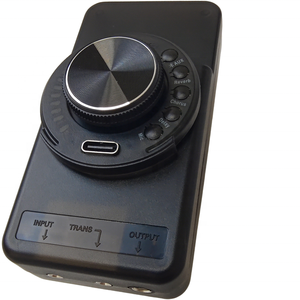
Integrated 32-bit floating-point SHARC and ARM Cortex audio processors operating at 24-bit/96kHz sampling rates. Zero-latency convolution engines supporting custom 1024/2048-sample cabinet impulse responses (IR), Bluetooth 5.3 low-energy app configuration, and real-time USB-C class-compliant audio streaming.
Proprietary closed-loop feedback SMPS (Switched-Mode Power Supplies) coupled with self-oscillating Class-D amplifier modules. Capable of generating continuous RMS ratings from 15W desktop practice units to 800W touring bass amplifier heads with active power factor correction (PFC) across 90V-260V AC inputs.
Strategic insights for brand owners, B2B wholesale importers, and musical instrument distributors planning product lifecycles over the next half-decade.
The global electric guitar amplifier market is undergoing a structural paradigm shift driven by evolving demographic behaviors, home-studio recording proliferation, and stringent environmental directives. Enterprise purchasers must align their procurement cycles with four decisive industrial realities:
| Amplifier Architecture | Typical OEM Unit Cost | Dynamic Headroom | Weight vs. Power Ratio | Target Retail Audience | Regulatory Compliance Focus |
|---|---|---|---|---|---|
| Pure Tube (Class A / AB) | High ($$$$) | Harmonic Tube Compression | Heavy (~18-28 kg) | Boutique, Studio, Purist Touring | High-voltage UL/CE, Tube Heat Dissipation |
| Solid-State Transconductance | Low-Mid ($) | Fast Transient Attack | Moderate (~8-14 kg) | Beginner, Music Academies, Rental | RoHS 3, Low Standby Power (<0.5W) |
| DSP Modeling + Class-D | Mid-High ($$$) | Variable Polyphonic Modeling | Ultra-Light (~2-6 kg) | Modern Gigging, Bedroom Producers | FCC Part 15 Class B, RED, Bluetooth SIG |
| Micro-Portable Lithium Amp | Low ($) | Optimized Full-Range Voice | Miniature (<1.5 kg) | Busking, Casual Practice, Students | UN38.3, MSDS, IEC 62133 Battery Safety |
Rooted in Nagoya, Japan since 1956, our heritage spans seven decades of premier fretted instrument crafting and portable amplification engineering under the highest international quality covenants.
Founded in 1956 by classical guitarist Shiro Arai, our operations preserve a legacy of exacting craftsmanship. All OEM/ODM electronic circuit schematics, chassis tolerances, and acoustic voicings are governed by our engineering headquarters in Japan. Every production batch undergoes a 7-stage quality protocol, including a 48-hour continuous thermal soak and high-voltage breakdown dielectric testing.
As the proud home of Pignose portable amplifiers—the definitive battery-powered icon relied upon in recording studios worldwide—and official export partner for legendary GOTOH precision guitar hardware and Augustine strings, our manufacturing network provides unmatched credibility across international borders.
Unlike isolated electronics assemblers, our facilities supply an integrated fretted-instrument and amplification supply chain. We manufacture everything from professional electric guitars (such as the Aria Pro II PE and SB series played by icons like Cliff Burton) to custom-voiced wooden speaker baffles, magnetic pickups, and flight cases.
We streamline worldwide market entry with full pre-compliance testing. Our export models leave the assembly line equipped with CE, FCC, UL/cUL, RoHS, REACH, PSE (Japan), KC (Korea), and RCM (Australia/New Zealand) certifications, minimizing customs friction and liability for import distributors.
Detailed answers addressing minimum order quantities, custom tooling, firmware localization, chassis acoustic modeling, and global shipping warranties.
Consult directly with our audio electronics engineering division in Japan and our global export dispatch teams. Whether you are launching a boutique tube series, a smart DSP desktop lineup, or a high-volume student combo range, we deliver unmatched production consistency and margin support.