
Browse real factory-certified guitar necks, tonewood test fixtures, precision hardware, and export-grade luthier materials available for immediate bulk configuration and OEM procurement.
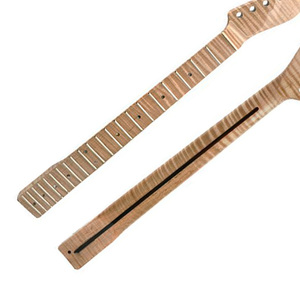
In modern electric, bass, and hollow-body instrument manufacturing, the guitar body blank serves as both acoustic bedrock and structural anchor. Precision engineering demands strict botanical verification, scientific kiln schedules, and tight acoustic density ratings.
For high-volume brands, bespoke boutique luthiers, and private-label distributors, the selection of raw tonewood billets directly dictates finished playability, sustained fundamental frequencies, finishing yield rates, and warranty risk. A guitar body blank is not merely dimensioned lumber; it is an acoustically resonant substrate that must withstand up to 180 lbs of combined string tension while maintaining complete dimensional stability across diverse global microclimates.
Industrial procurement managers face mounting complexities: volatile shipping freight cycles, stringent environmental regulations governing old-growth logging (CITES Appendix II, EU Timber Regulation No 995/2010, and US Lacey Act audits), and escalating labor costs in manual rough-planing. Consequently, top-tier musical instrument factories have transformed from simple sawmill buyers into high-precision engineering hubs utilizing multi-stage Radio Frequency (RF) vacuum kilns, acoustic frequency spectrographic sorting, and automated 5-axis CNC roughing centers.
| Tonewood Species | Botanical Taxon | Avg. Density (Air-Dried) | Acoustic Resonance / Fundamental Timbre | Primary Sourcing Regions | Machining & Finishing Index |
|---|---|---|---|---|---|
| American Red Alder | Alnus rubra | 450 – 530 kg/m³ | Balanced mids, articulate attack, round lows | Pacific Northwest (USA/Canada) | Superior; closed grain, minimal pore filling required |
| Southern Swamp Ash | Fraxinus caroliniana | 420 – 490 kg/m³ | Airy highs, scooped upper-mids, bell-like dynamic chime | Southeastern Wetlands (USA) | Requires thorough pore filler; striking prominent grain |
| African Mahogany | Khaya ivorensis | 510 – 590 kg/m³ | Thick sustained lower-mids, punchy fundamental warmth | Central / West Africa | Moderate open pore filling; excellent dimensional stability |
| Okoume | Aucoumea klaineana | 380 – 440 kg/m³ | Resonant, articulate midrange resembling vintage lightweight mahogany | Gabon, Equatorial Guinea | Very high CNC yield; uniform micro-pore structure |
| American Basswood | Tilia americana | 390 – 440 kg/m³ | Even response across frequencies; neutral fundamental core | North America / Northern Asia | Soft; optimum for solid color polyurethane/polyester finishes |
| Hard Eastern Maple | Acer saccharum | 680 – 740 kg/m³ | Bright snap, crystalline top end, extended harmonic attack | Eastern USA & Canada | Heavy tool wear; requires razor-sharp carbide CNC tooling |
Evaluated by drying technology, timber provenance, CNC integration capability, B2B volume reliability, and international compliance certification.
Modern instrument building blends luthier intuition with rigorous mechanical engineering. Four critical manufacturing advancements are reshaping how body blanks are conditioned, milled, and certified.
Traditional steam kilns risk case hardening and internal stress cracks. Next-gen RF vacuum drying boils moisture at lower temperatures (45°C), evacuating bound water from thick blanks without destabilizing cellular lignin.
Roasting tonewood blanks at 180°C–210°C in an oxygen-free nitrogen atmosphere crystallizes hemicellulose. The result is an ultra-light, hyper-resonant blank impervious to humidity swings with vintage broken-in tone.
Transitioning from 3-axis routers to multi-spindle 5-axis monoblock machining allows full 3D contour carving, tremolo cavity clearing, and wire indexing in a single clamping setup, holding tolerances within ±0.05 mm.
Leading factories now employ ultrasound pulse spectrometry to measure longitudinal speed of sound through raw blanks. Billets are sorted by harmonic resonance factor before costly cutting and joinery begins.
Strategic purchasing managers must navigate three seismic shifts currently realigning the musical instrument timber trade.
Environmental pressures on traditional Southern Swamp Ash (heavily threatened by Emerald Ash Borer infestations and Mississippi watershed flooding) are accelerating procurement substitution. High-growth, exceptionally lightweight timbers like African Okoume (Aucoumea klaineana), Paulownia, and sustainable European Poplar cores laminated with figured drop-tops are securing substantial commercial market share. Factory purchasing departments must adapt finishing protocols for these softer cell walls, optimizing polyester sealer recipes to maintain surface hardness.
Global shipping rates penalize transport of waste timber. Shipping rough-sawn lumber entails paying freight on 30%–40% wood mass that ends up as sawdust in factory collection bins. Future B2B purchasing favors factory-jointed, bookmatched, precision-dimensioned 2-piece body blanks (typically 45mm x 350mm x 500mm) planed to finish thickness. This shifts rough-milling labor and wood scrap handling back to source sawmills, allowing assembly plants to operate higher-efficiency lean production lines.
Founded in Nagoya, Japan in 1956 by classical guitarist Shiro Arai, Aria Guitars has stood at the vanguard of global guitar design, tone innovation, and manufacturing discipline for seven full decades. From the legendary carved-top Aria Pro II PE series to the immortal SB bass program—embraced across heavy music history by artists like Metallica's Cliff Burton—our heritage is forged in deep woodcraft mastery.
Today, our engineering operations integrate raw tonewood supply, state-of-the-art Japanese inspection standards, and an unmatched distribution network. Aria is also the official export partner for legendary Japanese GOTOH hardware and Augustine classical strings, providing turnkey guitar production synergies found nowhere else in the industry.
Technical, regulatory, and supply chain insights for enterprise brand buyers, importers, and workshop managers.
Connect directly with our international guitar engineering team in Nagoya. Benefit from 70 years of Japanese manufacturing heritage, certified sustainable tonewoods, and custom CNC manufacturing solutions.
Inquire Now